Viking Grand European Tour 15-Day River Cruise Review
This site contains affiliate links for which I may be compensated. More info here.
I was really excited to experience this Viking River Cruise Grand European Tour. Even though I’ve traveled several times on all the rivers on this itinerary, this was my first Viking river cruise. A new river cruise line, new ports and towns to explore added to my excitement.
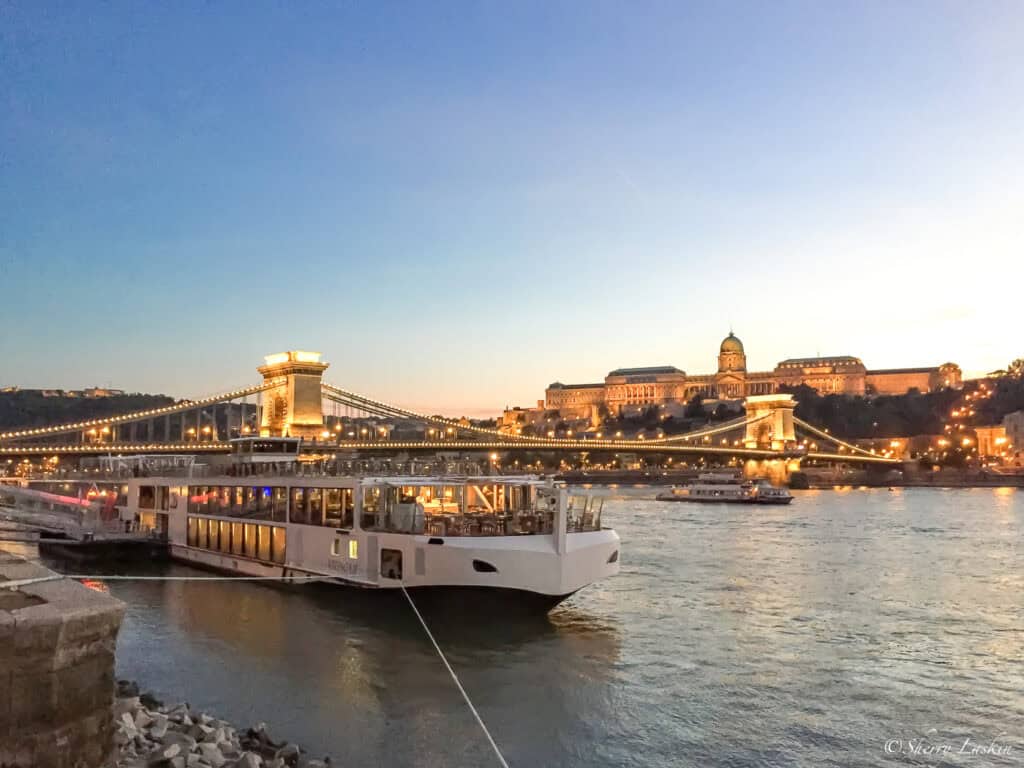
On this 15-day river cruise, our ship ventured through five countries: Hungary, Slovakia, Austria, Germany and the Netherlands. We traveled along the beautiful Danube, the narrow Main and the wide Rhine rivers.
Seeing ancient castles and ruins, tasting regional cuisines, visiting quaint medieval towns and imperial cities combined to make this river cruise one of my most memorable river cruises.
In this post, I share my experience of not only how I arrived into Budapest without flying, but also a full review of my Viking River Cruises Grand European Tour. Know before you go. Solo or not.
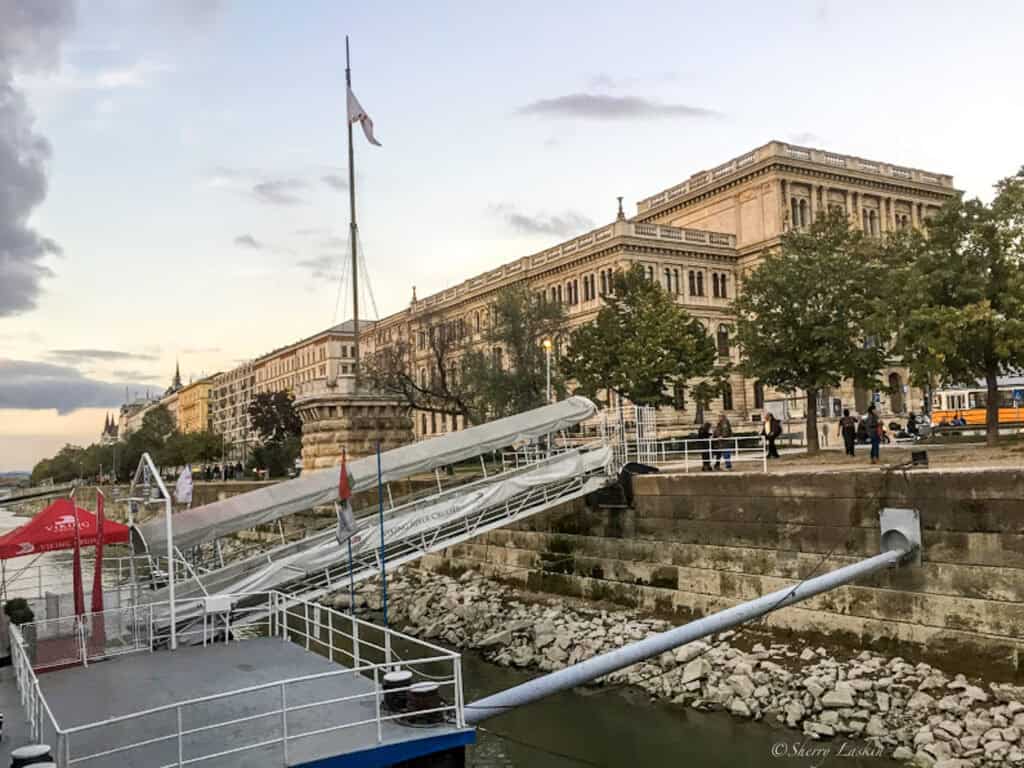
Here’s the recap of my 15-day river cruise adventure that includes one huge unexpected event halfway through the trip.
Getting to Budapest by Train
First, I had to go from Paris to Budapest. I had already taken the Eurostar from London to Paris. For convenience after a late afternoon arrival in Paris, I spent a couple of nights at a hotel adjacent to Gard du Nord.
Later the next day, I took a taxi to Paris Gare de l’Est for the French TGV overnight train to Munich.
Thinking back, as a solo traveler and someone who doesn’t fly, it really was a challenge to figure out how to get to Budapest. After one night in Munich, Germany, I boarded Germany’s OBB train for a fast and scenic eight-hour train ride to Budapest.
In First Class on trains in Europe, you’ll find many English-speaking passengers from North America. It was easy to strike up conversations with fellow travelers and the eight hours quickly passed.
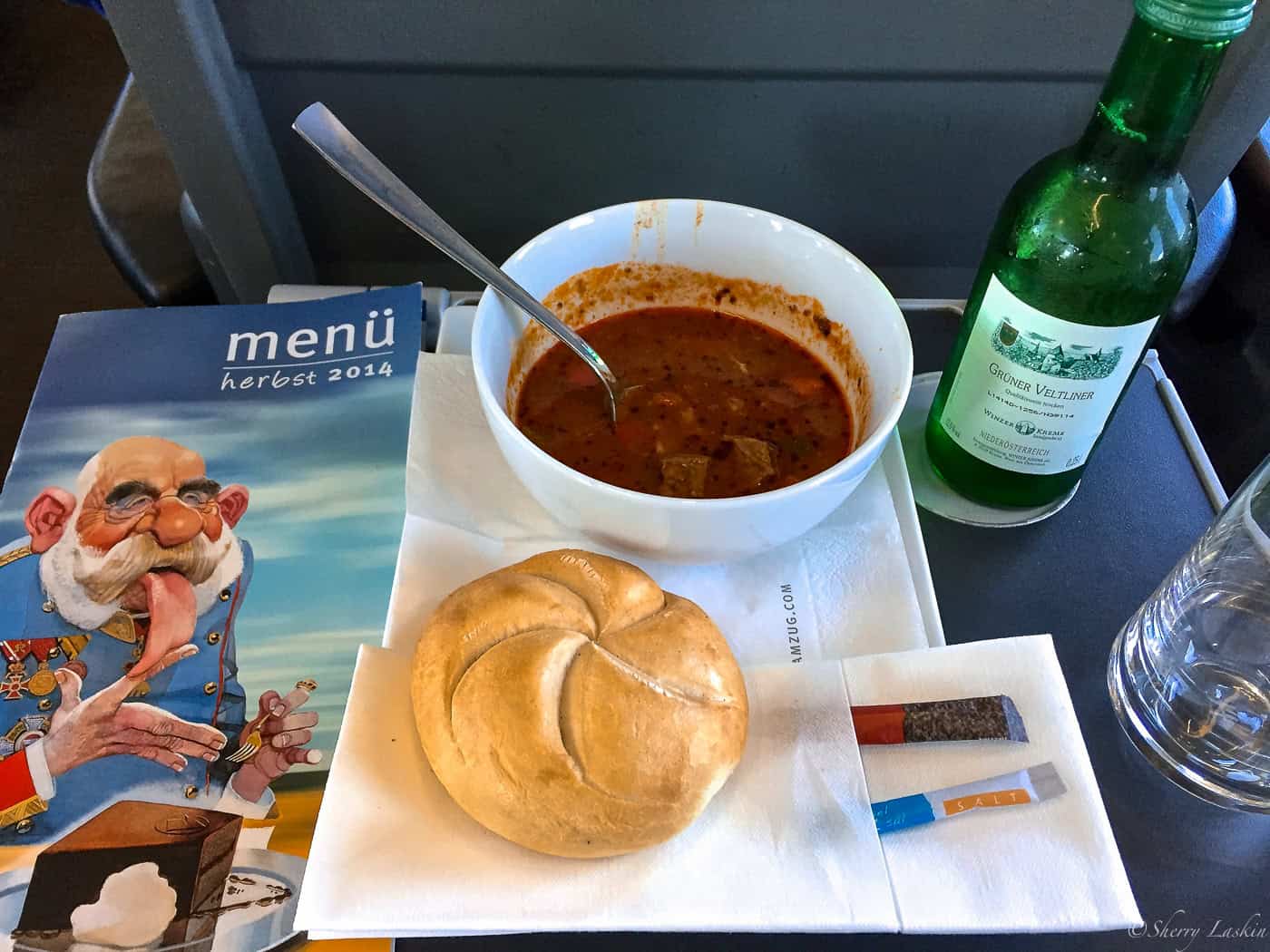
When the car attendant came over to take our food orders, I had no problem deciding what to eat: Hungarian Goulash, of course!
Boarding Viking Lif in Budapest
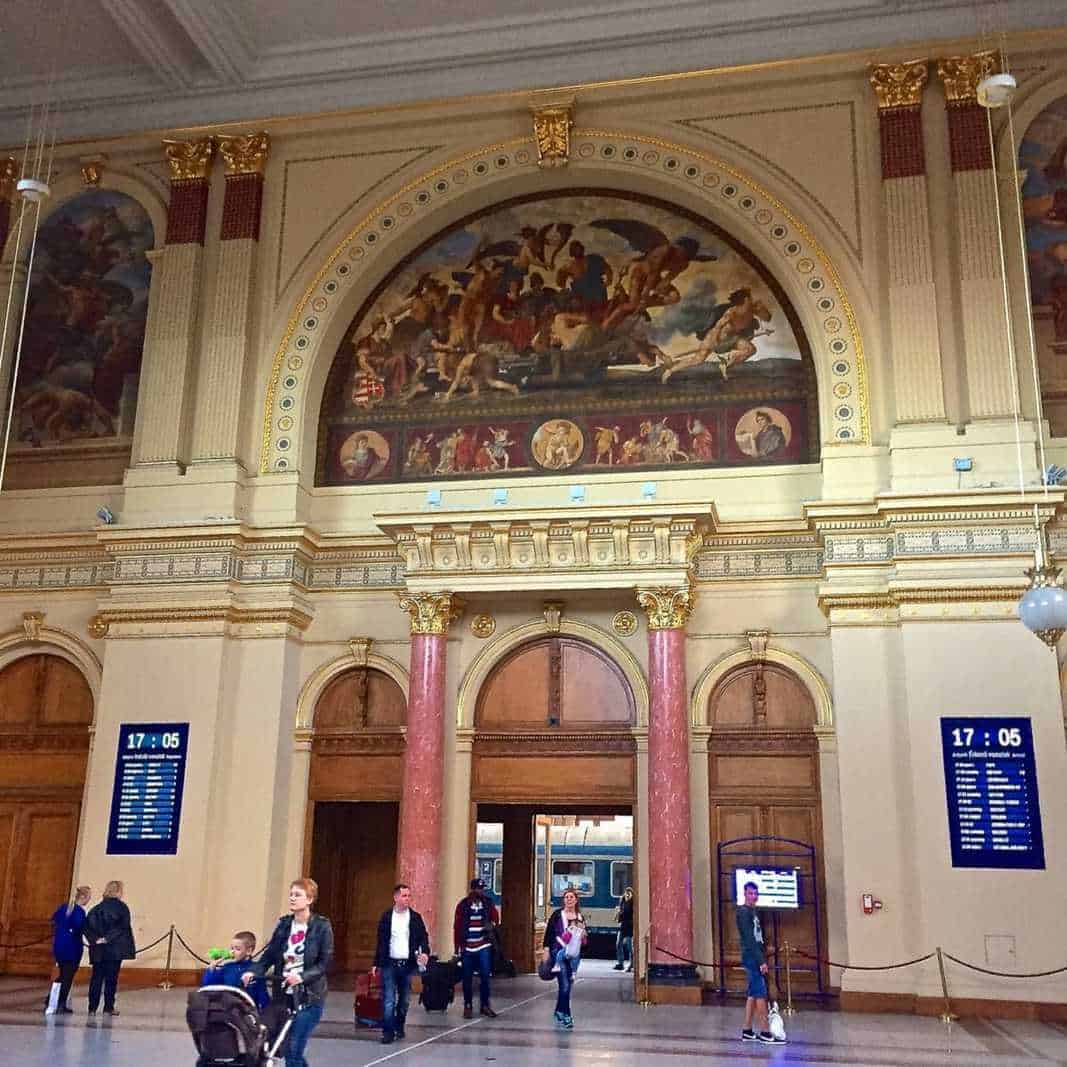
By the time the train pulled in to Keleti Station, I was more than ready for this 15-day river cruise from Budapest to Amsterdam. Lee Oliver, our Viking Lif river ship Program Director, greeted everyone at the gangway with a warm “Welcome Aboard!”
Those two words were like music to my ears. Maybe not Béla Bartok or Franz Liszt but music nonetheless.
With the help of Viking reservations, I booked a driver to meet me at Budapest’s historic Keleti station to get to the river ship. Yes, you can do this.
Within 30 minutes of pulling into the train station and getting into the taxi, I was on board Viking Lif, met our program director and settled into my cozy cabin. Our Viking Grand European Tour was about to begin.
The mid-afternoon boarding gave guests plenty of time before dinner to explore this spirited yet somewhat austere city, either on their own or with a Viking tour excursion. I arrived too late for the tour.
Budapest, Hungary, on the beautiful and sometimes-blue Danube, has so much to experience.
Viking River Grand European River Cruise Schedule
In the course of two-weeks, we would cruise on three rivers; the Danube, Main and Rhine rivers. Along the way, Viking Lif had 12 scheduled cruise ports to visit before docking in Amsterdam.
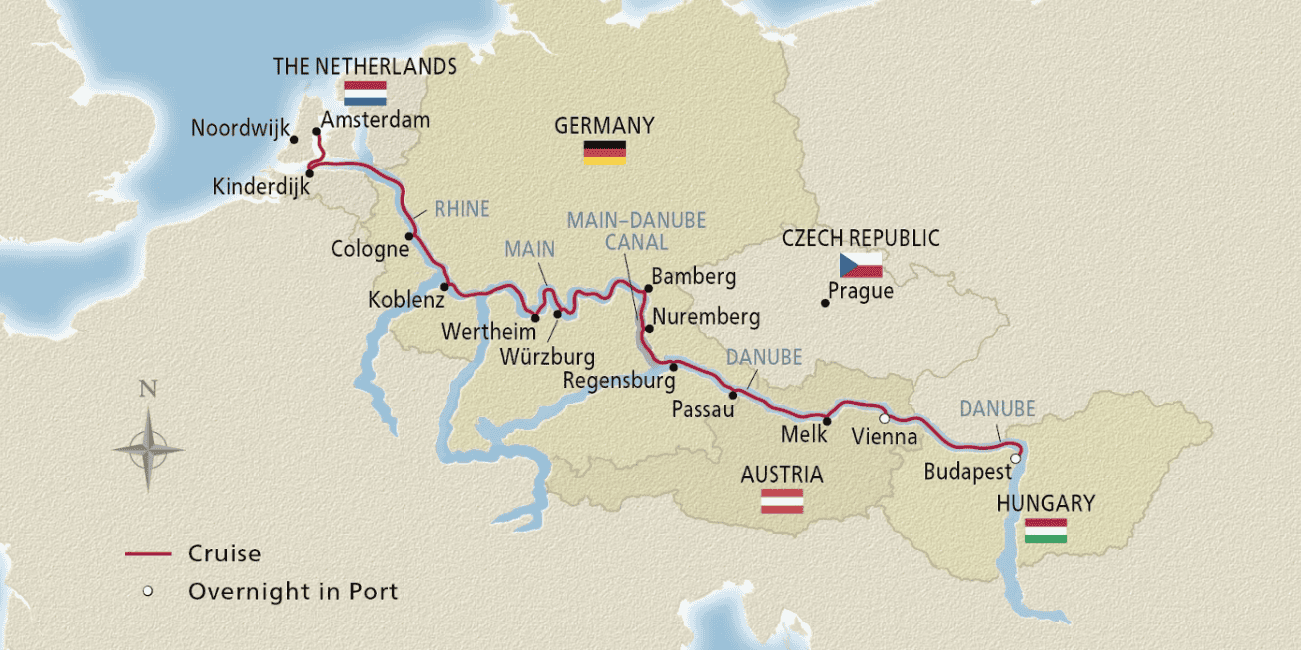
A couple of port excursions offered day trips to other nearby ancient or medieval towns, and I highly recommend those options.
Here’s our itinerary:
Grand European Tour Itinerary
- Day 1: Budapest, Hungary
- Day 2: Budapest and Bratislava, Slovakia
- Day 3: Vienna, Austria
- Day 4: Melk, Austria
- Day 5: Linz, Austria and Passau, Germany
- Day 6: Regensburg, Germany
- Day 7: Nuremberg, Germany
- Day 8: Bamberg, Germany
- Day 9: Wurzburg, Germany and Rothenburg ob der Tauber, Germany
- Day 10: Wertheim, Germany
- Day 11: Koblenz, Germany
- Day 12: Cologne, Germany
- Day 13: Kinderdijk, The Netherlands
- Day 14: Amsterdam, The Netherlands
RELATED: How Exactly to Take the Train to Budapest for a River Cruise
Day 1: Viking Lif Embarkation
By the time I arrived at the ship in the late afternoon, other passengers had already unpacked and were mingling about the vessel. They were already enjoying cocktails in the lounge.
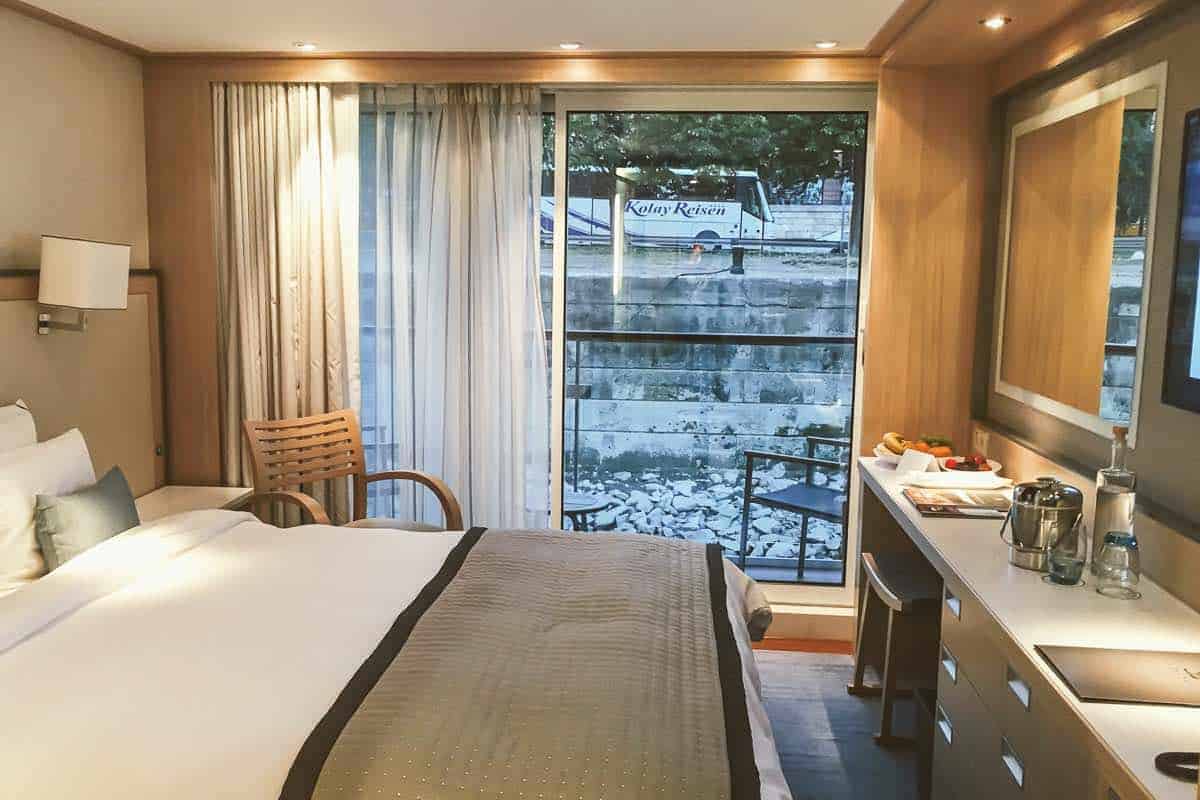
I had about an hour to get acquainted with my cabin and Viking Lif river ship before the first pre-dinner meeting.
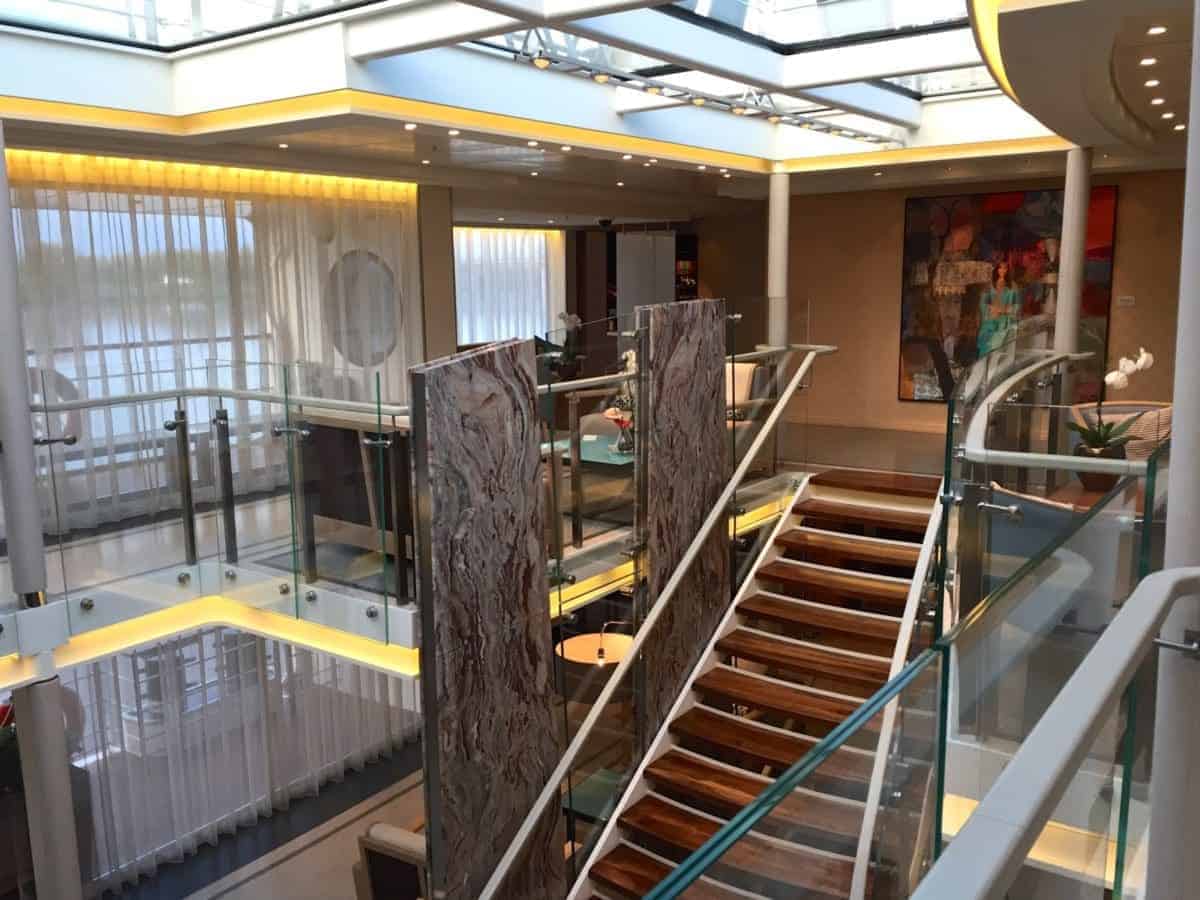
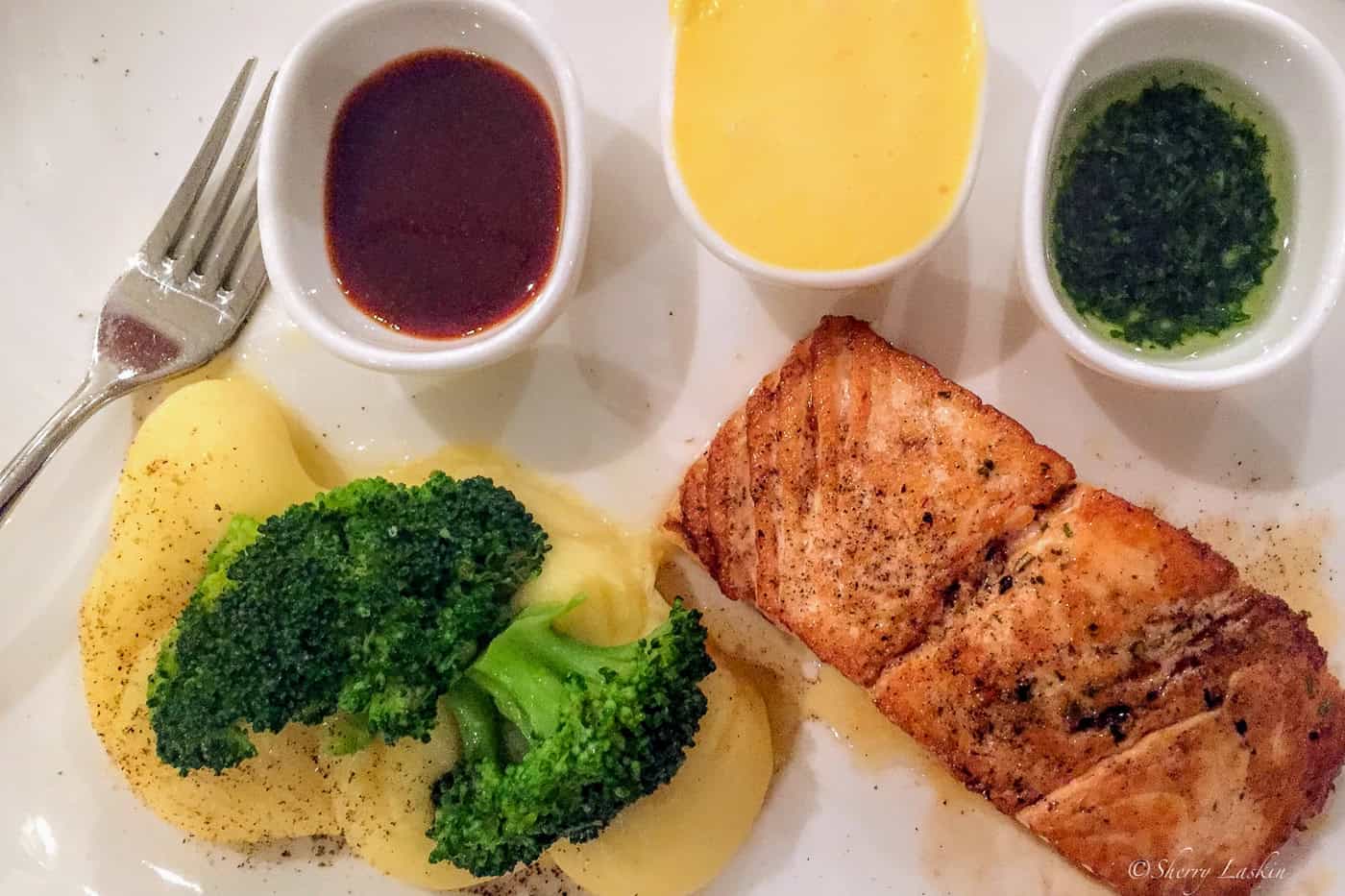
At 6:30pm, it was time to head to the lounge, meet the other guests and attend the nightly informative yet brief review of our river cruise itinerary. Though these meetings are necessary to attend, I really looked forward to tonight’s dinner. And I wasn’t disappointed.
READ NEXT: Getting to Budapest for Viking Grand European Tour Embarkation
It was a balmy autumn night that beckoned tourists and locals alike to stroll along the banks of the Danube late into the evening. I was tired but excited to finally have a chance to walk across Budapest’s historic Chain Bridge.
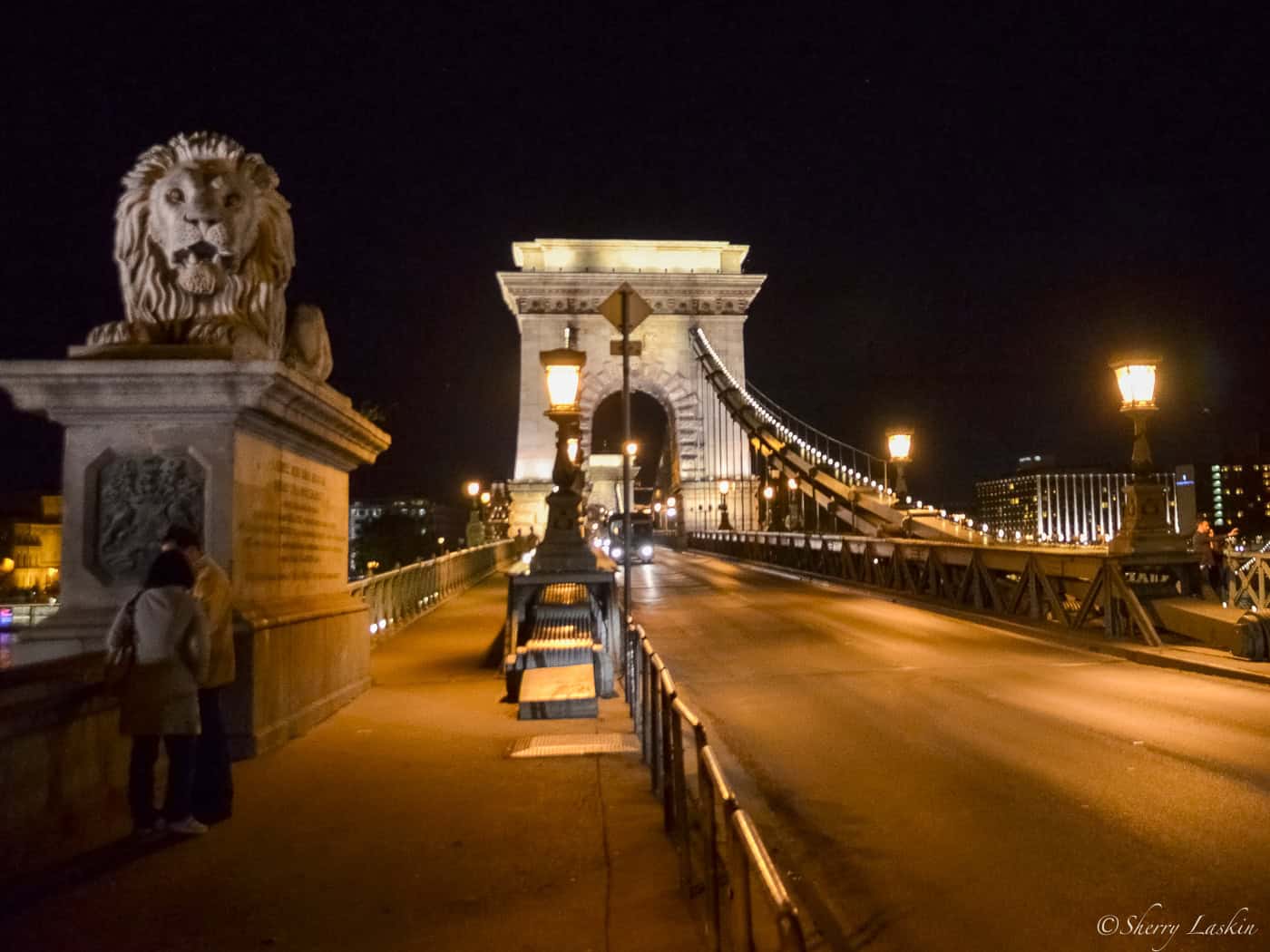
Camera in hand, I must have crossed the Danube four or six times, snapping photos of the warm yellow bridge lights, couples strolling arm in arm, and the magnificently illuminated state buildings that line the riverfront.
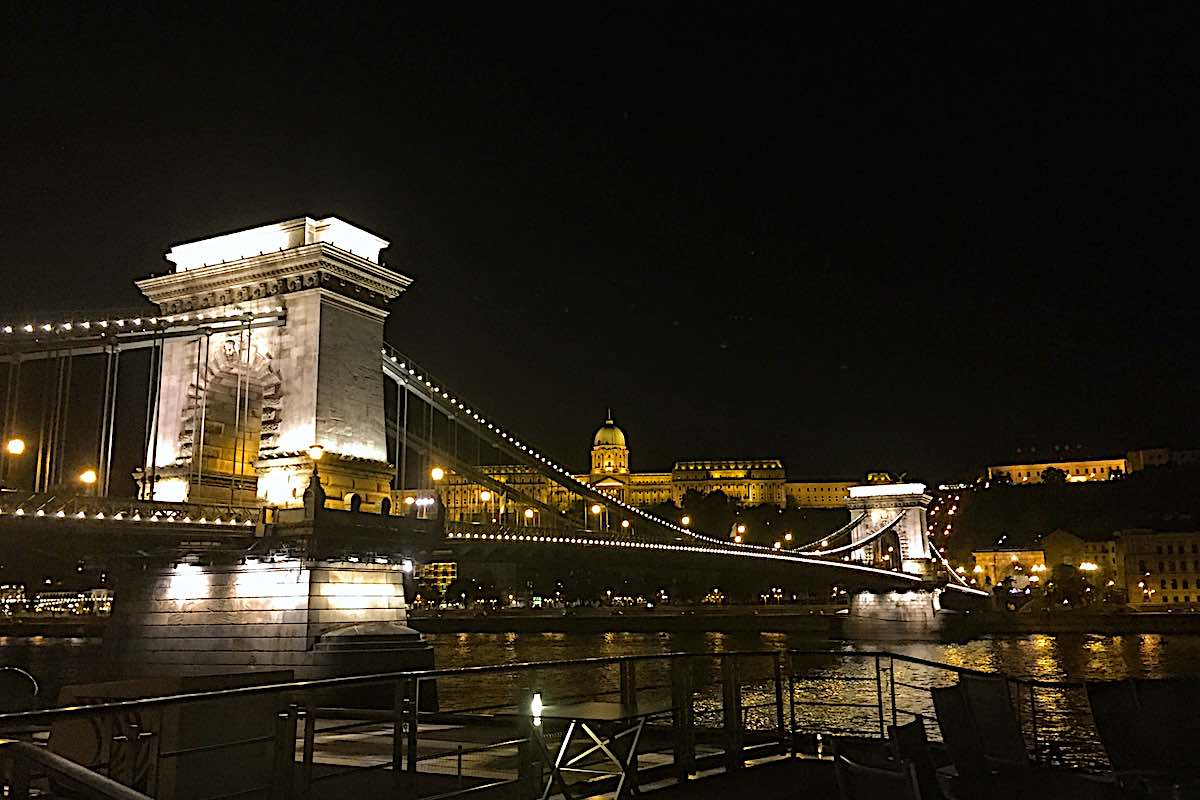
Finally, it was time to call it a night. Tomorrow, our Grand European Tour river cruise would begin with a full day of sightseeing before we even got underway.
READ MORE: In-Depth Review of Embarkation Day in Budapest
Day 2: Touring and Tasting Budapest
If being chatty at breakfast isn’t your thing, Viking offers the option for a very relaxing breakfast buffet at Aquavit Terrace every morning.
It’s also a good way to plan your morning time if you have a 9:00am or even earlier tour departure. This was usually how my day started; quiet, comfortable, and a cappuccino in hand.
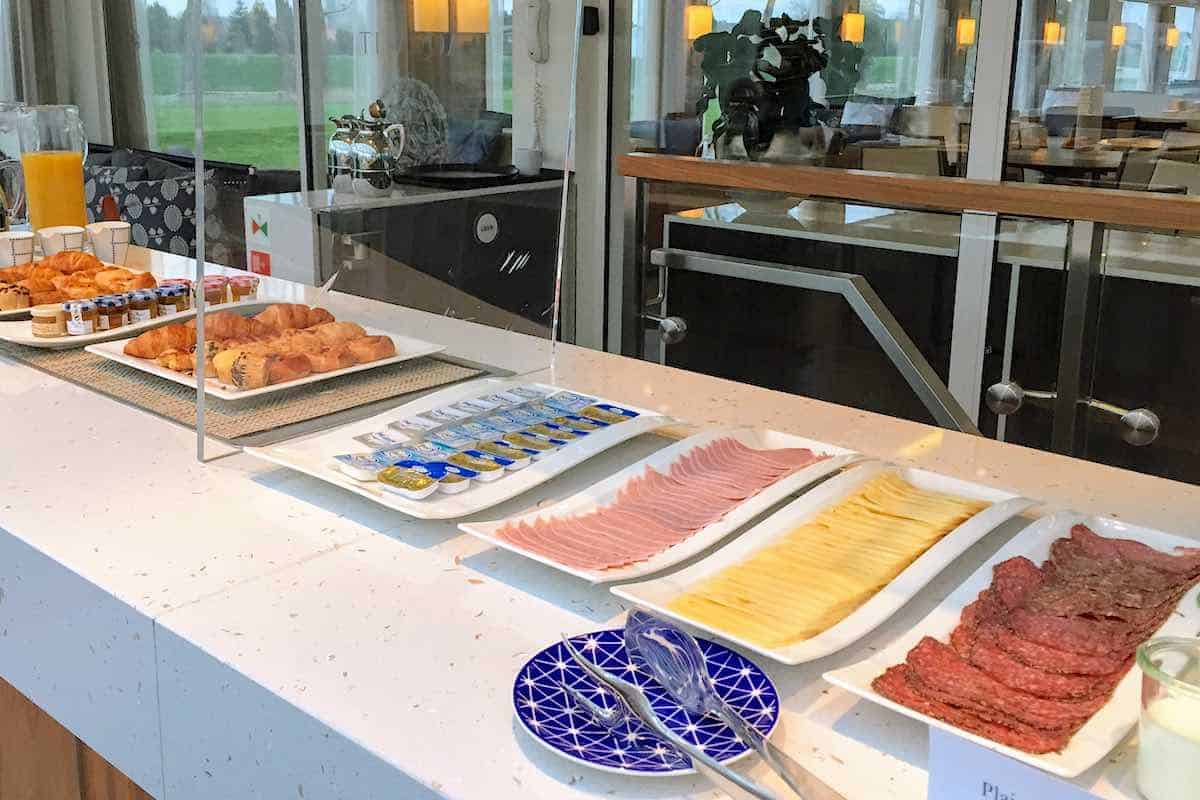
By 8:15am on our second day in Budapest, passengers heard the first warning announcement for our city tour departure.
Know Your Tour Departure Time
Here’s how it’s done on river cruises. You know your tour departure time, say 9 A.M. At 8:45 A.M. over the PA system, you’re given a 15-minute heads-up for the tour to leave.
Then you hear a 5-minute warning for your motor coach departure. The tour departure time that’s posted is not when you should walk out of your stateroom. It’s actually when the bus departs. I’ve had to run to catch the bus on more than one occasion.
Today’s complimentary morning tour was your basic European city overview; historic places, medieval churches, political hotspots of yore. In the scope of four hours, we would either drive by, stop to view or exit the motor coach to stretch and take photos.
As a solo, I usually sit in the back of the bus. Since no one usually sits there, I can snap photos from both sides, and sometimes through a back window, too.
Highlights of Our Morning Budapest Tour
Our motor coach drove across the Chain Bridge to Buda side of the Danube. This is the hilly side of the city where many of the most beautiful building are located.
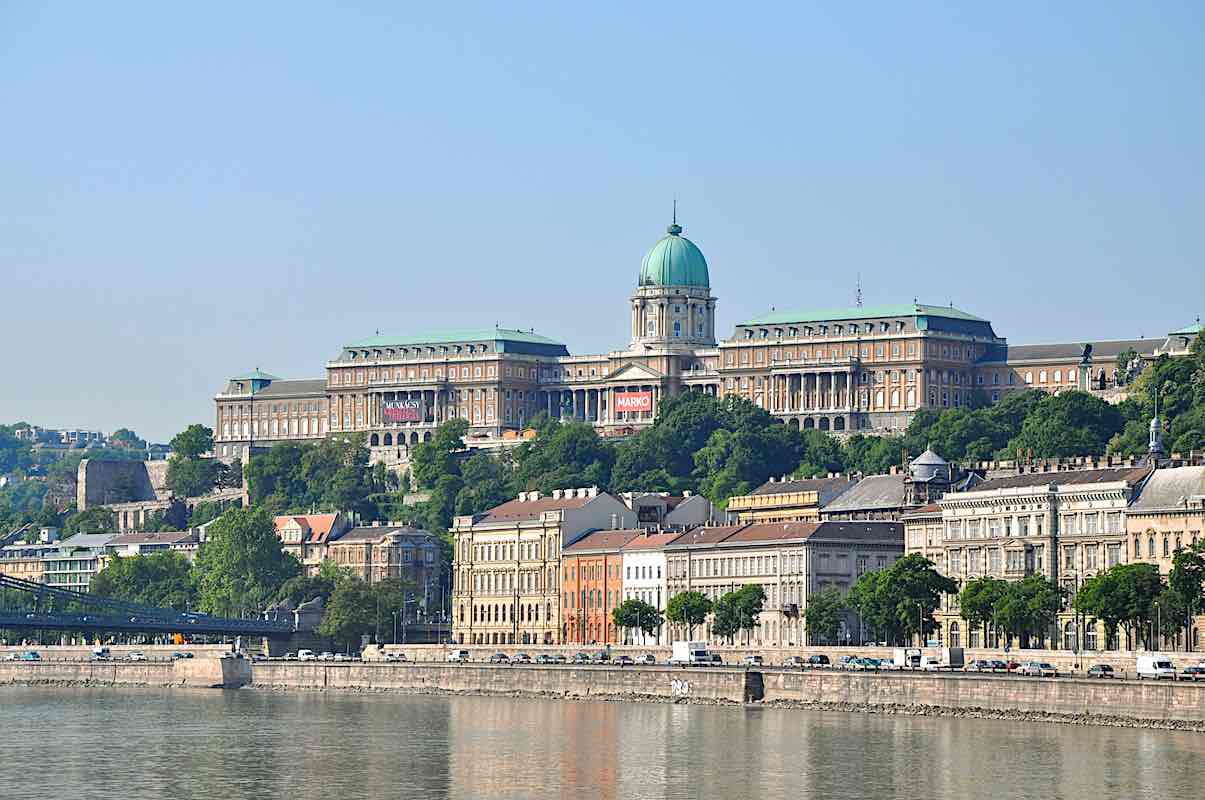
Views from the Buda side of the river…
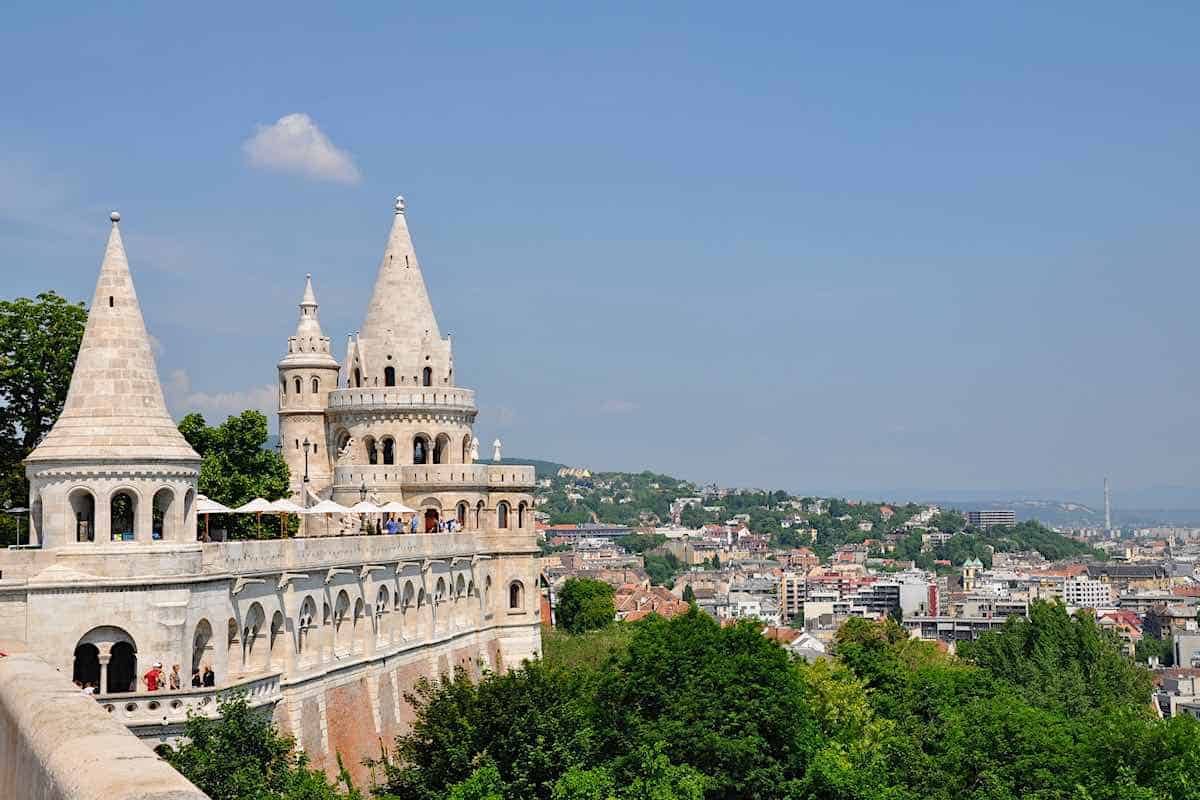
Fishermen’s Bastion, built between 1895 and 1902, the beautiful towers and covered terrace weren’t built to defend the territory but to provide unparalleled views of the city.
We had ample time to wander along the terrace and up to the Neo-Romanesque designed towers. This is the prime photo op location for sweeping vistas of Budapest.
Back aboard Viking Lif in time for lunch. As there would be on every day of the cruise, you can choose from two lunch venues; The Restaurant with table service and a buffet or in Aquavit for a café lunch, buffet-style. Most days, I chose Aquavit Lounge.
Afternoon Tour on the Pest Side
Budapest Jewish and Hungarian History
I signed up for the optional 2:00PM Dohány Street Synagogue and Hungarian Jewish Museum tour. The motor coach let us off just a short walk to the synagogue. Part of the intrigue was seeing the small shops, bars and cafés in what was once the Jewish Quarter, or Ghetto.
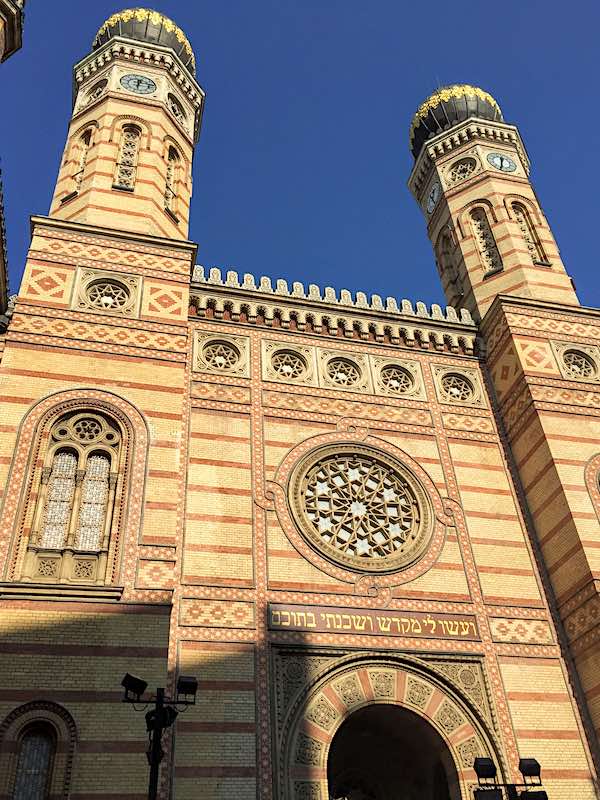
Built in the Moorish Revival style between 1854-1859, it is the largest synagogue in Europe. In addition to the main synagogue (Great Synagogue), inside you’ll find the Hungarian Jewish Museum, the Graveyard and the Memorial.
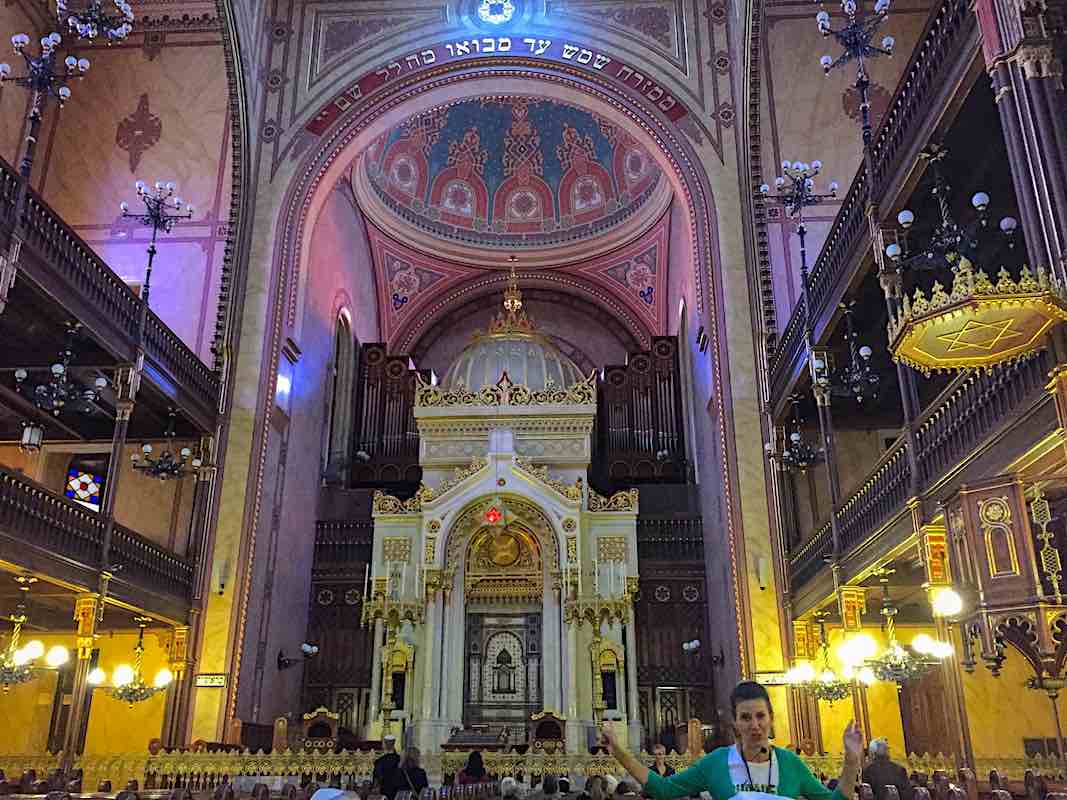
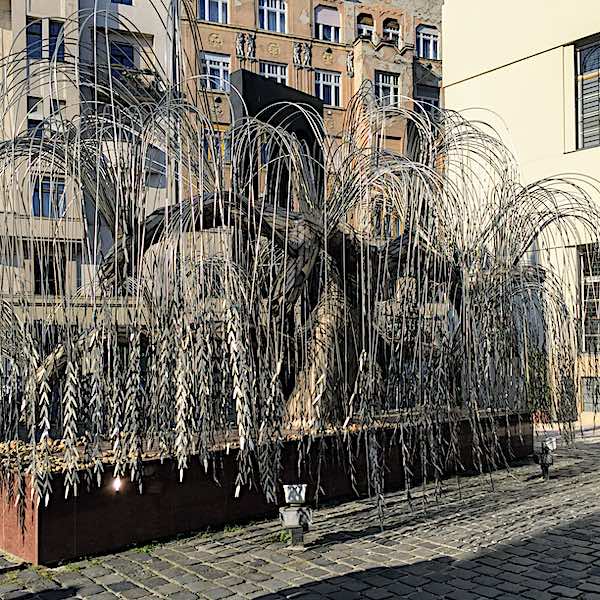
The Weeping Willow memorial is in the courtyard behind the synagogue. On its leaves are inscribed the names of 30,000 Holocaust victims. The father of actor Tony Curtis, Emanuel Schwartz, funded the weeping willow memorial.
The courtyard was named Raoul Wallenberg, the Swedish diplomat who managed to save thousands of Jews from going to concentration camps.
Stopping for a Slice of Budapest’s Finest Pastry
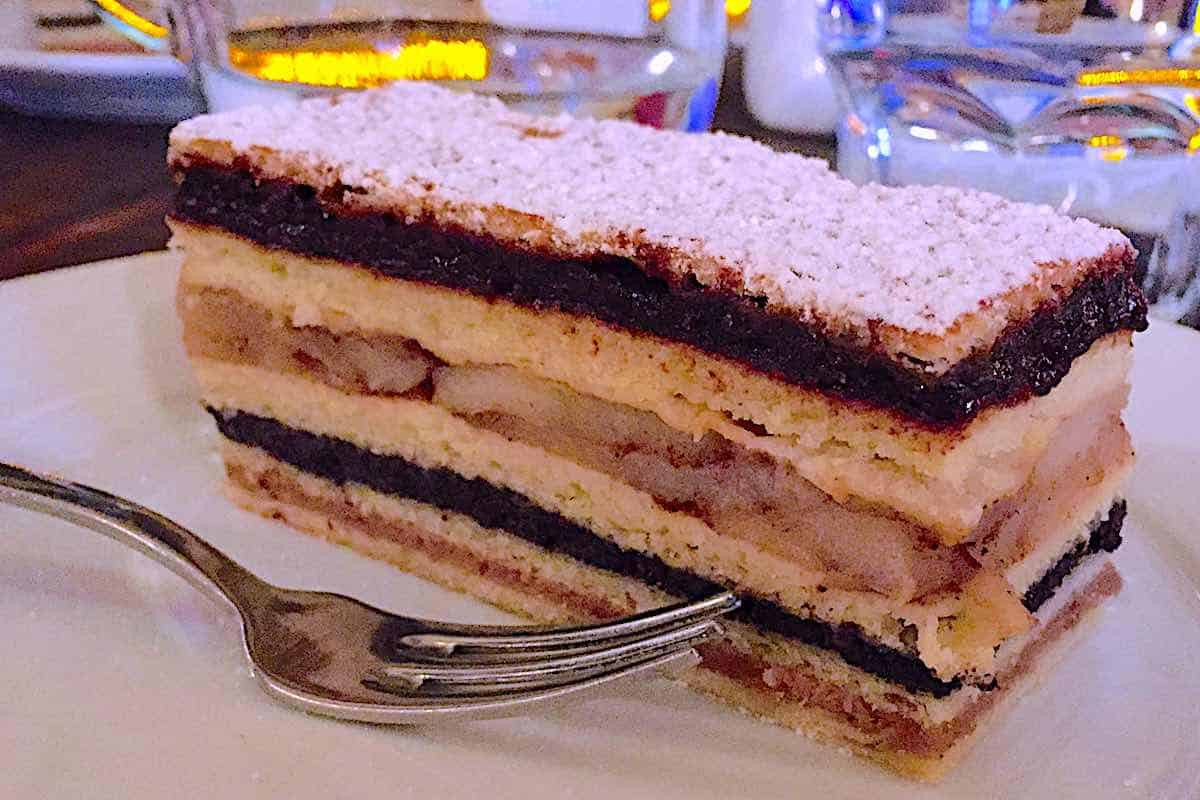
Almost an afternoon necessity, we were treated to Hungarian pastry called, “Flódni”, at a small bakery. With not much time to spare, we boarded the bus to head back to the ship and returned just in time for Cocktail Hour.
Tonight was the official “Welcome Aboard” toast by Captain Marcin and Hotel Manager Eve. One sparkling wine down and just before dinner, we had our next day’s briefing. Next port going north on the Danube would be Bratislava, Slovakia.
READ MORE: Top 10 Things to See in Budapest
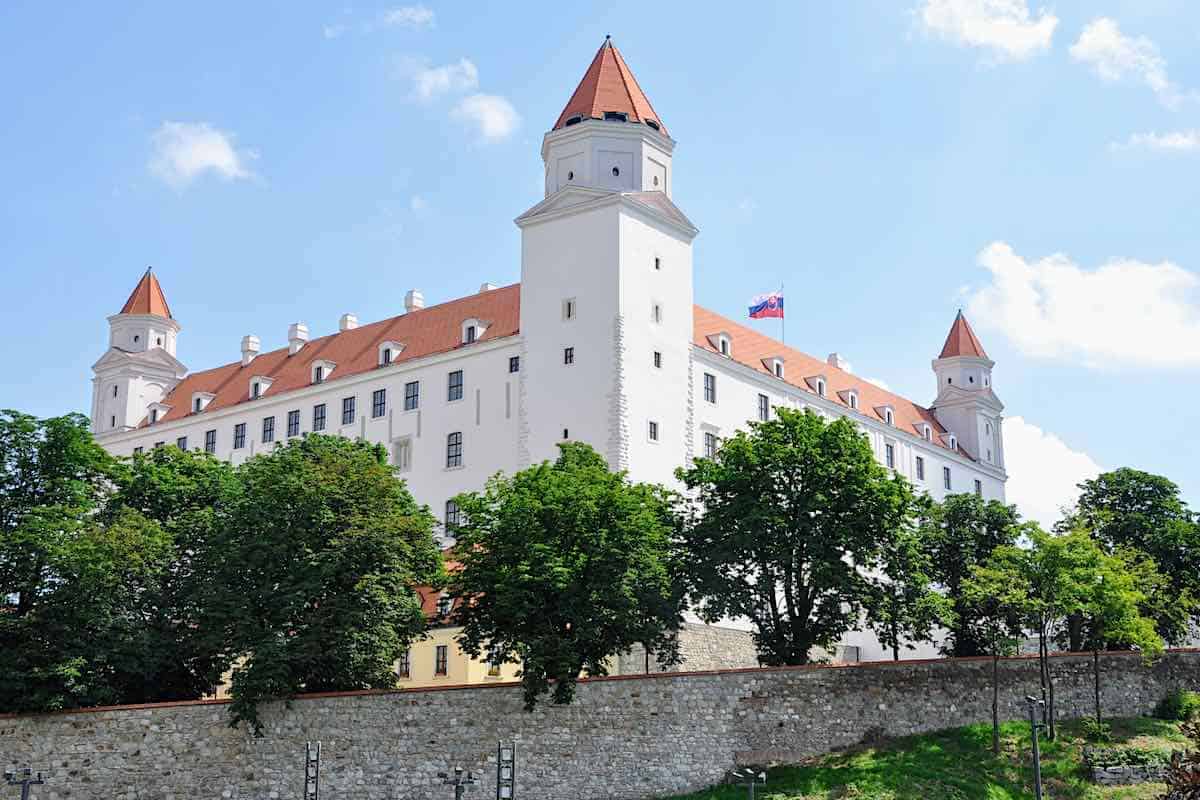
Day 3: Bratislava, Slovakia and Funny Little Men
I woke up to see that we were underway, gently cruising along the Danube towards our next port, Bratislava, Slovakia.
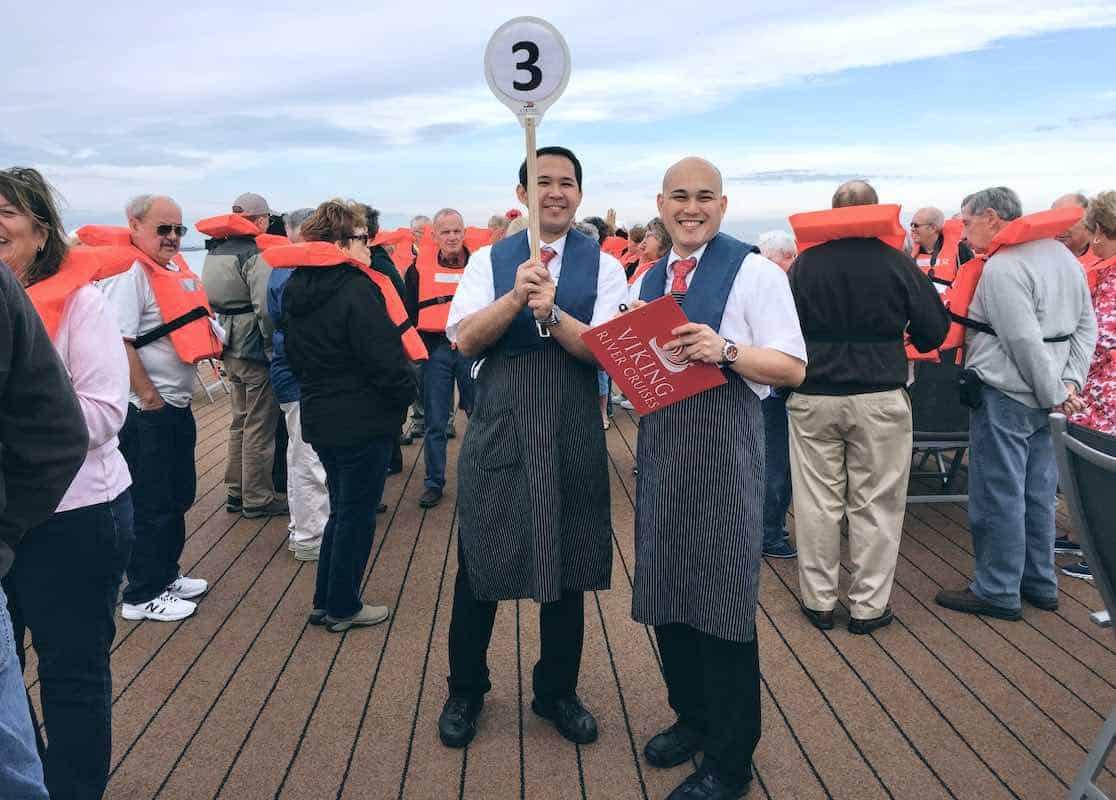
Following breakfast and before we’d arrive, a mandatory safety drill was held. Warm autumn weather quickly drew everyone to the top deck and the drill took all of 15-20 minutes.
Afterwards, many of us stayed and either walked laps or settled into a lounge chair. With a mid-afternoon arrival into Bratislava, the day would be relaxing and informative.
Program Director Lee led an enrichment talk about Vienna coffeehouses (where to go and what to eat) and a background about Austrian-born composer Wolfgang Mozart.
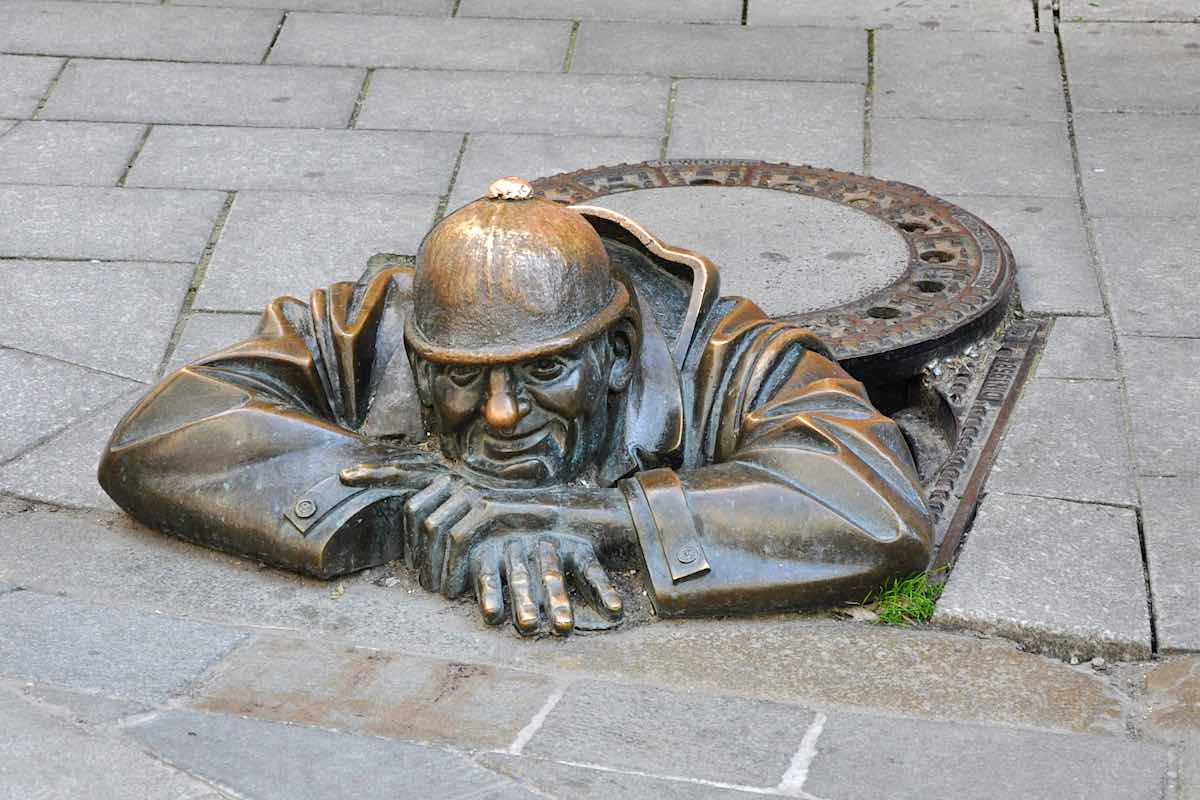
Locals have a great sense of humor as can be sensed when you try to find all the bronze statues. When I was in Bratislava, I counted eight almost human-size funny little men bronze statues. How many will you find?
Day 4: Vienna, Austria
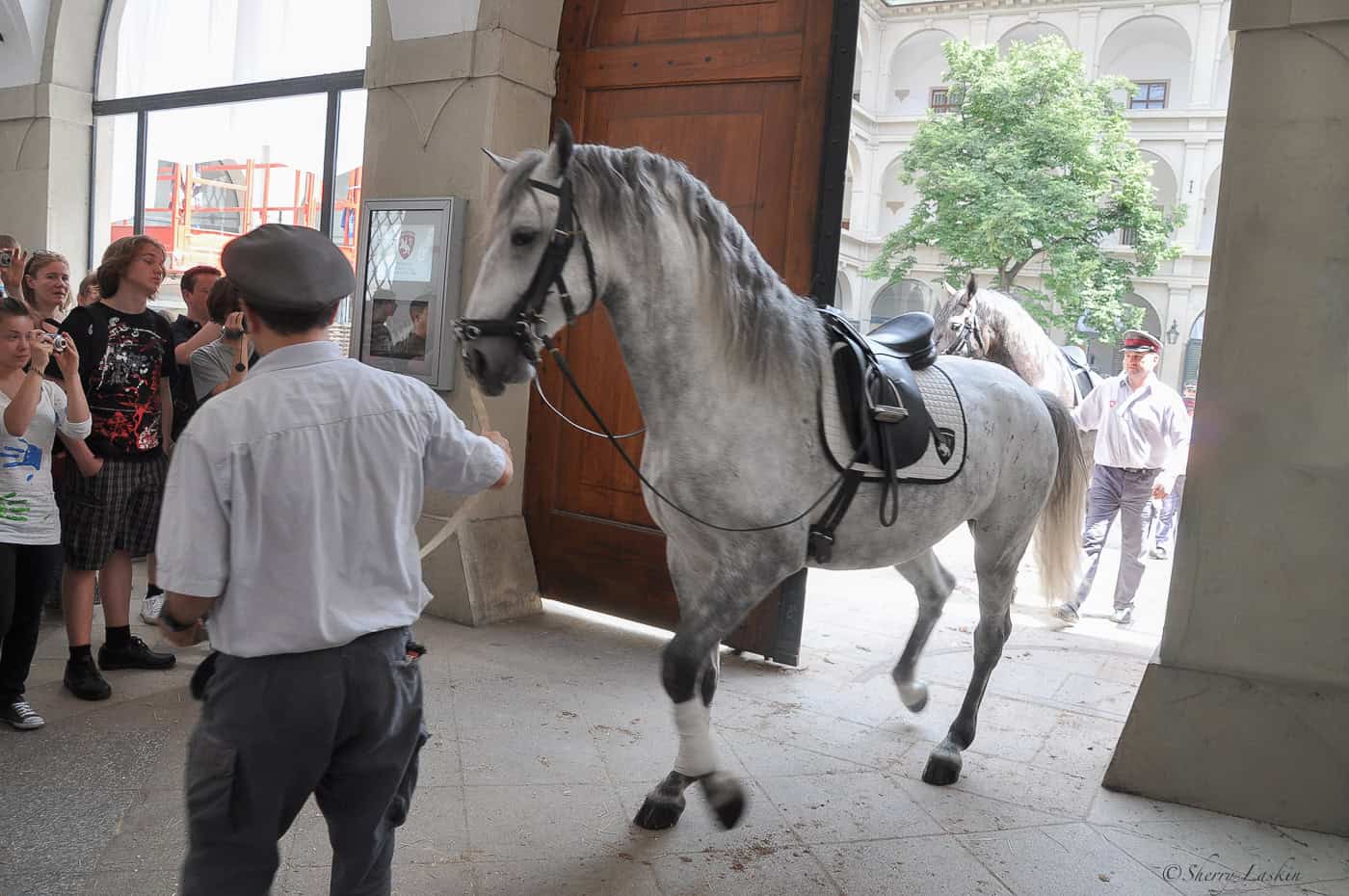
This wasn’t my first visit to this medieval city. From the beautifully baroque Schönbrunn Palace to a peek at the Spanish Lipizzaner Horses, Vienna has something surprising or magnificent around every corner.
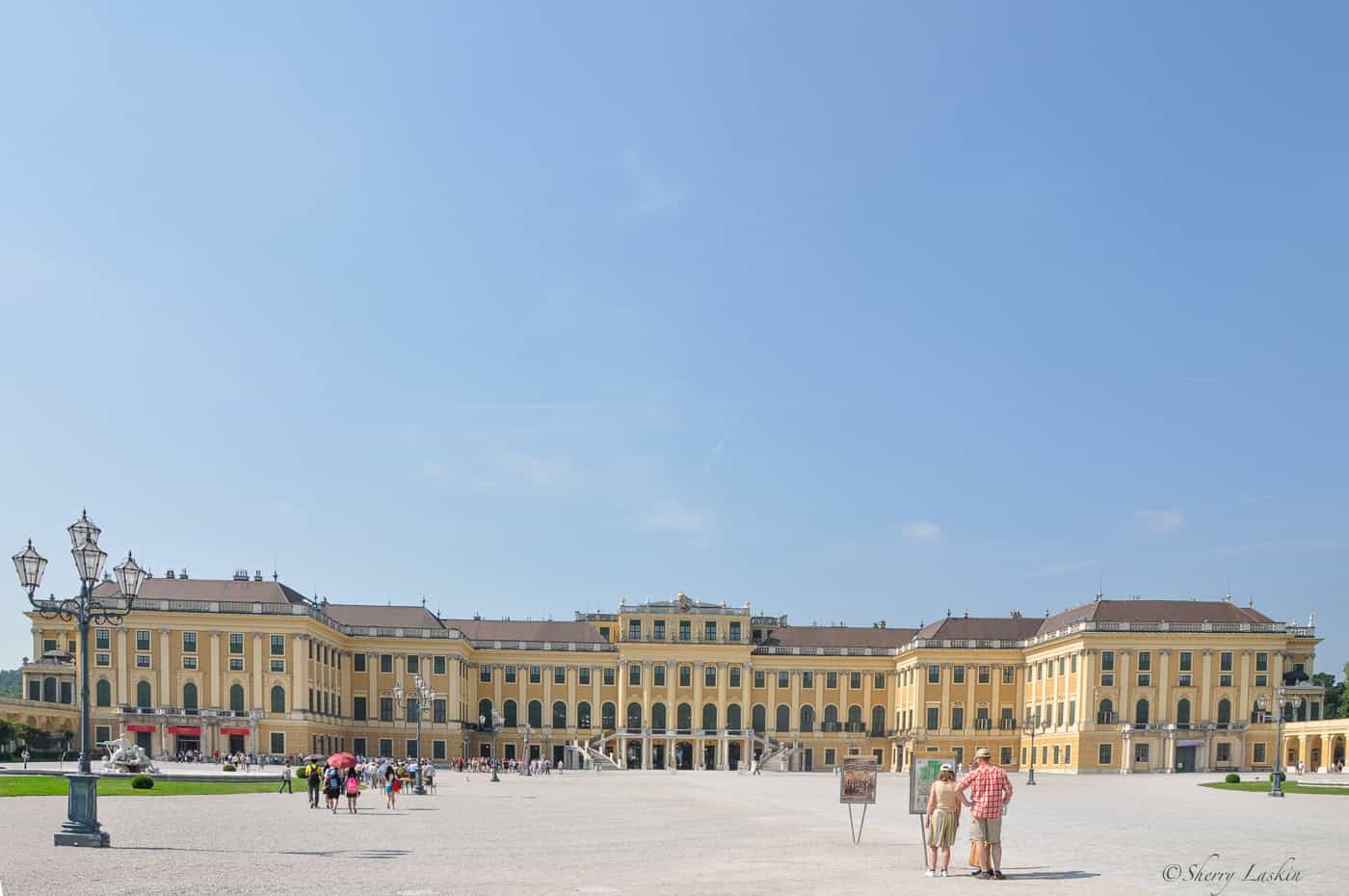
I decided to pass on the complimentary morning motor coach tour of the city and get some writing done. One thing to note about Vienna, river cruise ship dockage is usually too far to walk to the city center. It is walkable but most people opt for a bus into the city and some will then walk back to the river ship.
Too good to pass up, I signed up for the Chef’s Tour to the Farmer’s Market (Naschtmarkt). A bit of walking, two subway trains and we were smack in the middle of a working-class neighborhood and a several-blocks-long farmer’s Market.
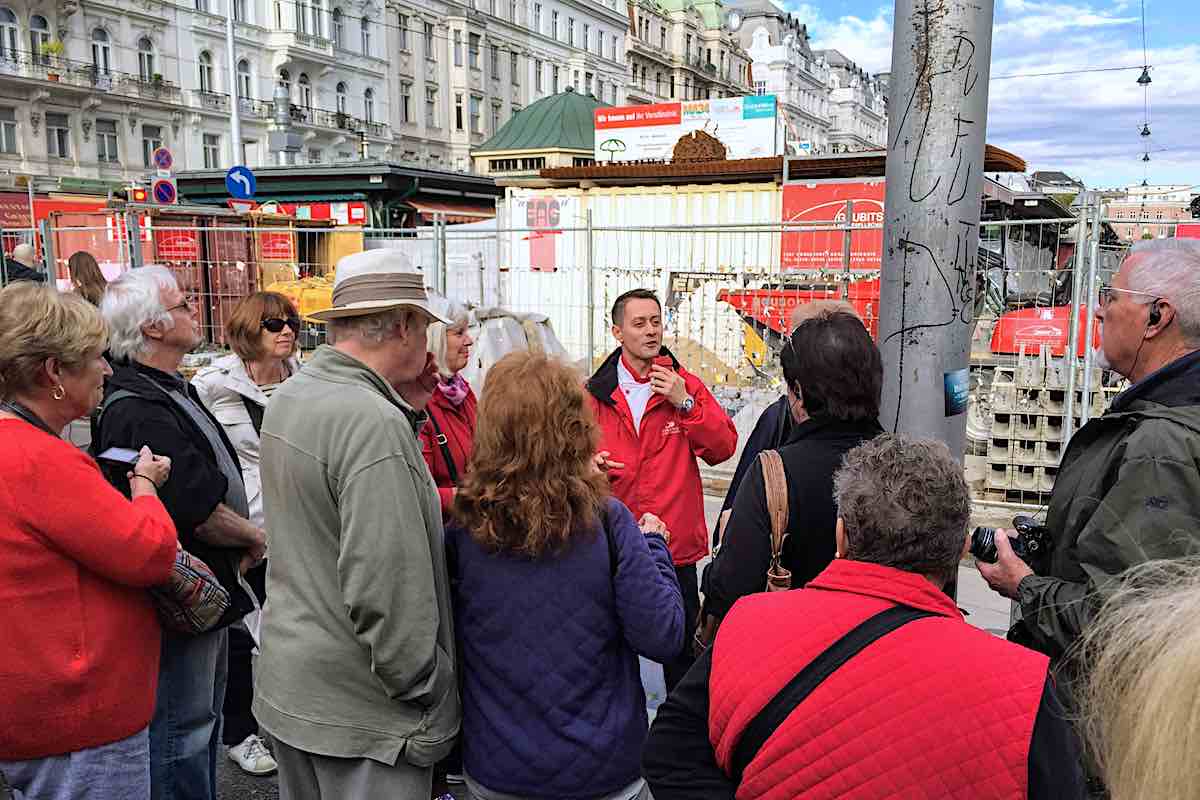
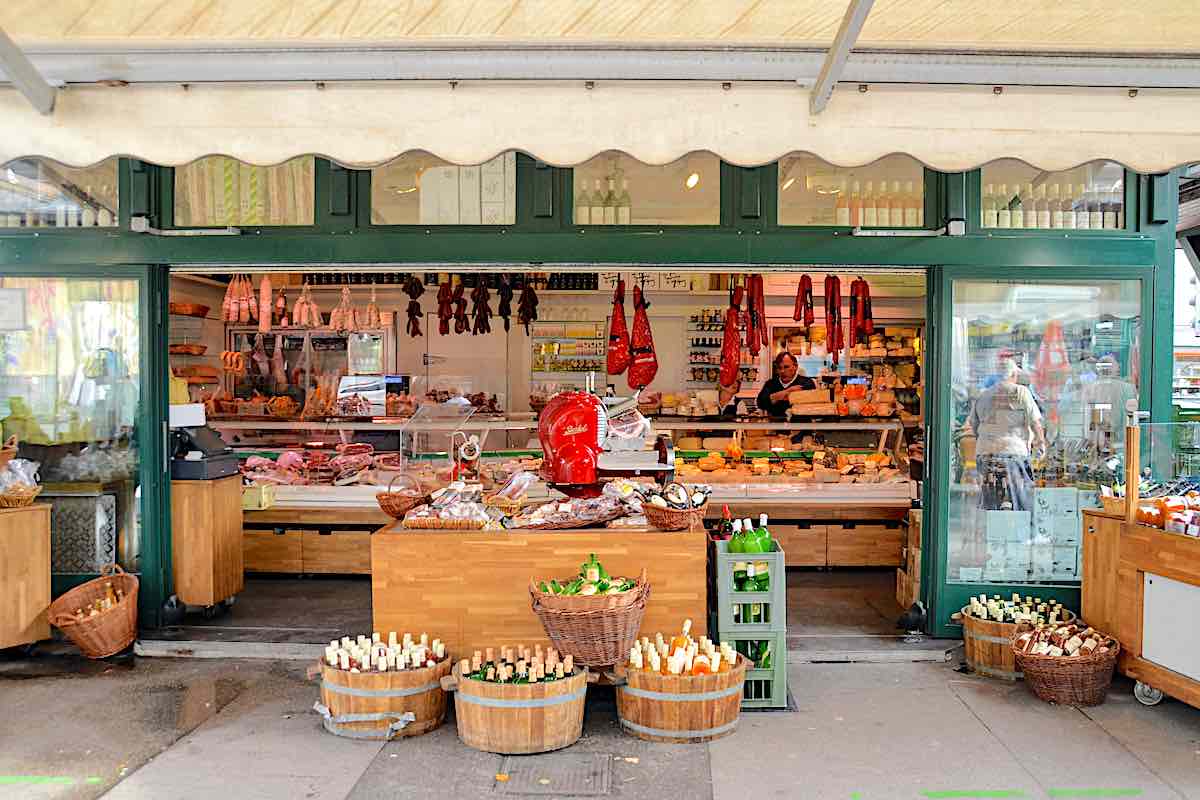
After a couple of hours, we were back on the subway, walked two blocks through Mexikoplatz and past St. Francis of Assisi Church and we were back on Viking Lif…in time for cocktails, of course. But not much time to spare.
Not-to-Miss Evening in Vienna
I had signed up for the optional ($) Viking excursion tour to a concert hall for a Mozart and Strauss concert. Every river cruise line offers this but I had never done it. There would be an early dinner on board and then leave on the motor coaches before 7pm for the concert hall.
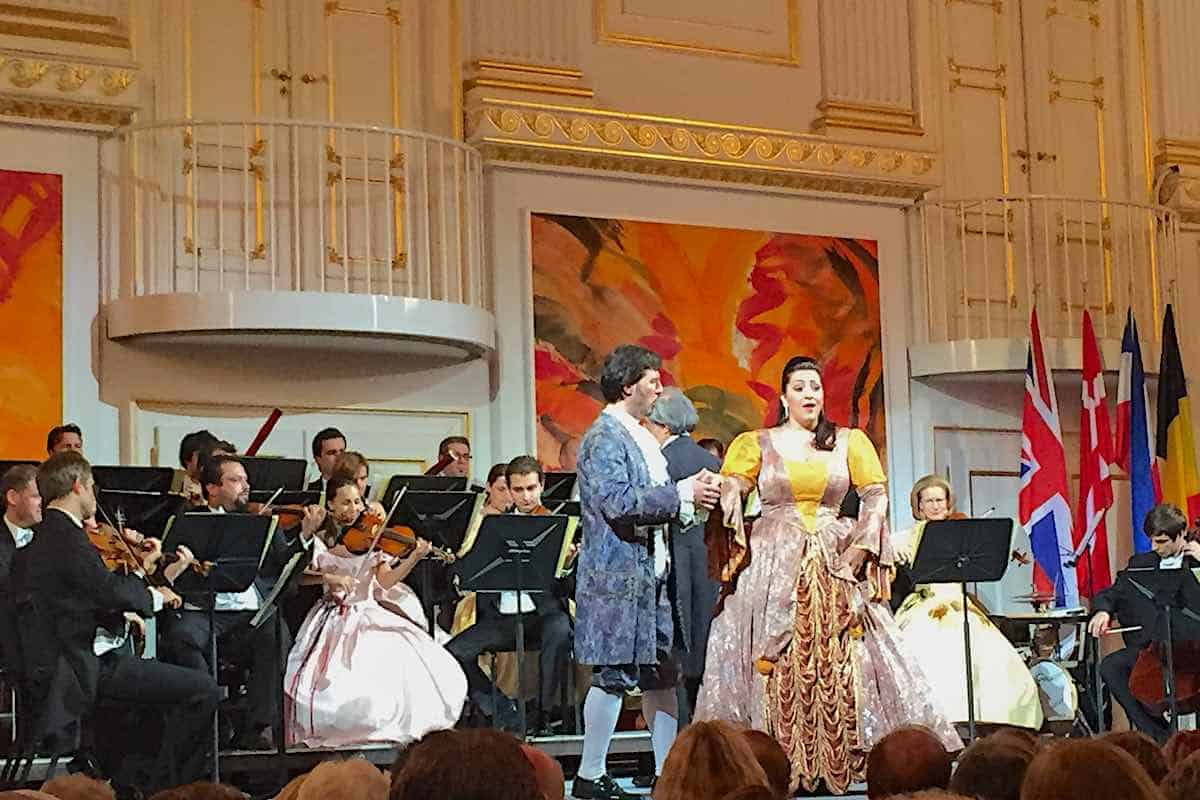
The concert hall was beautifully Baroque. We were all packed in on folding chairs like sardines in a tin though not as smelly. The performances were excellent with most of the music and singing were familiar classical pieces.
If you have a chance to book a shore excursion that includes a concert in Vienna, I highly recommend it.
Afterwards, everyone was really quiet on the motor coach back to the ship. It had been a busy, long day from one end of the city to another.
When we arrived back to the ship, we were greeted with a special Viking Grand European bedtime treat: goulash soup in Aquavit Restaurant. The gorgeous bowl of soup and a fresh-baked crunchy roll accompanied me back to my cabin. Within an hour, I was asleep. One more port in Austria tomorrow.
Day 5: Melk, Austria
Melk is a curiously monastic community with the resplendent gold Melk Abbey high on a hill overlooking the Danube.
Cobblestone street wind through town, leading to the Abbey’s grand entrance. Monks from the Abbey stroll through town and work in the Abbey as they have for more than 900 years.
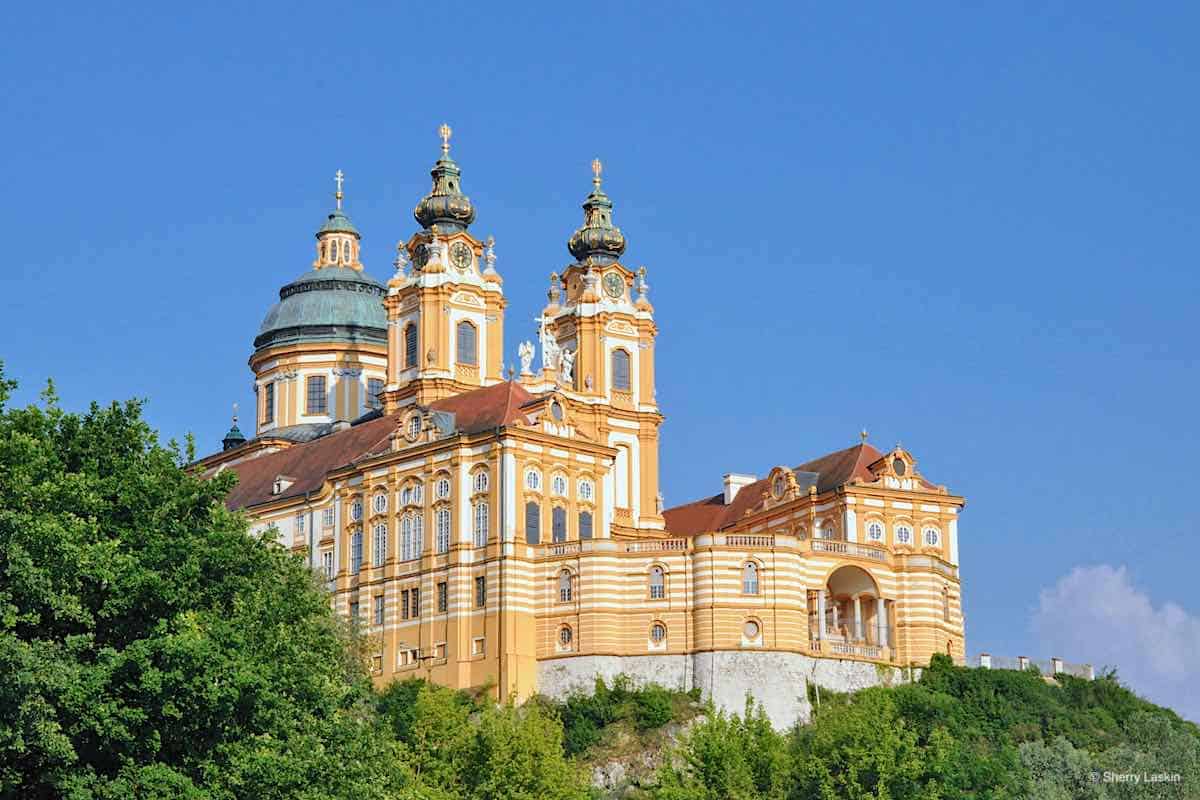
Plan to spend about an hour inside the Abbey. You can walk up to the entrance or take a motor coach to the top of the hill.
The baroque interior is dazzling, the library has over 80,000 medieval manuscripts and several hidden doors. Leave time to step outside for a sweeping view of the city and Danube below.
It’s a pleasant stroll over a little bridge back to the river ship, or take the motor coach again. The town is lovely with cafés and small boutique shops.
With a “Be back on board” at 3:45pm, we were welcomed with an Austrian apple strudel-making demonstration. Then the habitual cocktail hour, daily port briefing and the slow walk into the dining room. Another satisfying multi-course dinner and off to bed.

Every night on the river cruise there’s entertainment in the lounge. So far, we’ve had the onboard musician at the keyboard and dancing, Slovakian folk dancing show and the goulash event. With days so busy, evening entertainment has been kept to a minimum. I think Viking knows that we’d be exhausted.
READ NEXT: Viking Adds New Pre- and Post-River Cruise Options
Day 6: Passau, Engine Issues and a Slight Detour
Surprise! We were informed last night that Viking Lif was having engine trouble and we’d not make it to dock in Passau. Instead, Viking Lif would tie up in Linz. So at 8:15am, (it was a really early wake-up!) passengers boarded Viking’s motor coach for a full-day nine-hour tour.
Sadly, one man had to see a doctor in the nearest town so he and his wife had to stay in Linz. I was working under deadline to file a story, so a 9-hour day in motion put me into panic.
Viking’s Program Director, Lee, made similar arrangements for me so that I could spend the day writing instead of touring. I was so incredibly happy when I found out I would have a hotel room for the day in Linz and would get a full day’s writing done.
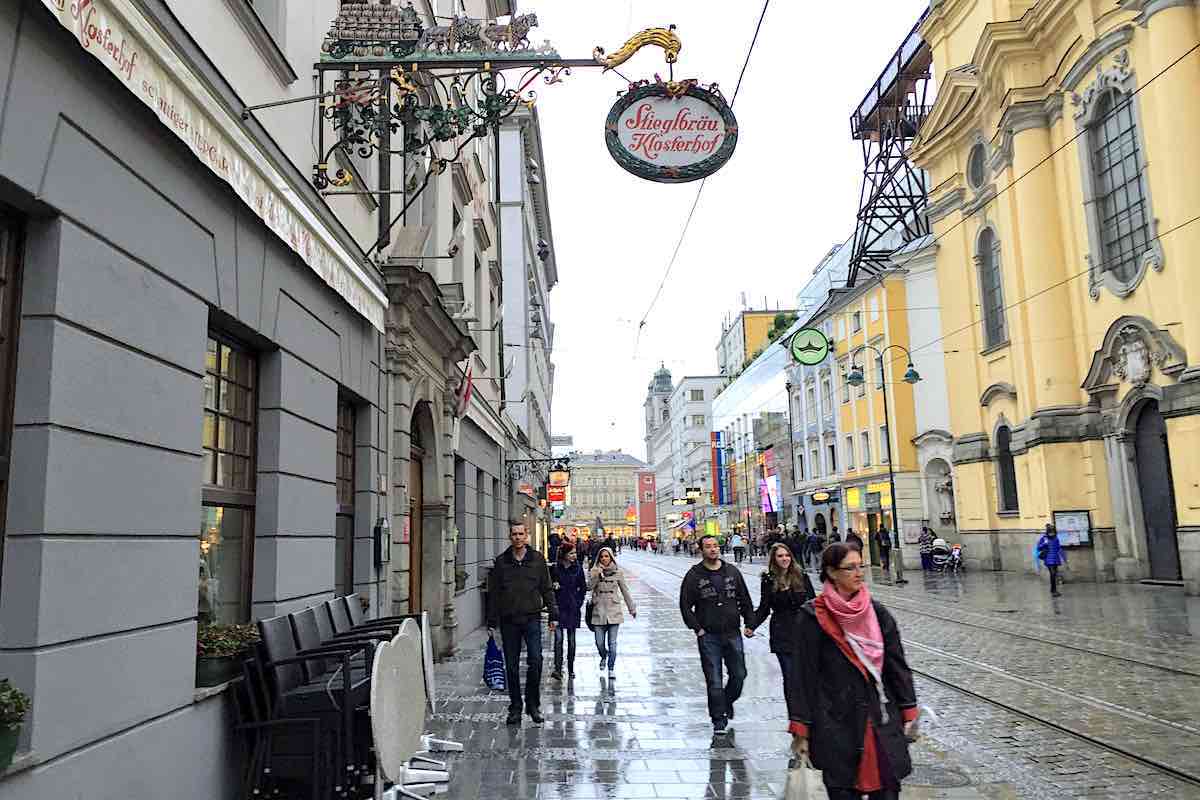
Even the light drizzle didn’t stop anyone from walking in the city center. After my friend’s doctor appointment, the three of us met for lunch and a walk through town.
Linz is one of the most non-touristic larger cities I’ve visited in Europe. It’s very charming. And I’ll bet it’s even lovelier during the holiday/Christmas market season.
At 5:00PM, a white minivan arrived and the three of us were off to meet Viking Lif, fully repaired at the shipyard in Linz. All the other passengers were on their way back from Passau. We arrived in time for cocktail hour, daily briefing and another very nice dinner in the dining room.
Onward to Straubing, Germany! Almost halfway through our Viking Grand European Tour.
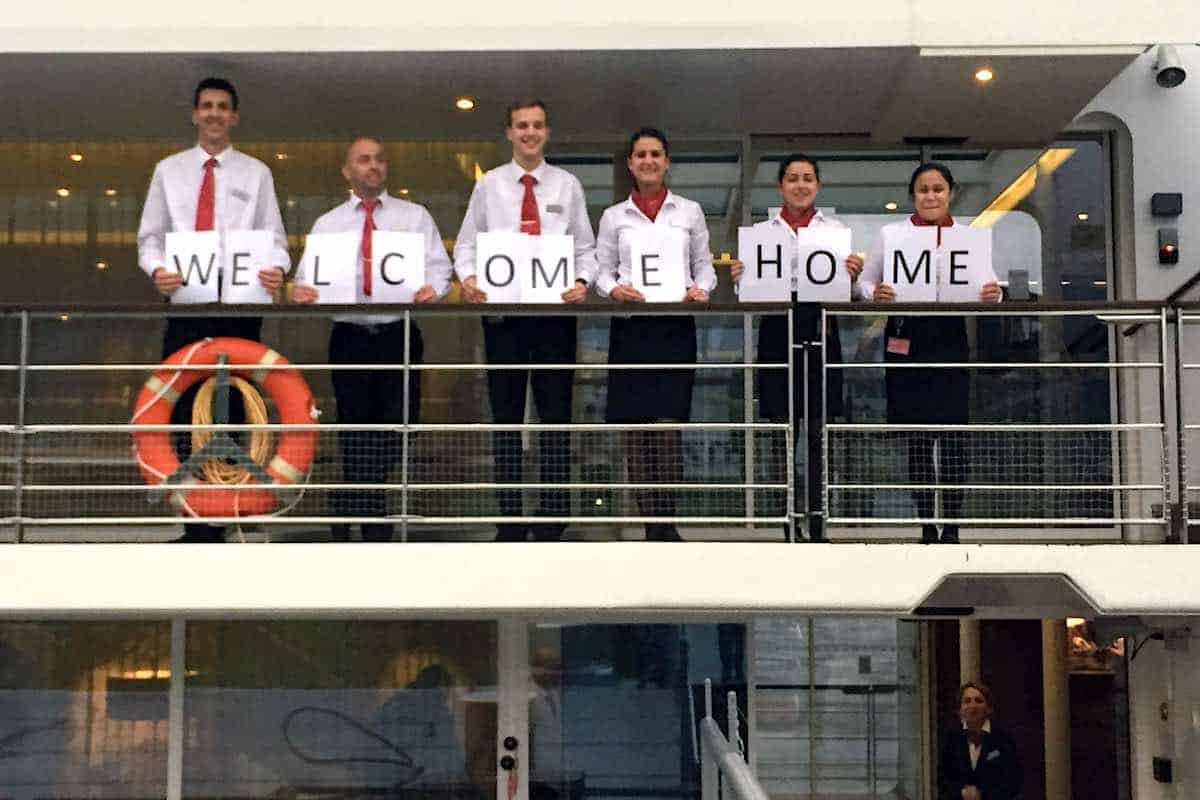
Day 7: Regensburg, Bavaria – Germany
This was one of those years in central Europe when the rain never seems to stop. Germany and France had seen flooding at the end of summer and rivers were swollen and overflowing their banks.
As we made our way up the Danube, I started to watch the water’s edge. I knew from past river cruises, if I saw tree trunks submerged and debris quickly flowing past us, it meant trouble.
With high water, river ships cannot fit under the dozens of ancient bridges. Locks get stuck. But Viking Lif made its way to Straubing and by 2:00pm, we boarded the motor coach for the short ride to beautiful medieval Regensburg.
I was so glad Regensburg was included on this Viking Grand European Tour. It’s among my favorite places in Europe. This is the oldest city on the Danube and dates back to the year 179.
While the Dom St. Peter Gothic Cathedral is one of the grandest in all Bavaria and worth a visit, I always head to the Alte Würstküche, meaning, “Old Sausage Kitchen”, it’s the oldest restaurant in Germany.
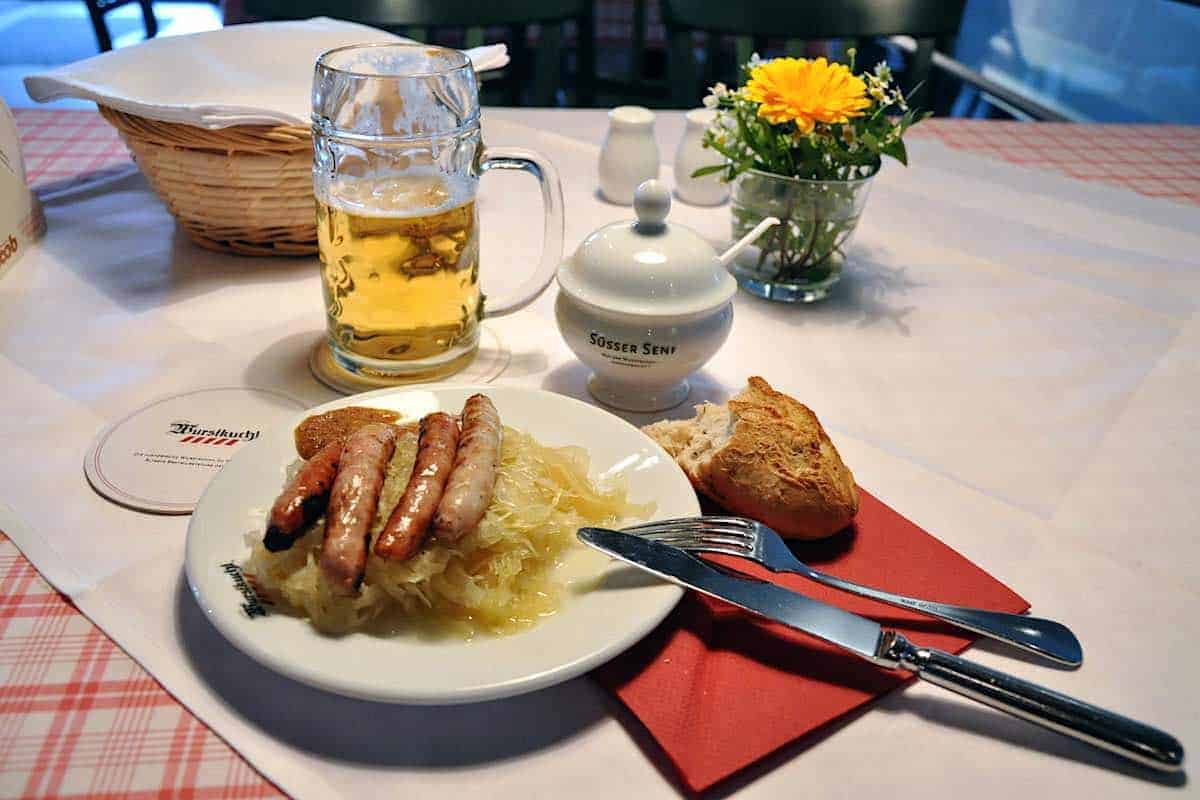
The restaurant is usually packed with tourists throughout the summer but this rainy October day, I had no problem getting my own indoor table. Once you’ve finished your beer and extras, take a walk across the Old Stone Bridge.
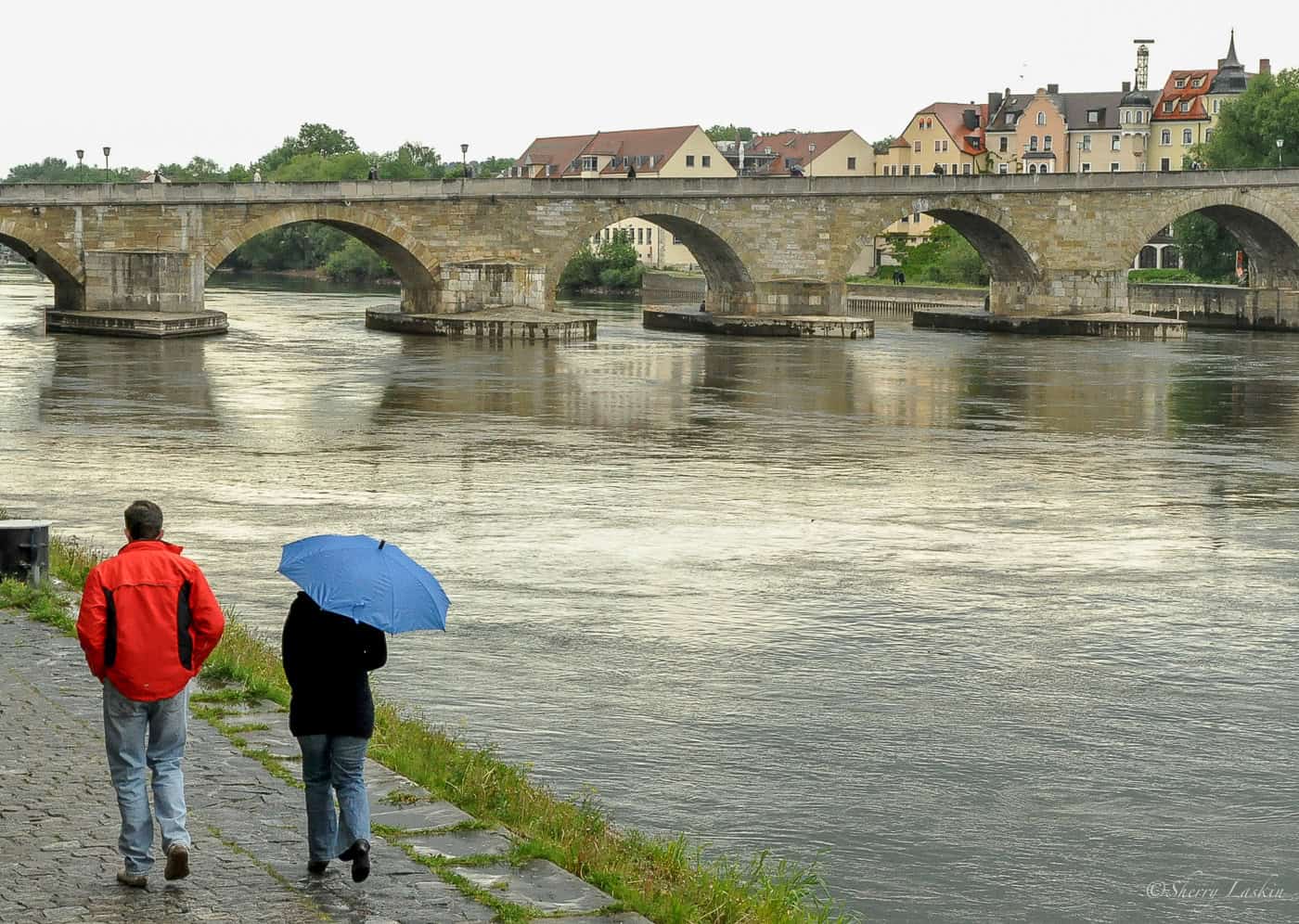
Built between 1135 and 1146, it was the bridge used by the knights on the second and third Crusades to the Holy Land.
Danube Begins to Look a Little Ominous
When the skies cleared, I went for a walk and what I saw from the Regensburg Old Bridge didn’t look too good. I’d been on enough floods on the rivers in Europe to recognize the inevitable.
The Danube was rushing past us downstream heading towards the Black Sea, its terminus. Trees were submerged. The water was creeping up to the lower levels of the medieval buildings.
While we were in Regensburg, Viking Lif sailed from Straubing to Regensburg to meet us. This was a chance for passengers who simply yearned for a quiet day onboard to just cruise.
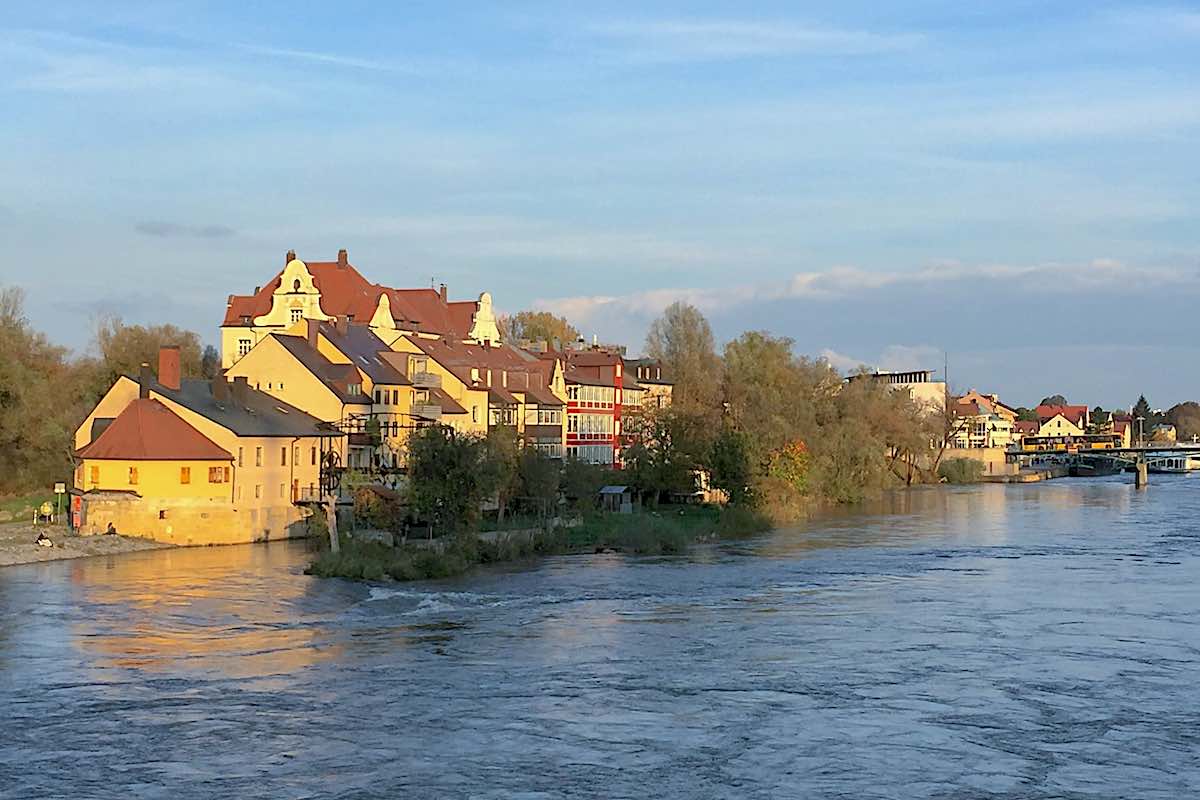
I wondered why our captain had pulled the Viking Lif as close to the shoreline as possible and we were at a standstill. Then it appeared.
The Current Was Impressive
One of those hulking, massive barges laden with cargo, zoomed past us. Good thing we were off to the side. The barge took up the entire middle of the river.
It’s one thing to judge speed when two moving ships pass each other. But when your ship is stopped and the oncoming vessel seems to fly past, you know a raging current is the culprit.
The sundeck on the Viking Lif had been closed for at least a day. Guardrails around the sundeck’s edge were disassembled and laid flat. The captain’s wheelhouse was hydraulically lowered. All done to fit under the old bridges. They knew what was ahead.
And Just Like That…Everything Changed
Back onboard with time to freshen up before the daily briefing. But tonight, the meeting took a sudden twist. The Program Director proceeded with an (un)expected announcement.
To paraphrase, Lee said, “Pack your bags, we’re changing river ships in the morning”. It was a very busy evening for everyone. We needed to quickly pack that night and disembark with our carry-on luggage the next morning at 8:30 AM.
In the morning, Viking Lif could travel as far as Deggendorf, about 80 miles upriver from Regensburg. From there, we’d board a bus to Nuremburg and meet sister ship, Viking Skadi. Our Viking Grand European Tour was about to take a twist.
Day 8: Changing Ships and a Strange Detour
With our luggage taken off the ship and loaded onto buses, we only had to bring along our carry-on bags.
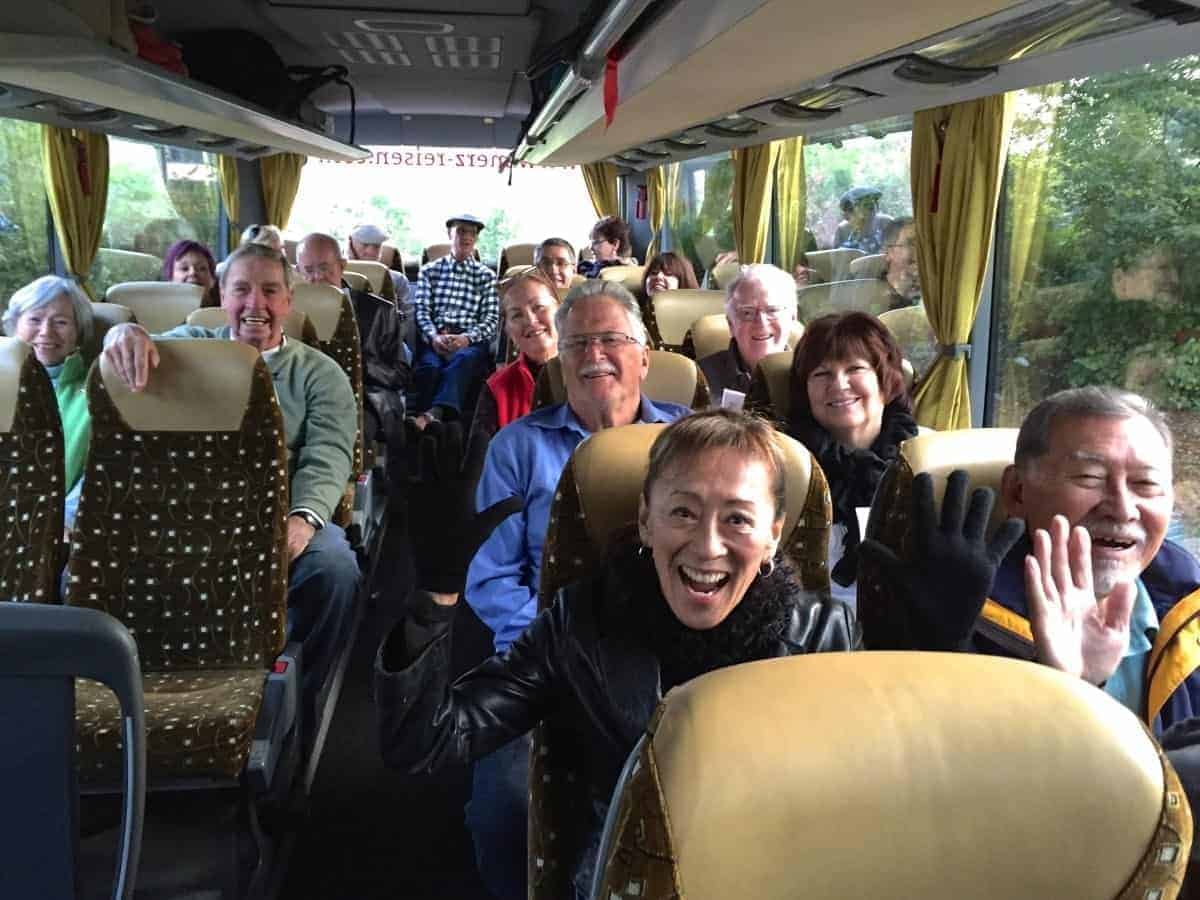
I had been through this river ship shuffle three times in the last few years so I knew what to expect. River cruisers seem to roll with the punches.
There’s nothing you can do when there’s a flood or a drought except board a bus and change ships.
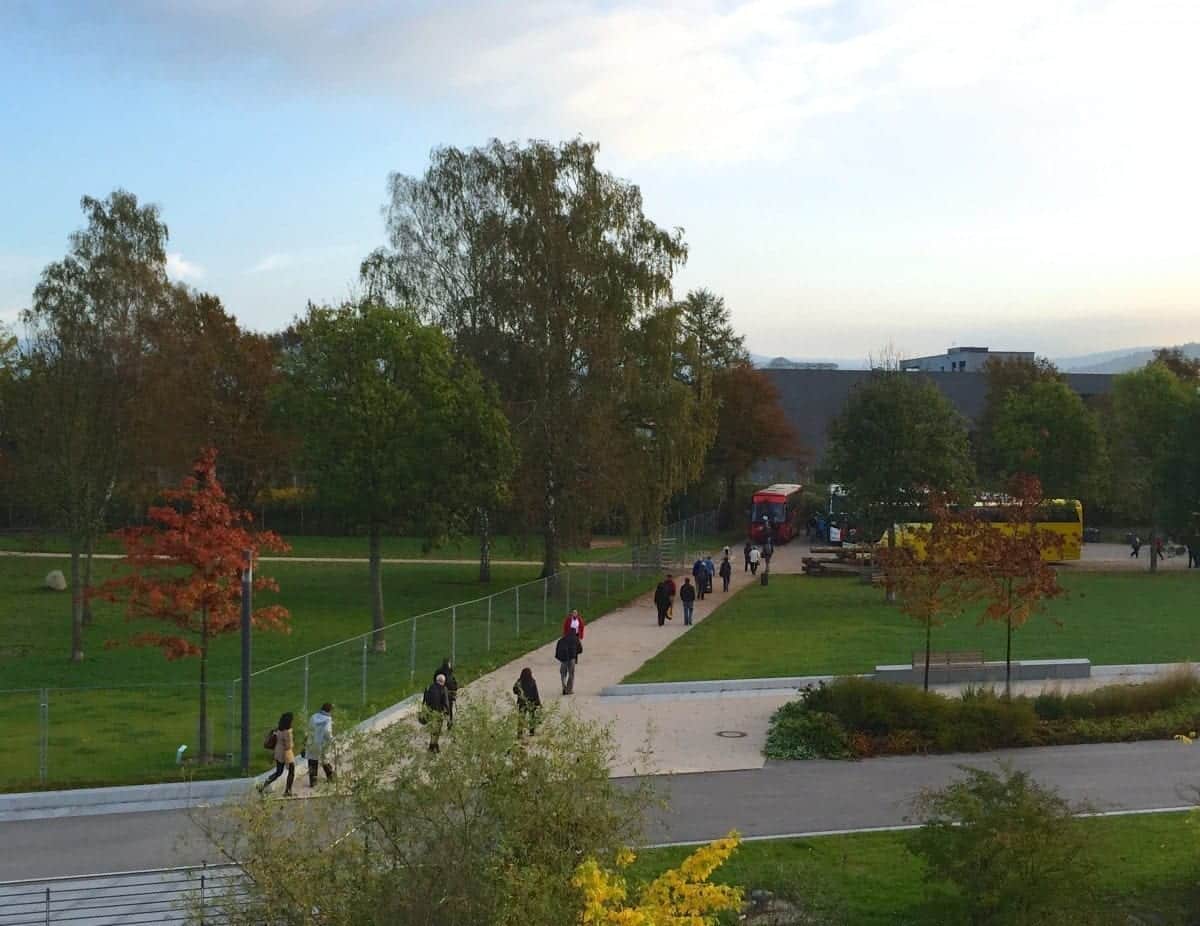
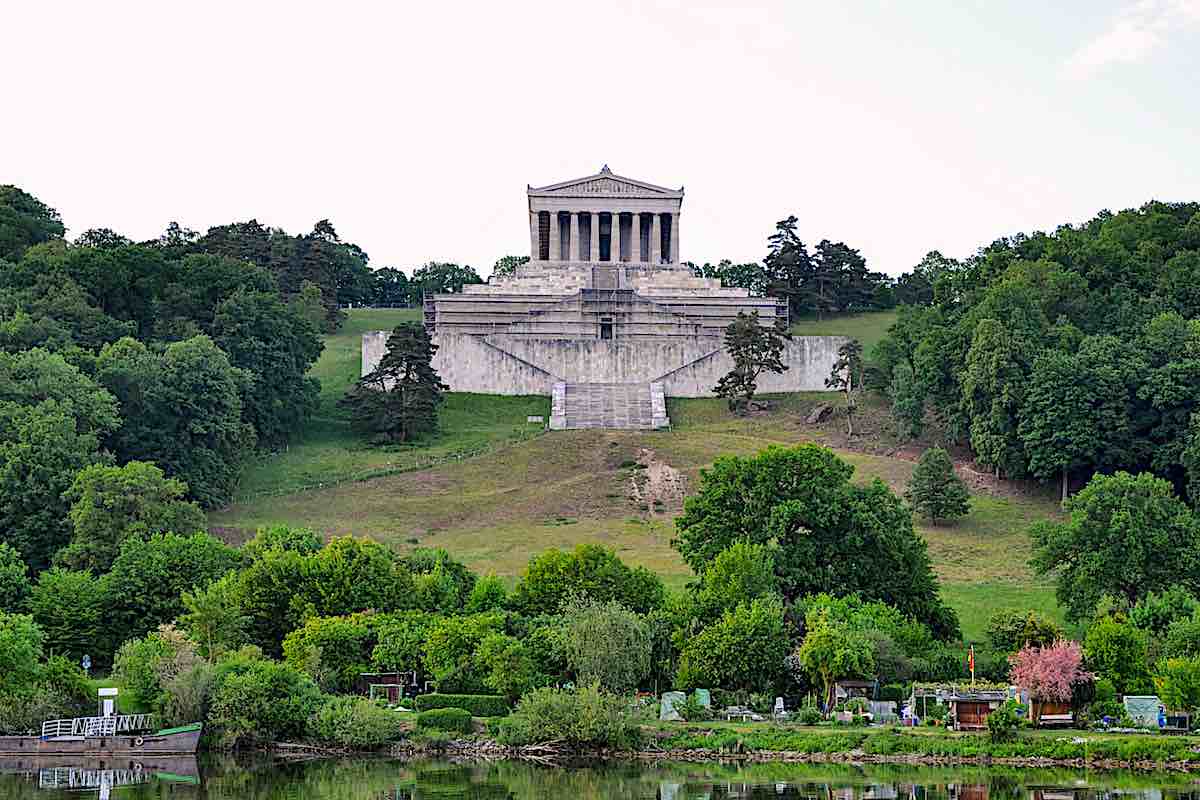
Viking had a really good plan on the way to Nuremberg. Driving through Bavaria en route to Nuremberg, we stopped at Walhalla, Germany’s monument to its native Germanic language politicians, scientists, artists and other distinguished people over the centuries.
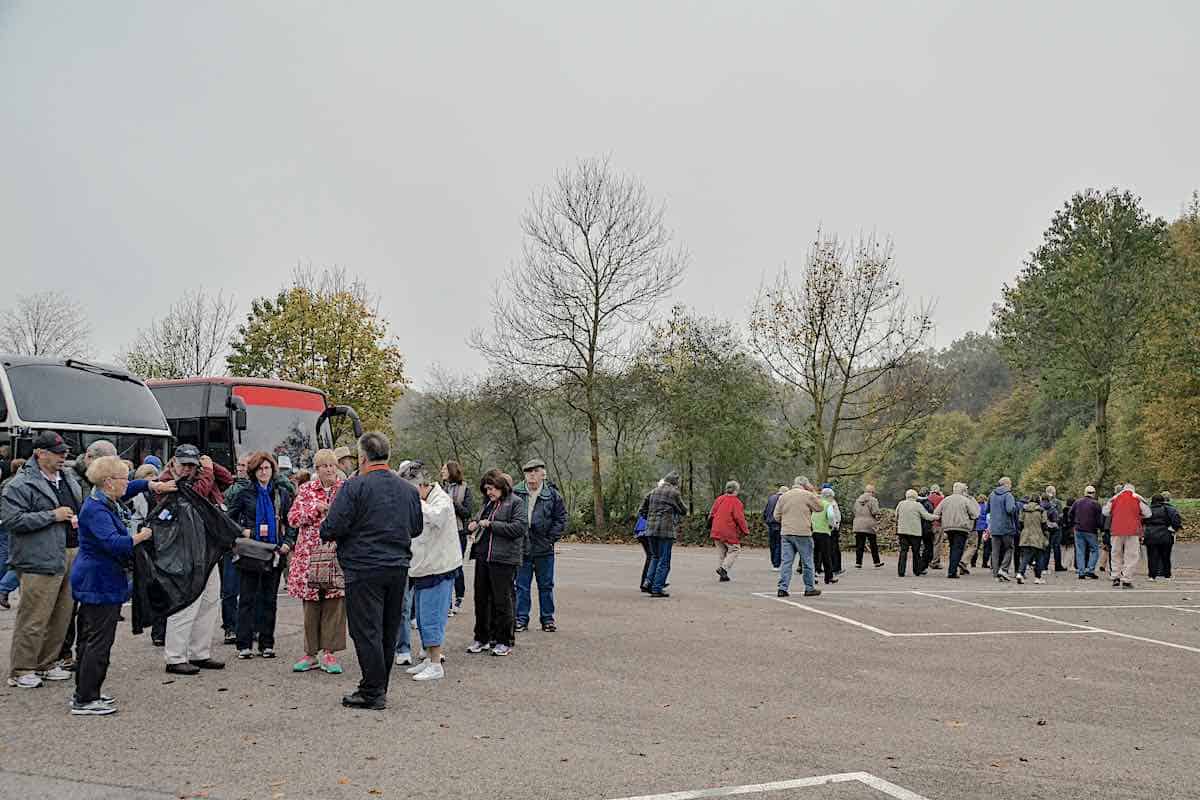
Perched on a hilltop overlooking the Danube river, Walhalla looms on the horizon bearing a striking resemblance to the Parthenon in Greece.
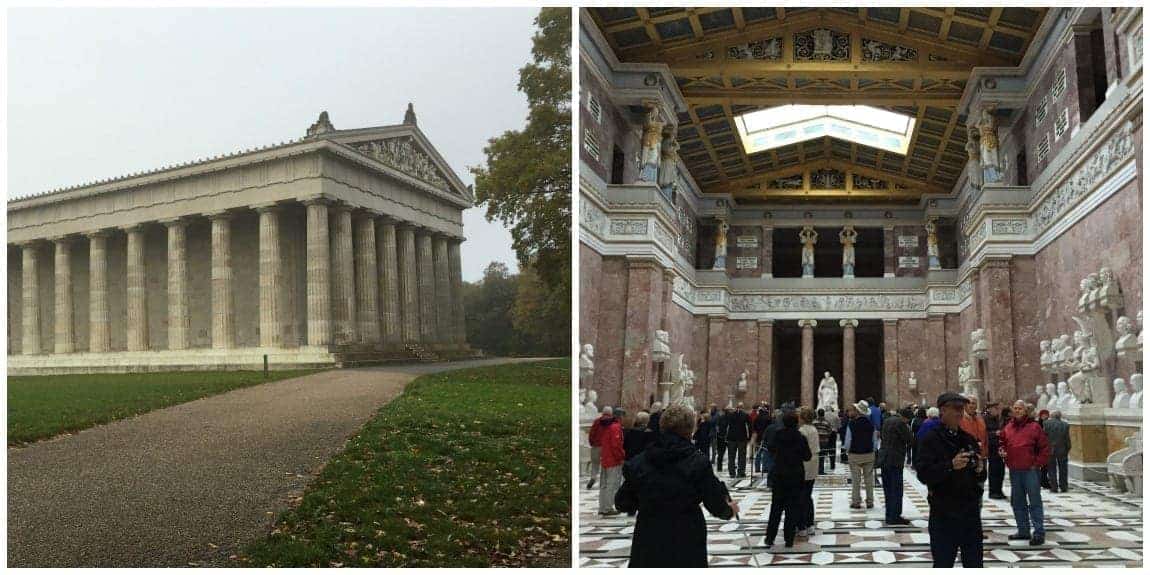
By 11 AM we were back on the bus leaving Walhalla, heading to our next ship. Buses would take us three hours upriver to Nuremberg.
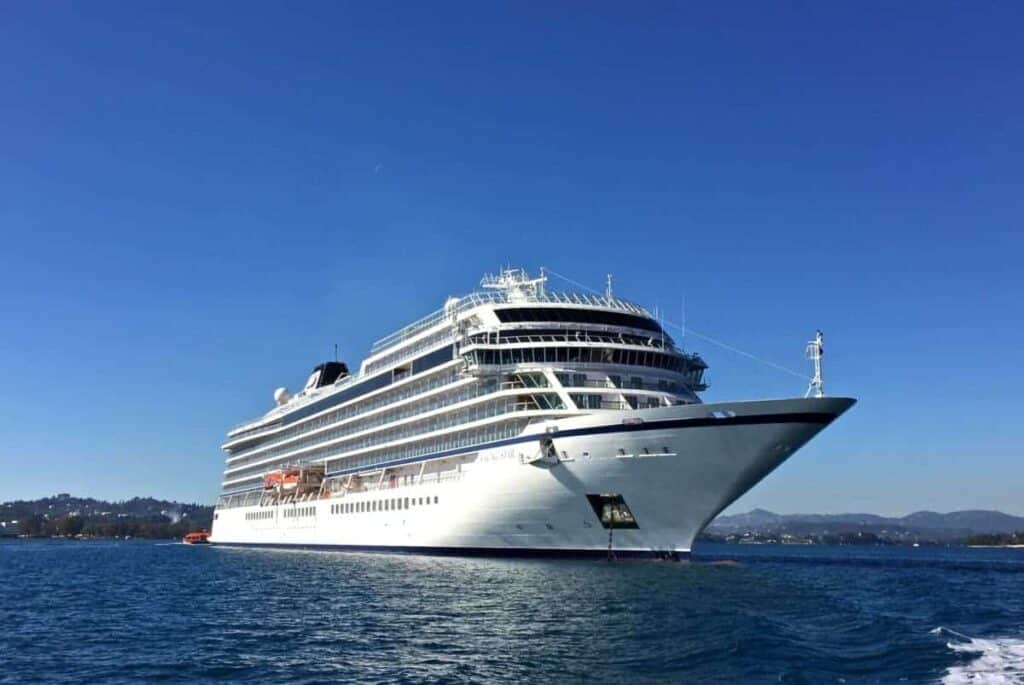
There, we’d board the Viking Skadi, a slightly older ship than Lif, but identical in design. Our crew came with us.
Curious How River Cruise Ships Deal With Floods?
Here’s how a ship shuffle works, using these two river ships for example. Our original river ship, Viking Lif, couldn’t go any further upriver – the water was too high to let it go under the next bridge after Duggendorf.
Viking Skadi, on its way south from Amsterdam, couldn’t get past Nuremberg for the same reason.
Thus, each ship (all Viking’s Longships are identical) swaps passengers and buses everyone to the other ship. Then both ships do a U-turn and continue on the route of the original river ship.
Everyone would end up at their scheduled port. Viking had this ship exchange experience down to a science.
Nuremberg and the Half-Way Point – Week Two
We had reached the half-way point of our Grand European Tour, continued aboard Viking Skadi.
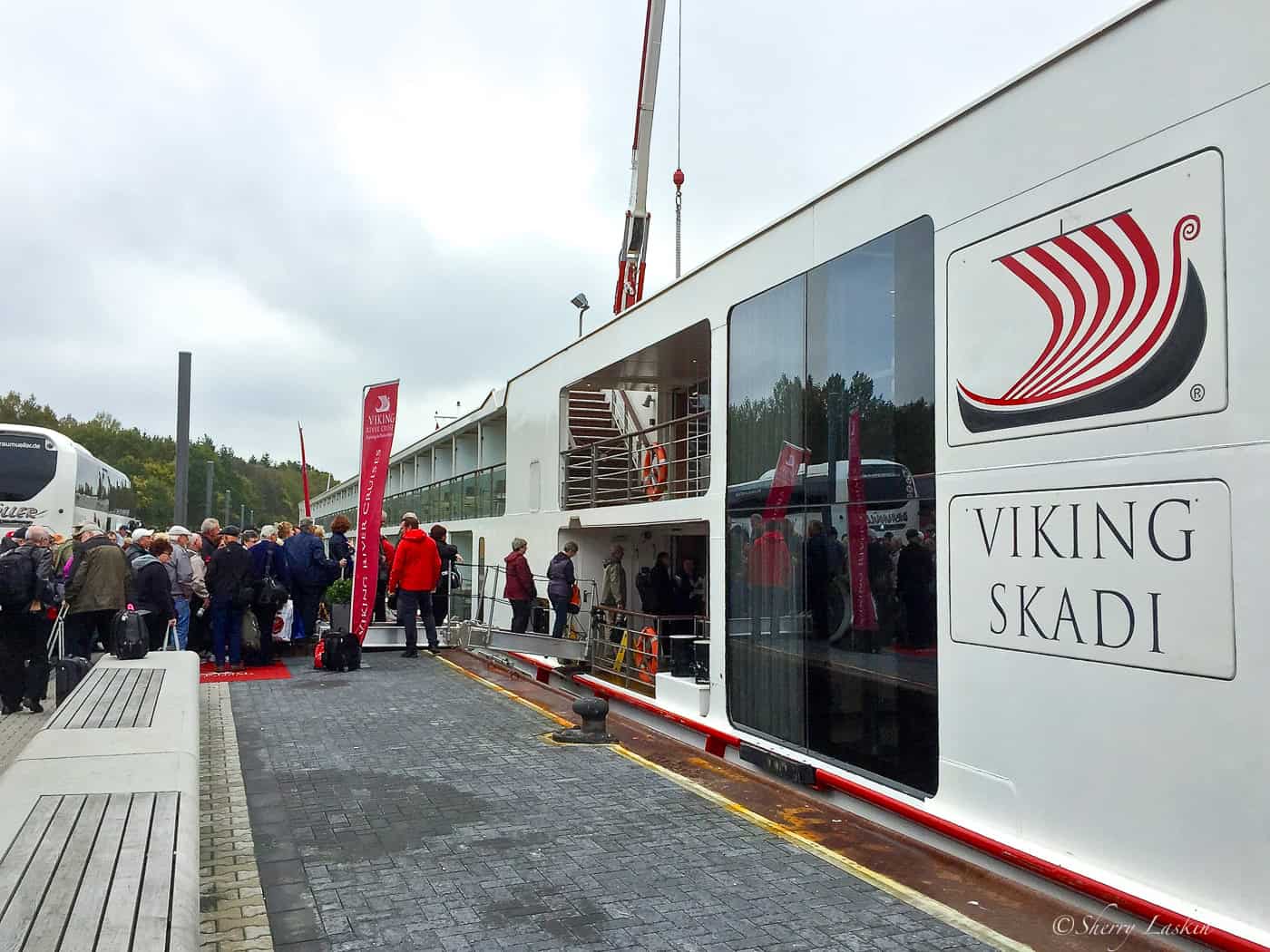
Ahead were seven more days of cruising, castles, culture and cuisine.
READ MORE ABOUT: What exactly happened on this ship-shuffle day
Day 8: Aboard Viking Skadi and Nuremberg, a City of Contrasts
Nuremberg, once the unofficial capital of the Holy Roman Empire, is a walled city with much of the medieval fortification still standing. With Nuremberg being so spread out, Viking’s included bus tour was my choice to see as much as possible.
There was time to visit Nuremberg Castle, Hitler’s Rallying Grounds and other reminders of the city’s dark Nazi past. Plus, there was time for a short walkabout in the old town, Altstadt, to buy souvenirs and sample an authentic Nürnberg sausage.
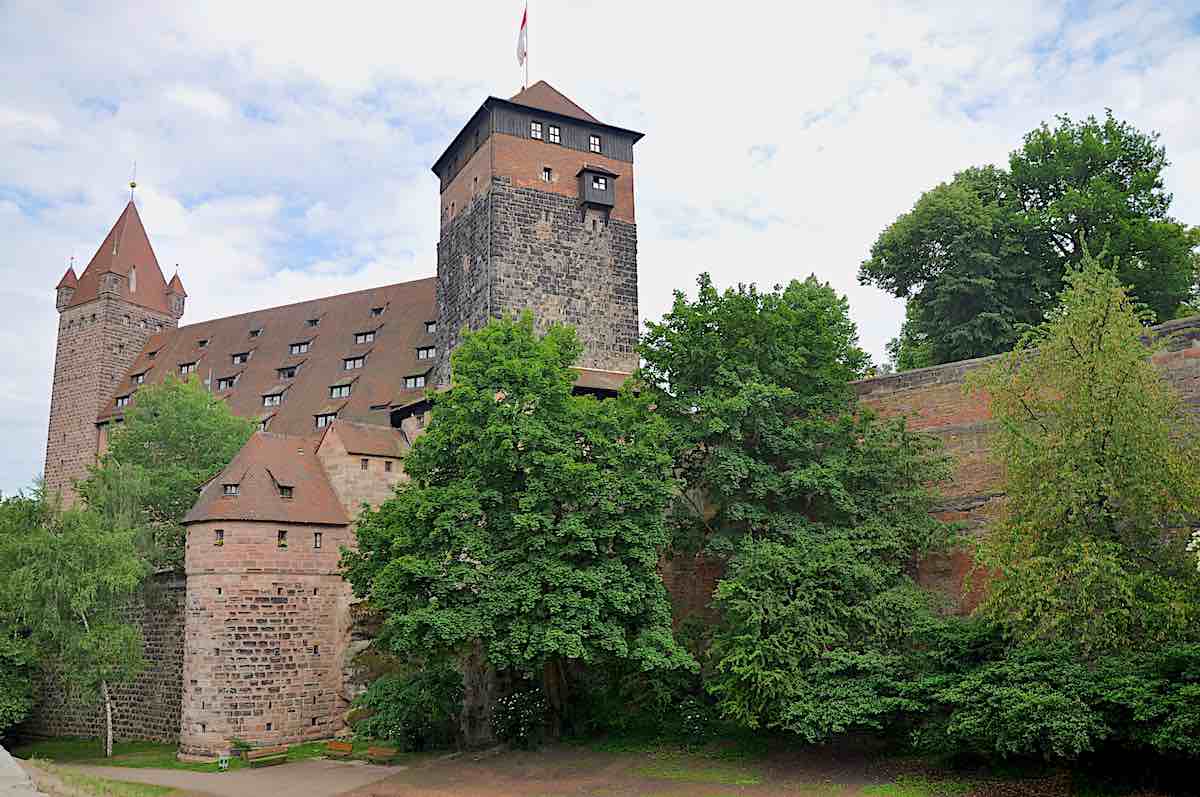
Amazingly, near two and one-half miles of the original old walls that surround the castle are still intact. Depending on your day in Nuremberg, you may have time to take a castle tour, or at least walk across the moat.
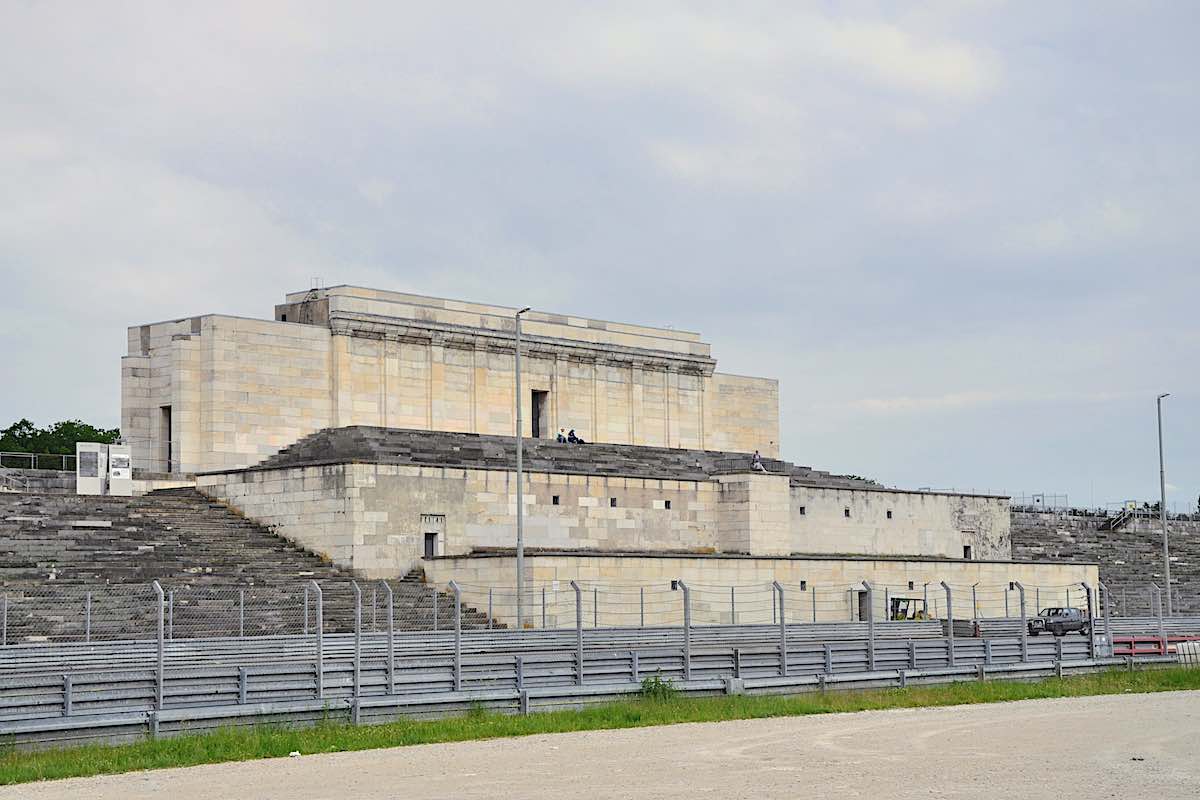
While I enjoyed the Old Town and could have stayed another half-hour or so, I couldn’t wait to get back on the tour bus and away from the Stadium. Conversely, I looked forward to returning someday to Nuremberg for the Christmas markets, one of the largest in Europe.
Back on Viking Skadi for our first night onboard since swapping ships. The routine was the same…pre-dinner briefing, dinner and then entertainment in the lounge. It had been a very busy and hectic day from very early morning leaving Viking Lif, to a visit to Walhalla and back on the bus to Nuremberg and board a new river ship.
Day 9: Bamberg – One of My Favorite Towns on the Main-Danube Canal
Today were two port visits; Bamberg in the morning and Hassfurt in the afternoon but there were two options. Guests could leave Viking Skadi in Bamberg at 1:30 PM for the afternoon or stay aboard and cruise to Hassfurt. Since I’d already been to Hassfurt, and the river ship was only there for an hour, Bamberg was my choice.
After lunch, those going to Bamberg boarded the bus for the short ride into town. Once there, you could join the walking tour or strike out on your own.
What’s so special about Bamberg? For one thing, it was once the seat of the Holy Roman Empire and like Italy, built on seven hills, each with a church on top. In 1993, the entire city became a UNESCO World Heritage Site.
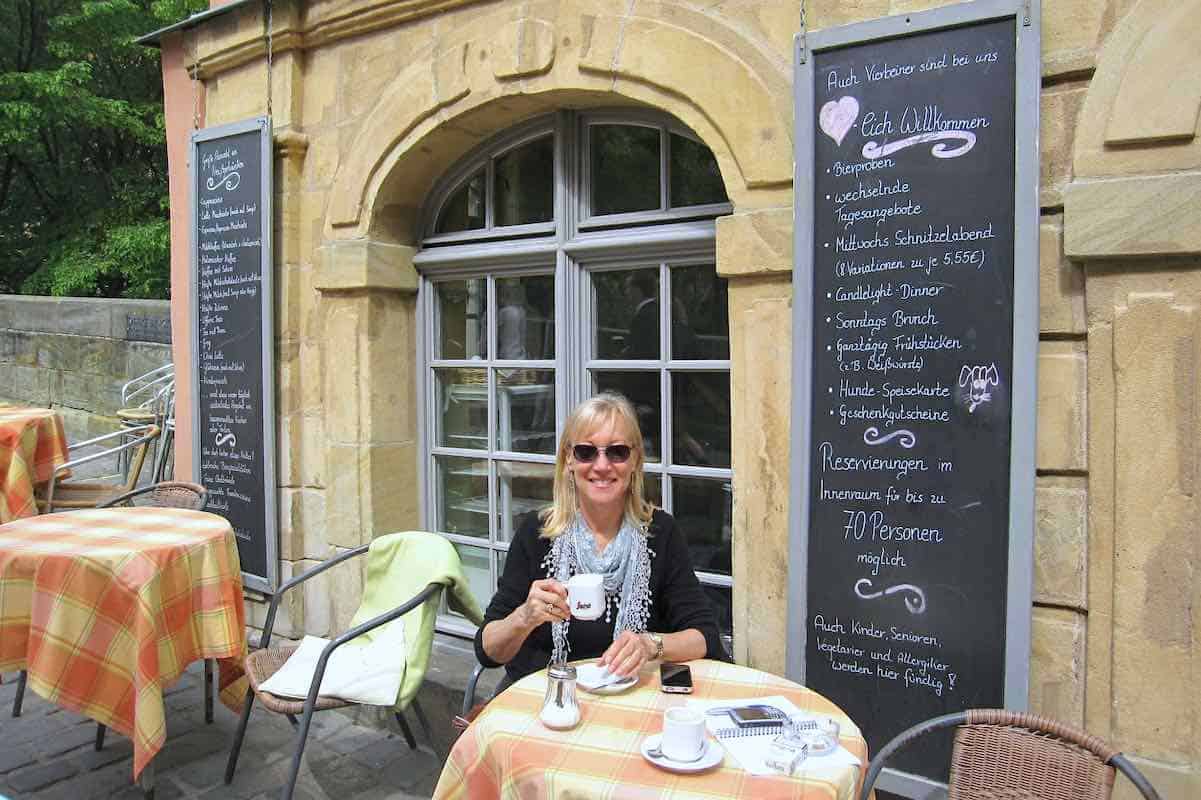
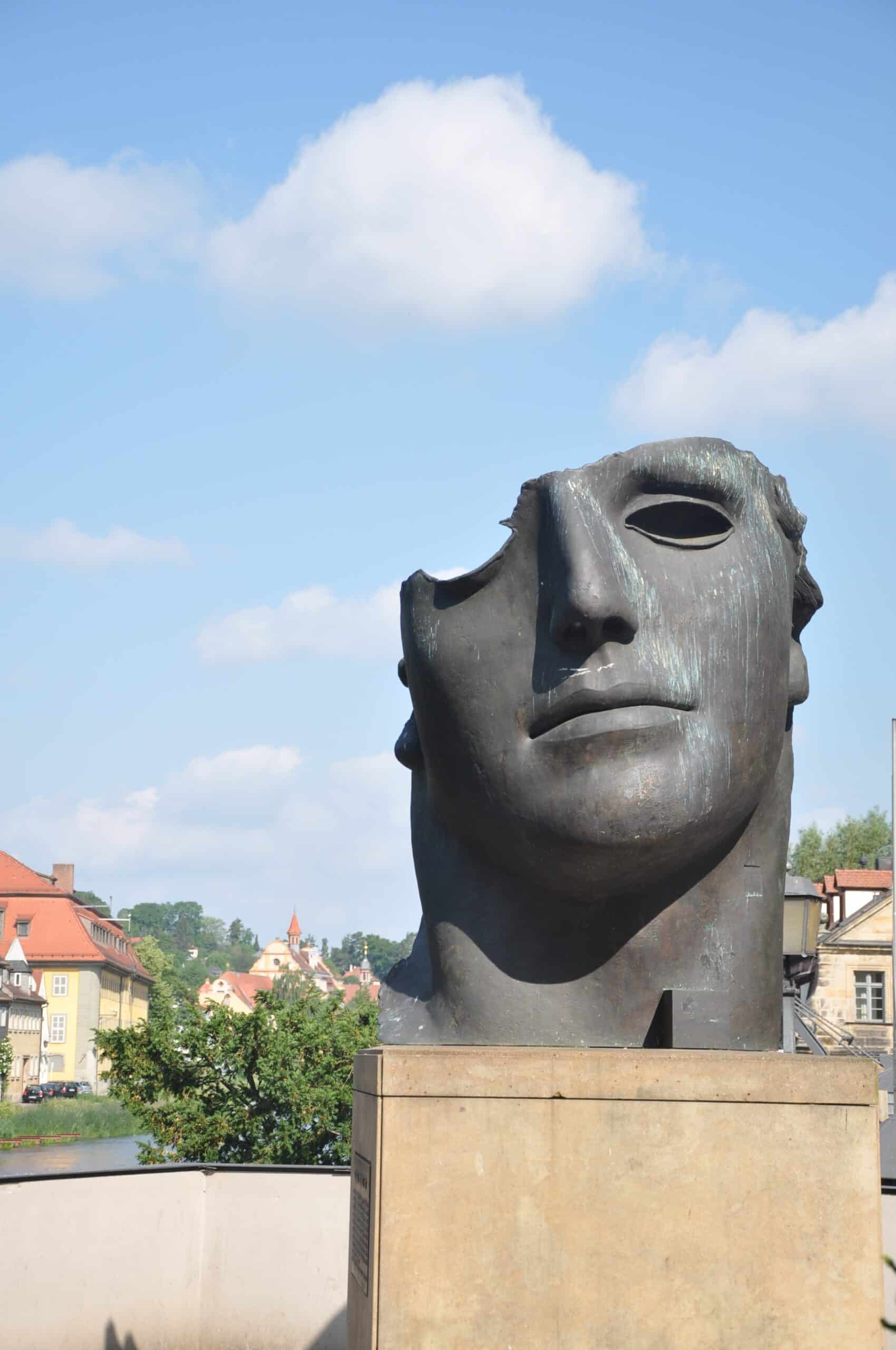
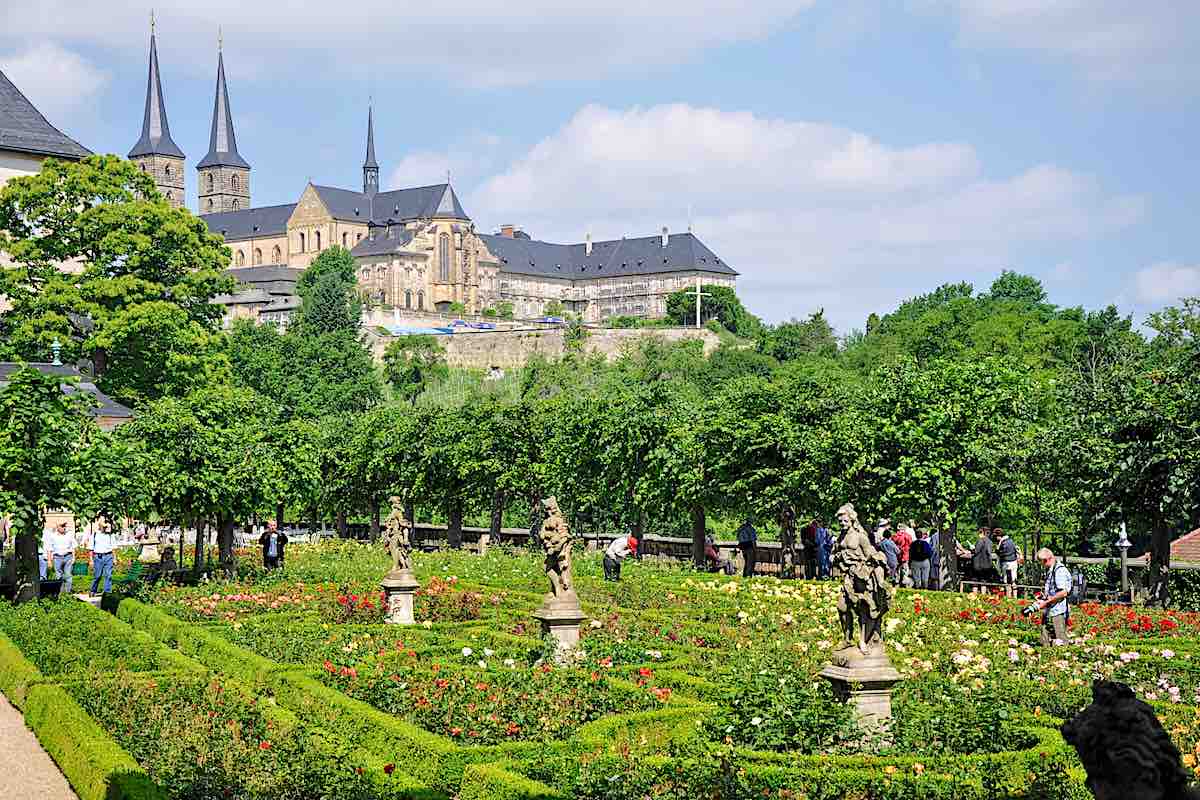
Back on the bus and on to meet Viking Skadi in Hassfurt. We met the river ship at 6:00 PM, enough time to rest for 45 minutes until the Daily Briefing and dinner procession. Tonight’s entertainment was provided by the onboard keyboard player. Again, we were all pretty tired and by 10:30 PM, the carpet was rolled up.
Day 10: Würzburg and Rothenburg ob der Tauber
I can’t tell you enough that if you have a chance to go to Rothenburg ob der Tauber (Rothenburg on the Tauber river) do it.
The bus tour to Würzburg is more of a drive-around city-guided tour. It included a stop at the baroque 40-room palace, Würzburg Residence. Built between 1720 and 1744, Marienberg Fortress and a drive across the Old Bridge, built in 1120 were part of the excursion.
Though Würzburg is a fascinating city, surrounded by wineries and some terrific cafés and dozens of old churches. I now always pick the tour to Rothenburg ob der Tauber and its odd half-timbered houses.
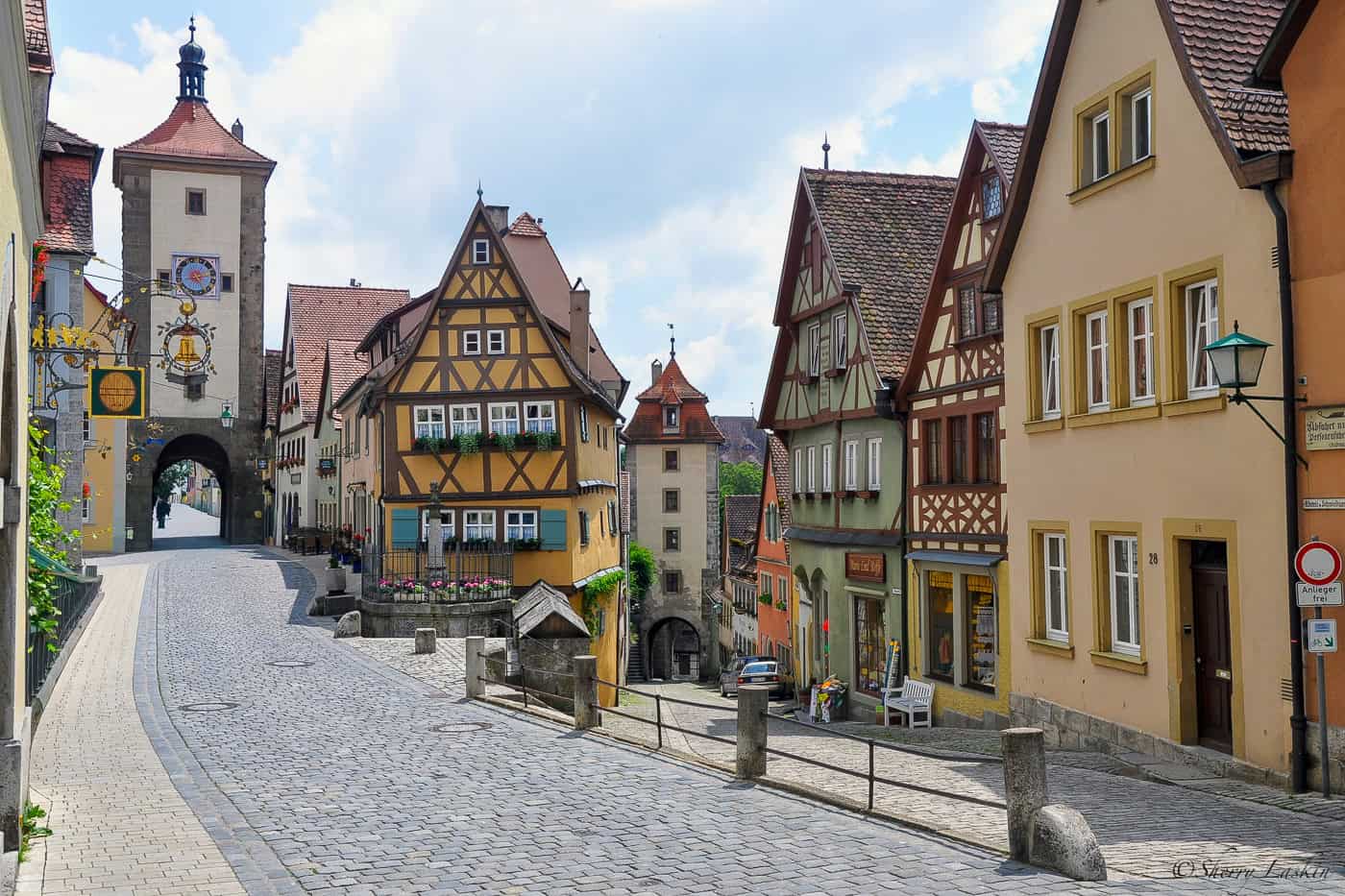
Rothenburg is probably the most well-preserved medieval town in Germany, located on Germany’s historic Romantic Road. Amid half-timbered houses, you’ll find tiny shops and even hotels.
But the best thing to do there is to walk the 1.5 mile city wall that circles Rothenburg since the middle ages.
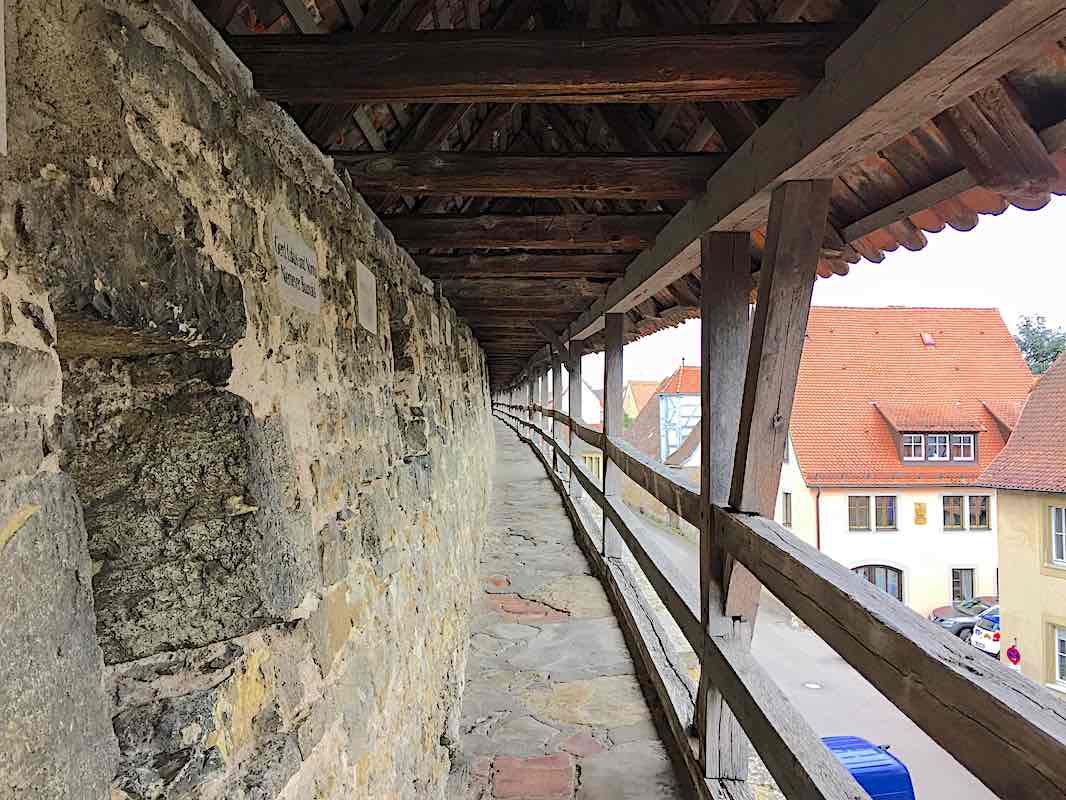
You have to walk up and down several sets of uneven cobblestone steps, as the wall connects five medieval gates dating from the 13th to 16th centuries. Stop and take a look inside the guard houses, too. Get to the town center at top of the hour to see the adorable clock “show”.
Back onboard Viking Skadi in time for Cocktail Hour. No one ever missed it. Then after dinner, we all found a seat in the lounge for an hour-long glass-blowing demonstration. Good-night.
Day 11: Wertheim – Quick Stop and a Walking Tour
We had about two and one-half hours for our guided morning tour to walk us through picturesque Wertheim. It was kind of a slow, lazy day.
I was back on board by noon and at 12:30, we were underway, heading for a next-day arrival to ancient Koblenz, Germany, once occupied by the Roman army.
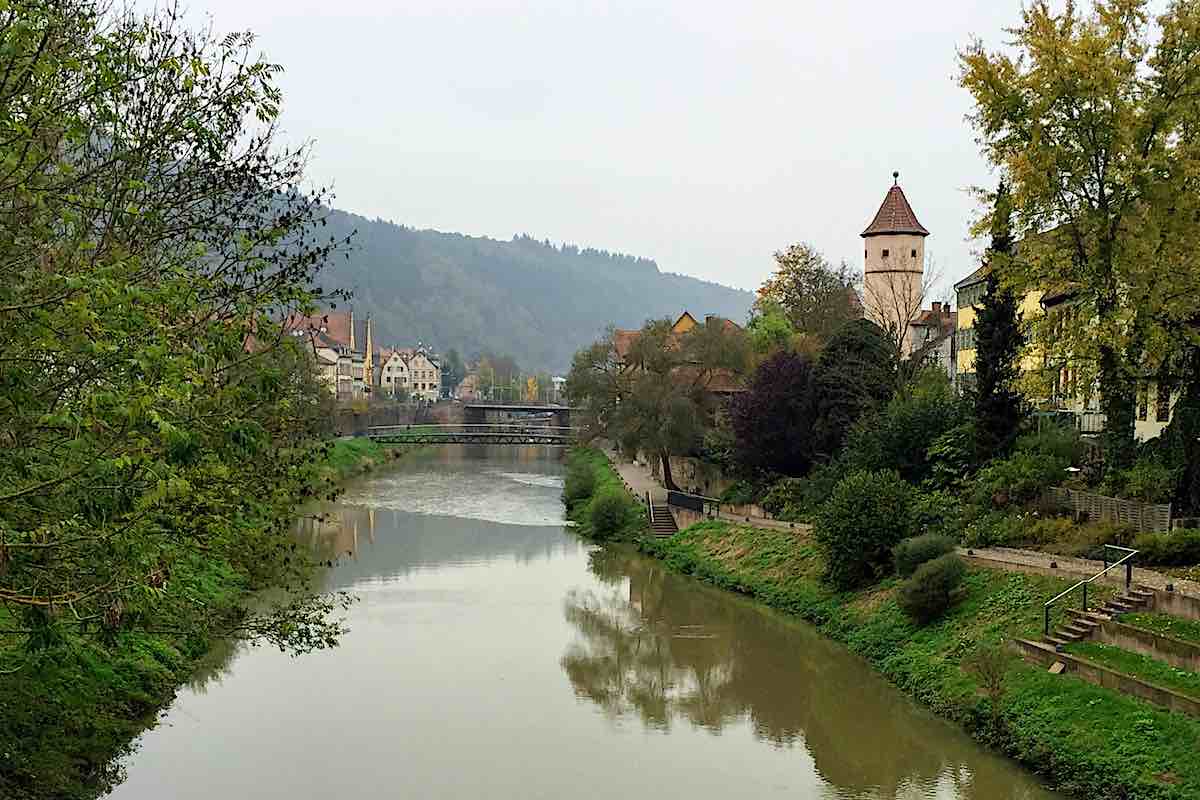
Day 12: Cruising the Romantic Rhine – It’s Castle Day!
Our Viking Longship sailed through the night so that we’d reach the Rhine River Gorge just after breakfast. This is one of those special moments on a river cruise that you want to just relax and watch as medieval and ancient history unfolds in front of you.
It doesn’t last long…only about two and one-half hours, a distance of nearly 41 miles.
I’d love to show you all of my photos from over two dozen trips up and down the Rhine through this stretch, but that will be another article. In the meantime, here are a few of the highlights. The majority of the 30+ castles are found just after Rüdesheim, between Bingen and Koblenz.
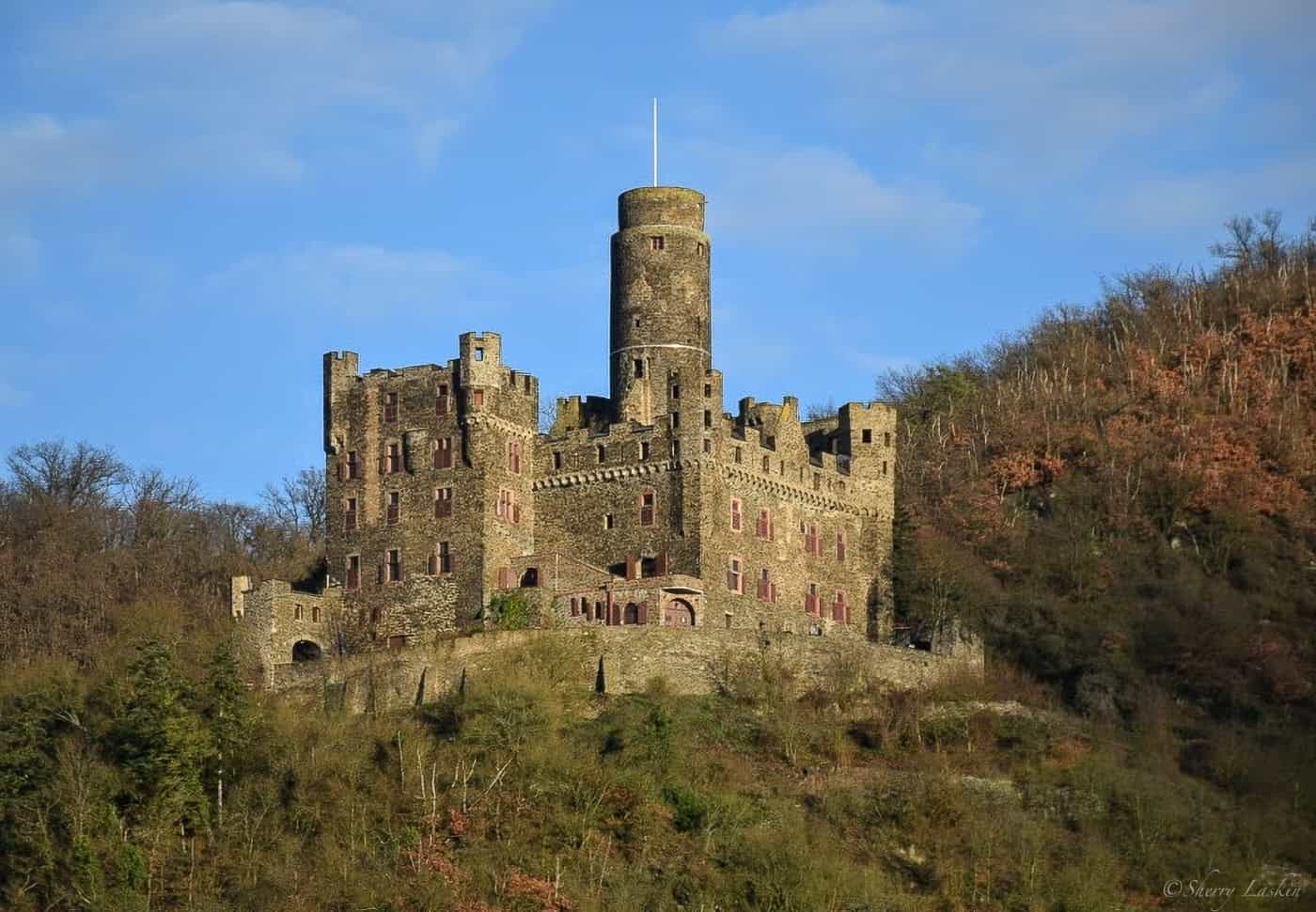
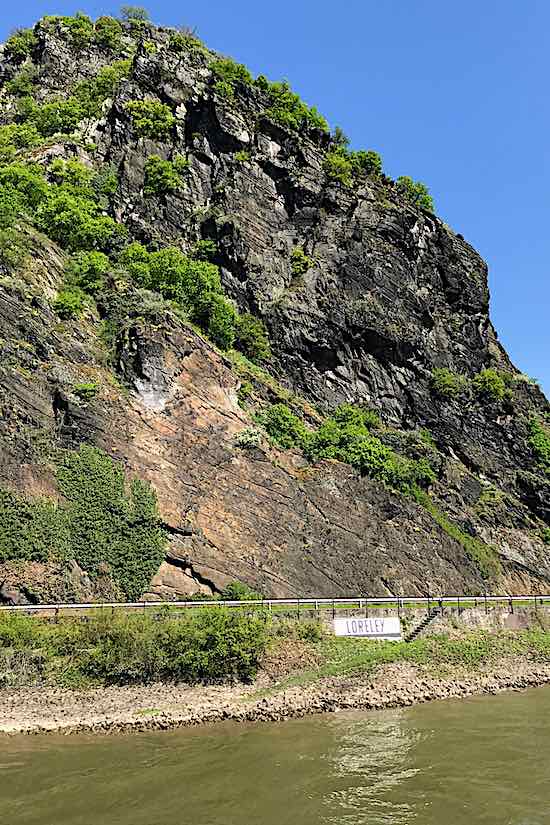
A little less than the halfway point is the legendary Loreley Rock. Set on a steep cliff, where the Rhine is the deepest and narrowest, the Loreley Rock is said to be where the beautiful Loreley used to sit and sing to the sailors on the river.
Her singing was such a distraction that it lured unsuspecting sailors to their doom. It’s tradition for river ships to play the Loreley song through this stretch of the river.
Arriving Koblenz
Koblenz sits on two sides of the point where the Rhine and Mosel rivers meet. Ehrenbreitstein Fortress looms overhead like a watchdog guarding a front gate. Almost all Rhine river cruises stop in Koblenz and today was no different.
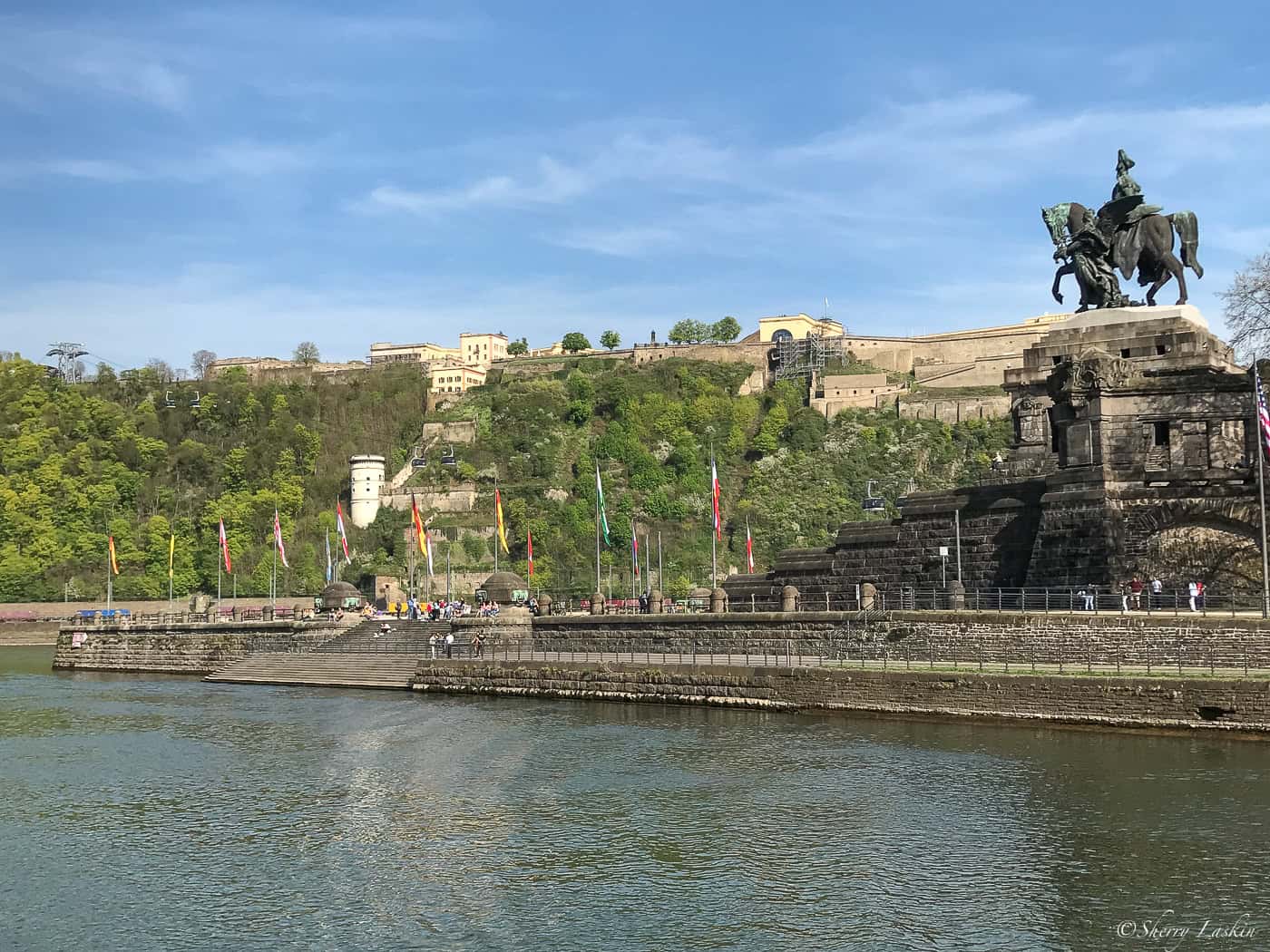
River ships were everywhere and our guided walk through town was crowded with tourists. Even at night, Koblenz is alive with activity. From outdoor restaurants and cozy cafes to people leisurely strolling along the river’s promenade.
I would have stopped in at my favorite dive bar, the Peanut Bar, but alas, it doesn’t open until 7PM.
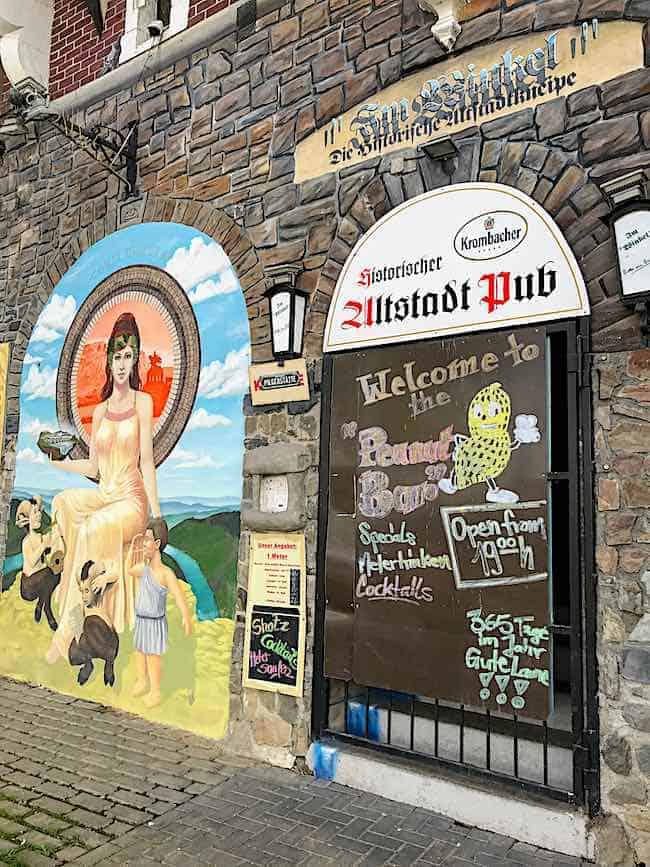
There were two included tours to choose in Koblenz; a bus ride to a walking tour in Marksburg Castle, the best preserved castle on the Rhine or a cable car ride across the river and up the hill to Ehrenbreitstein Fortress.
I took the tour inside sprawling Marksburg Castle. I’ve done the cable car ride over the river and once was enough for me.
Tonight’s dinner was titled, “A Taste of Germany” and its name held true. Traditional German foods were served in the dining room, Aquavit Lounge and also in the Galley.
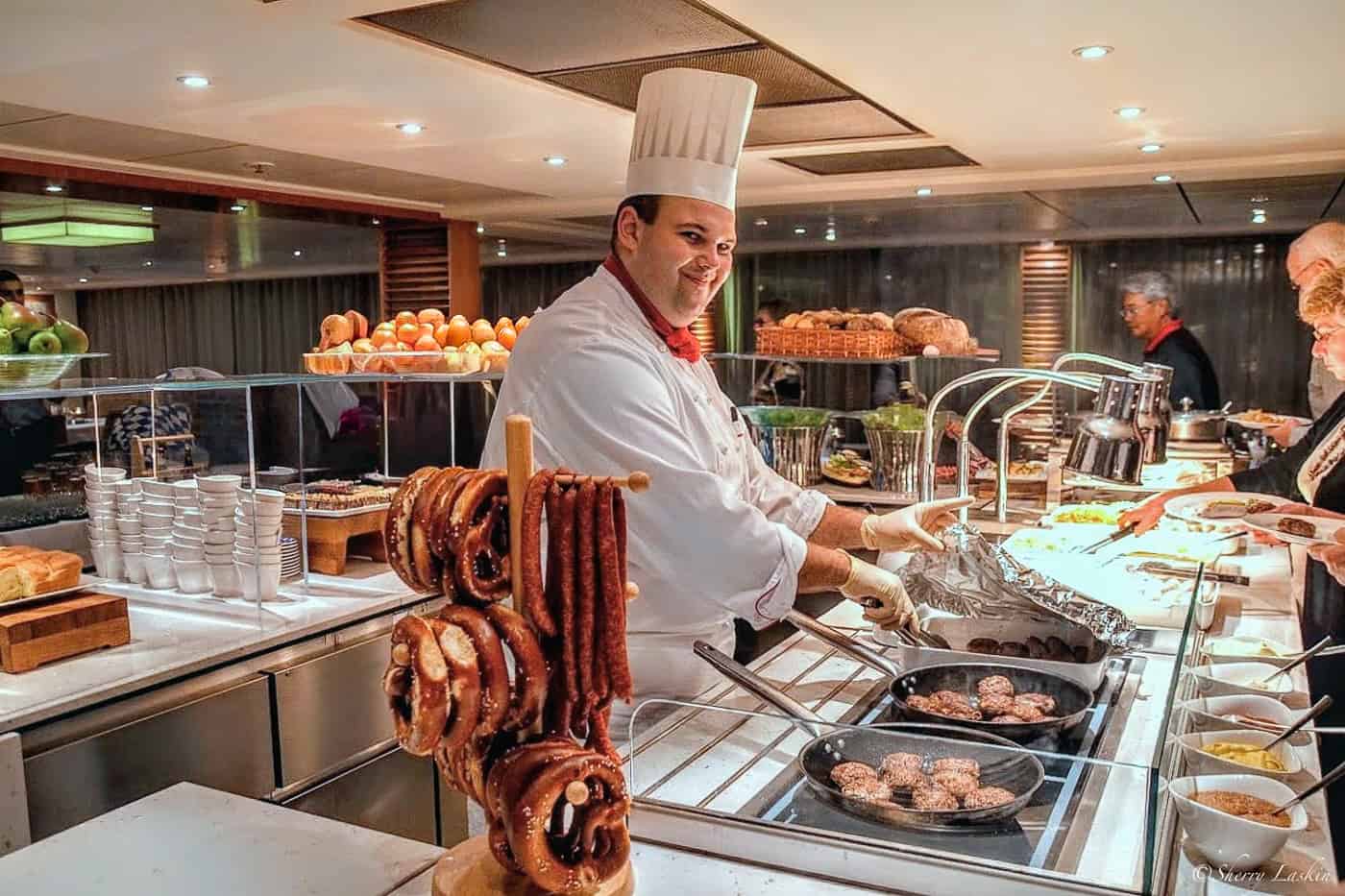
A couple of rather staid-looking German musicians entertained while we ate. Beer flowed. It was a fun night. But in a way, it was also bittersweet. Once you’ve cruised past the incredible stretch of castle after castle, it means the trip is almost over.
With only a couple of days left, and a lot of walking planned for my day in Cologne, I called it an early night. At least for me it was early…probably just after 11:00PM. After all that rich, tasty and delicious German food and of course a slice of Black Forest cake, 11:00 wasn’t really all that early.
Day 13: Cologne: Chocolate, French Fries with Curry Sauce, the Cathedral and More
Cologne’s a fun and funny place. So much history, fabulous food, great beer and a lot of odd museums. Not to mention the famous Cologne Cathedral, nearly untouched by the Allies in World War II.
I set out on my usual walking tour, happy to take a couple of new friends from the ship with me. First place I head to is the Cathedral.
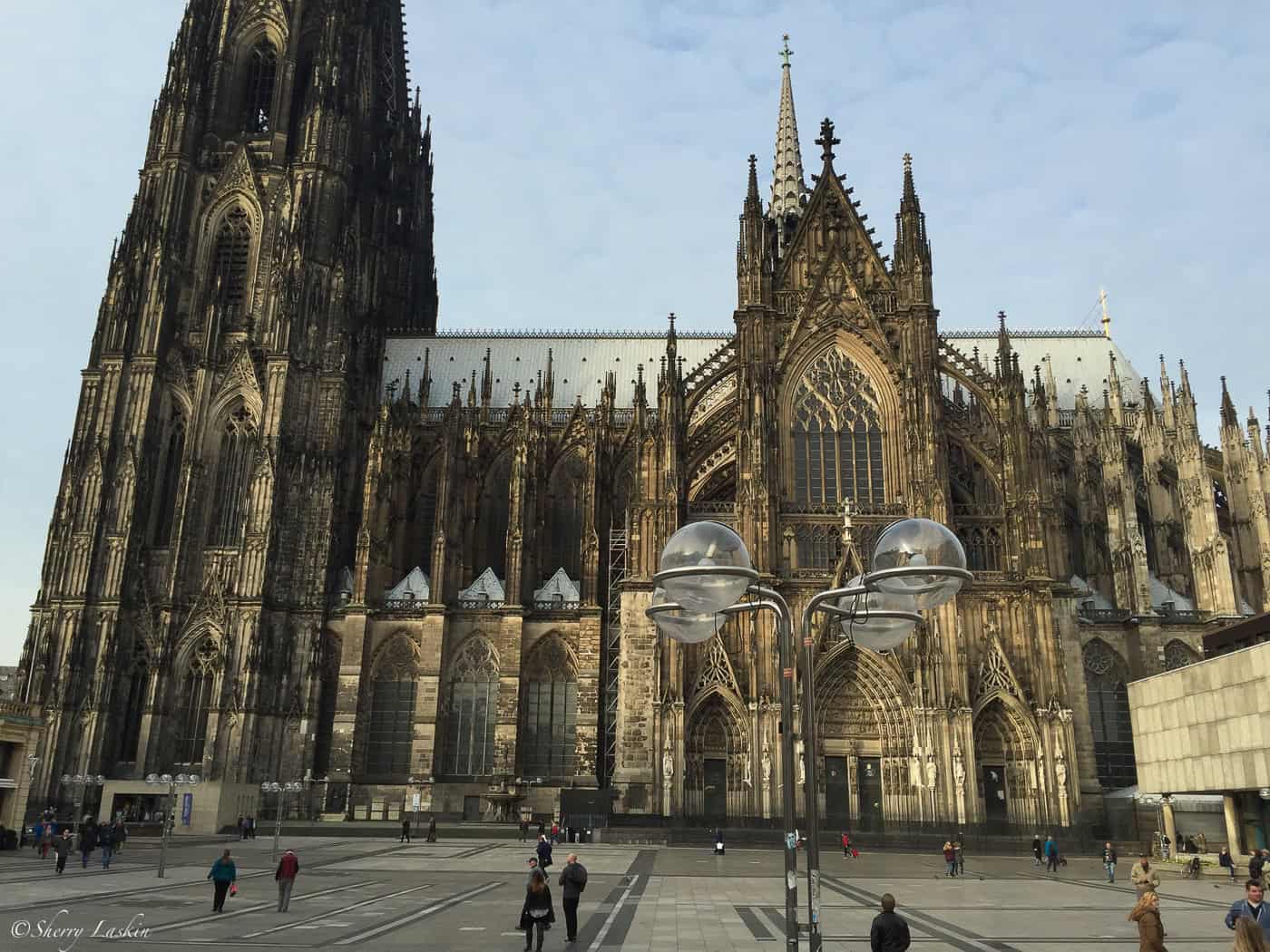
Be sure to go downstairs to the creepy basement to see the crypts. Then a walk through downtown and maybe into the city a little bit deeper.
Depending on the season that you go, you could run right into Christmas Markets. Everyone was outside, eating or drinking or strolling the two-mile long waterfront promenade.
Viking Skadi docked fairly far down along the promenade, so Viking had buses to drive guests into downtown. For me, a longer walk meant I could justify a stop at the Schokoladen Museum for a slice of chocolate cake followed by a quick stop at the outdoor kiosk next door for french fries and curry sauce.
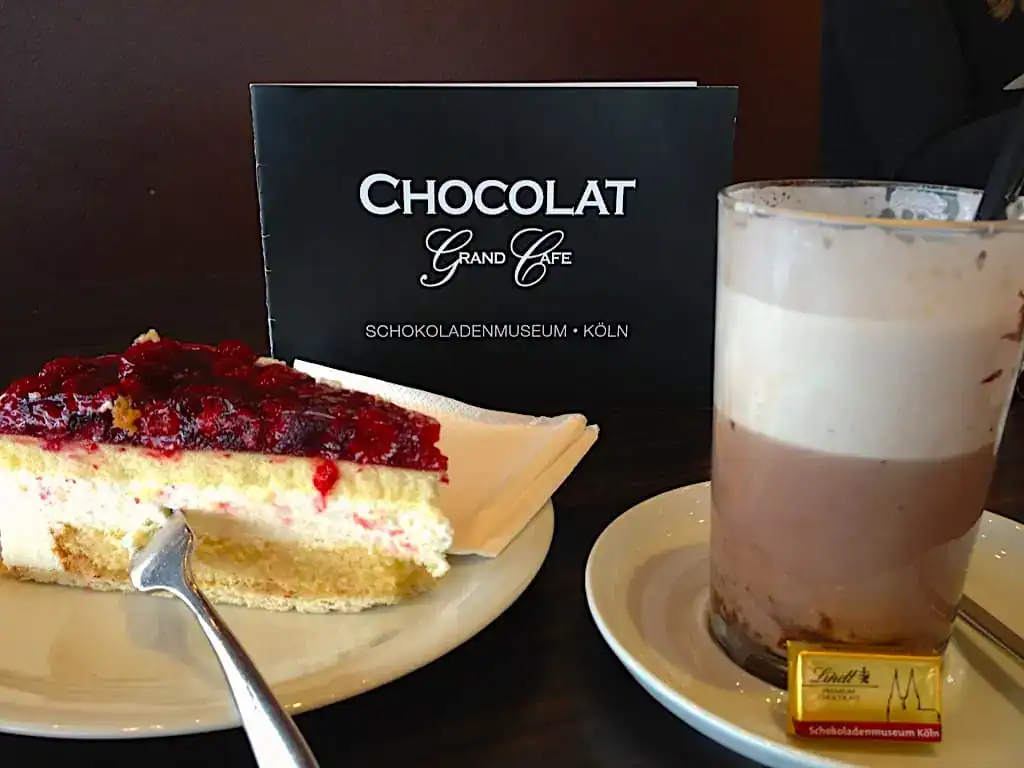
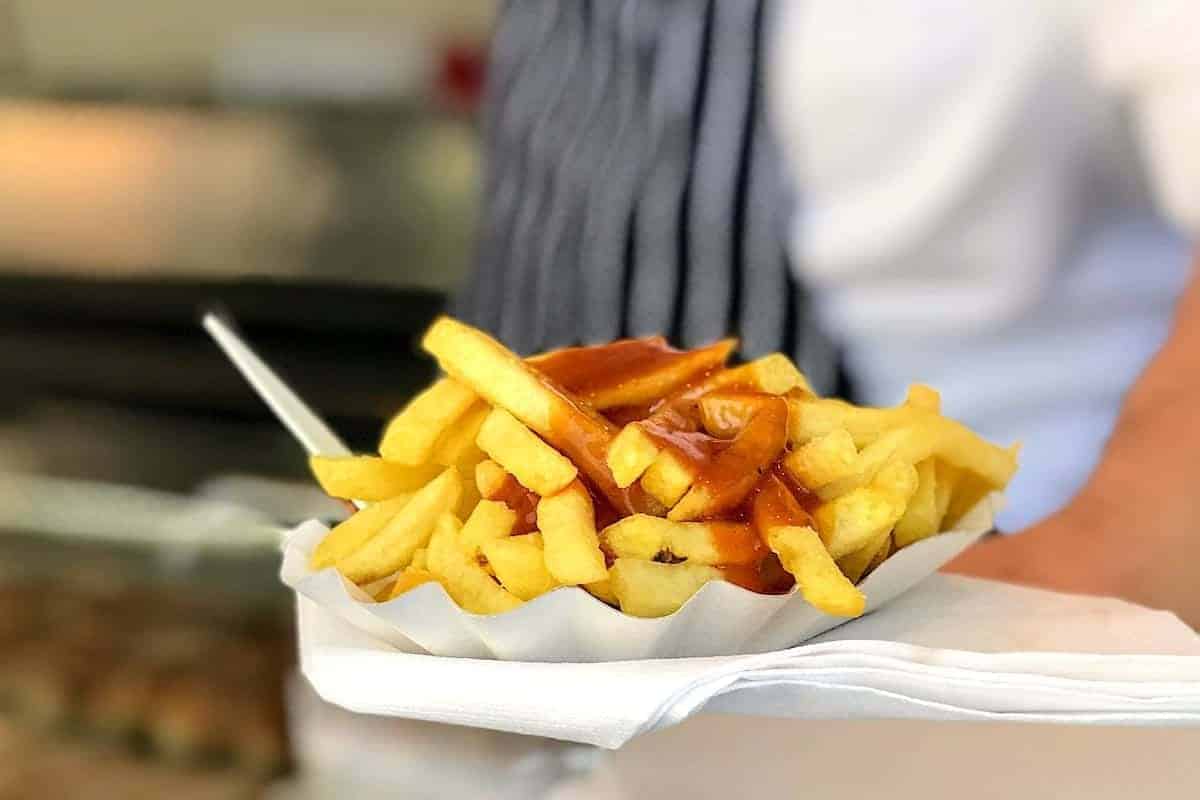
These were soooo good! A trip to Cologne isn’t complete unless I stop at the kiosk near the Chocolate Museum for these hot, crunch, slightly spicy potatoes.
If all this food and walking during the day wasn’t enough, Viking offered a nighttime optional ($) Beer Culture walking and drinking tour! And yes, I went along, not so much for the beer, but to walk with a group and see the city at night. A good time was had by all and we were back on board Viking Skadi by 11:00PM.
Day 14: Kinderdijk and Windmills – UNESCO World Heritage Site
Before our afternoon arrival into Kinderdijk, at 11:30am everyone was invited to a Dutch Masters art lecture followed by some of Holland’s best cheese and Jenever tastings. The cheeses were excellent samples of Gouda (correctly pronounced “How-dah”), Edam, and a Dutch Cheddar.
Jenever, if you’re not familiar, is kind of, sort of a gin. But really, it’s not gin at all except that they both are infused with juniper berries. Think Mescal or Aquavit…something to sip, though now used in craft cocktails.
Following all of this was lunch that I happily nibbled at in the Aquavit Lounge. With a 1:45PM arrival at Kinderdijk, I wanted to be ready and not sluggish.
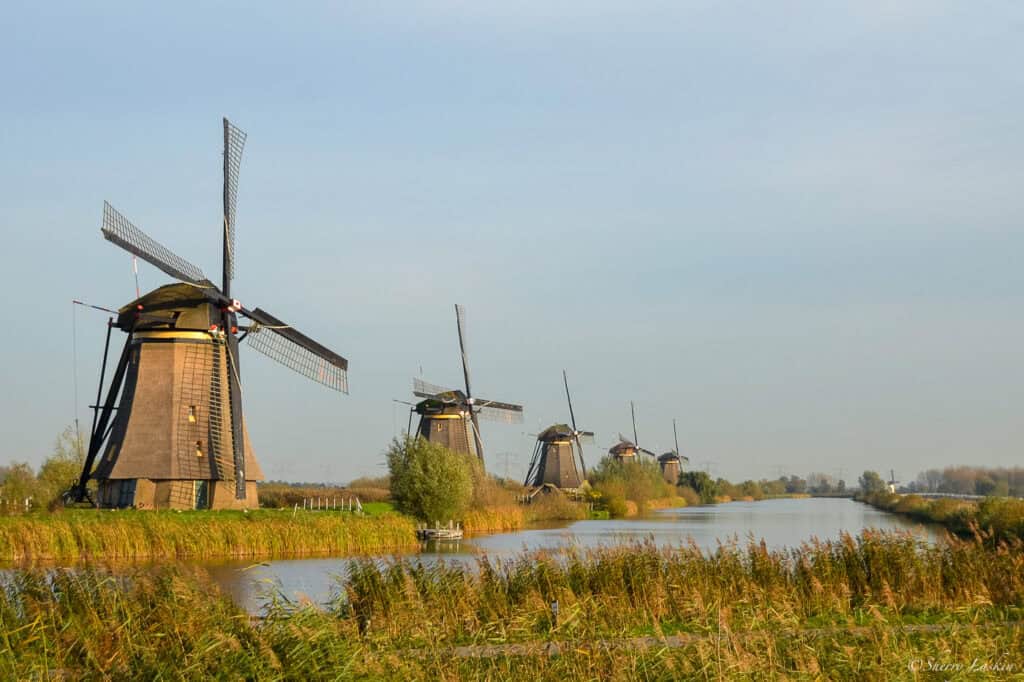
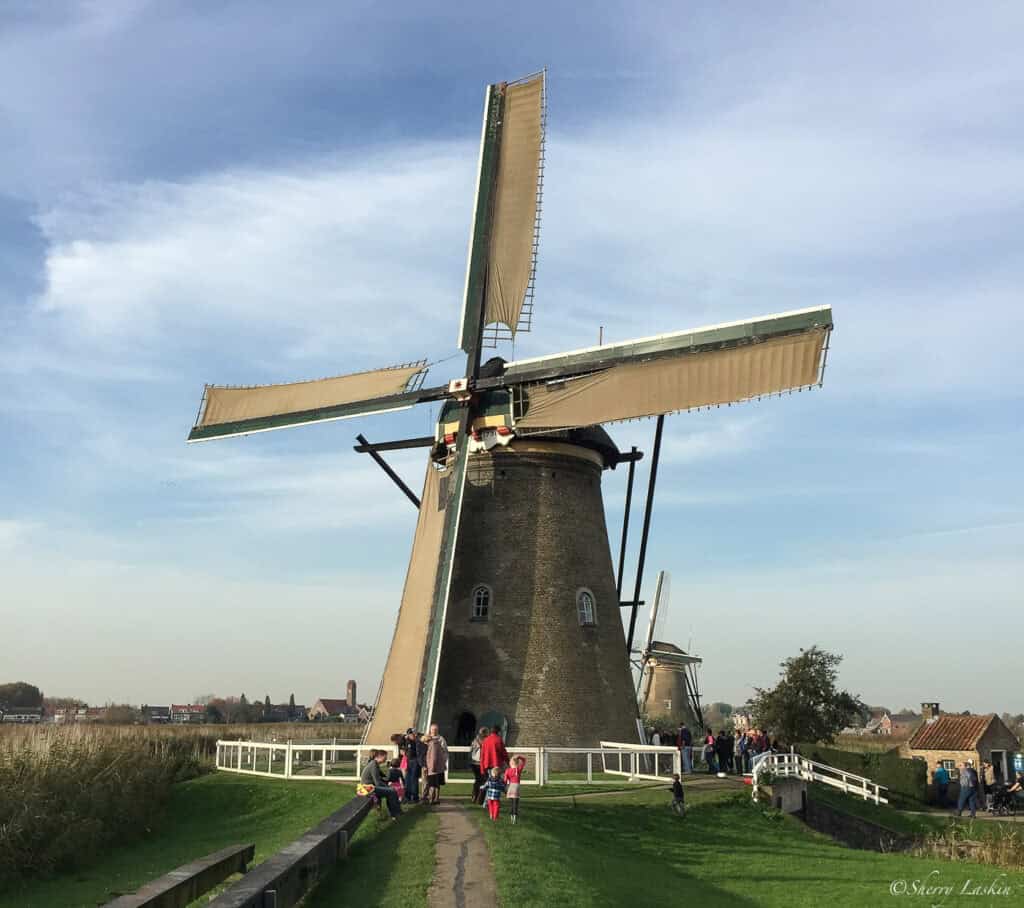
For some reason, even on this beautiful sunny and warm late autumn day, this working windmill village was not crowded. There’s a resident guide who explains the history and function of these 16 windmills, with all but one dating back to the 1700s.
The remaining two hours left plenty of time to wander. It’s not easy to believe how old these windmills are but that they are actually functioning to lower the water table at this below-sea level town.
The Journey Draws to a Close
Tonight was the Captain’s Farewell Dinner aboard our new home for the past week, Viking Skadi. As always, the last night’s briefing was a bit sad as we recapped the past 14 days and all that had happened.
We traveled on three rivers, the Danube, the Main and the Rhine though four countries, visited more cities that we had days – 16 ports in total. Counted over 30 castles and fortress ruins, passed World War II monuments and landmarks all the time enjoying our two river ships; Viking Lif and by chance, Viking Skadi.
Day 15: Goodbye Viking, Hello Amsterdam and Beyond
Our early morning arrival into Amsterdam meant an even earlier breakfast. It was time to gather the last of my belongings, head into the dining room and leave with last minute goodbyes.
Departure Procedure
Similar to departure morning on cruise ships, Viking does departure by time of your flight and a corresponding color-coded ribbon that you tie onto everything being transferred to the motor coach.
The first baggage pick up outside cabin doors began at 4:00AM. Bus transfers begin at 5:00AM for those with the earliest departures. The ship can also arrange for a taxi to take you to the airport.
Because I was independent, I was able to stay onboard until 9:00AM before taking a taxi to the train station.
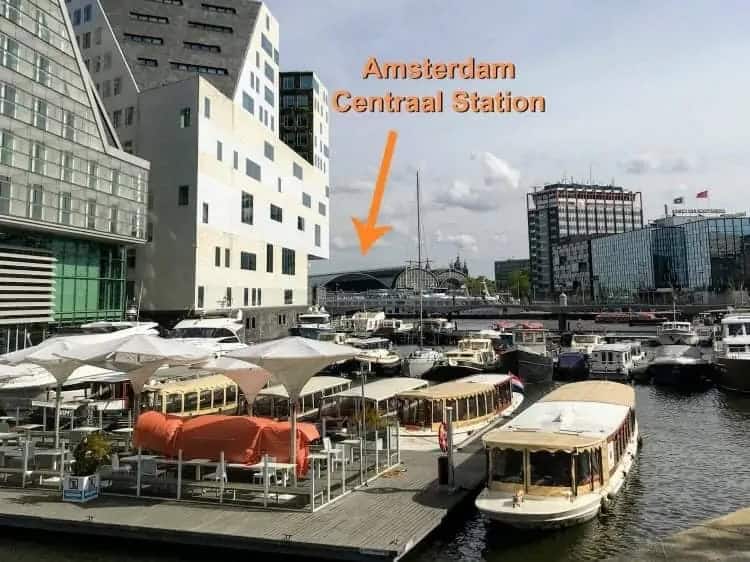
My day would include a train to Paris for a five-day Seine river cruise, then two trains to Berlin for the 25th celebration of the fall of the Berlin Wall.
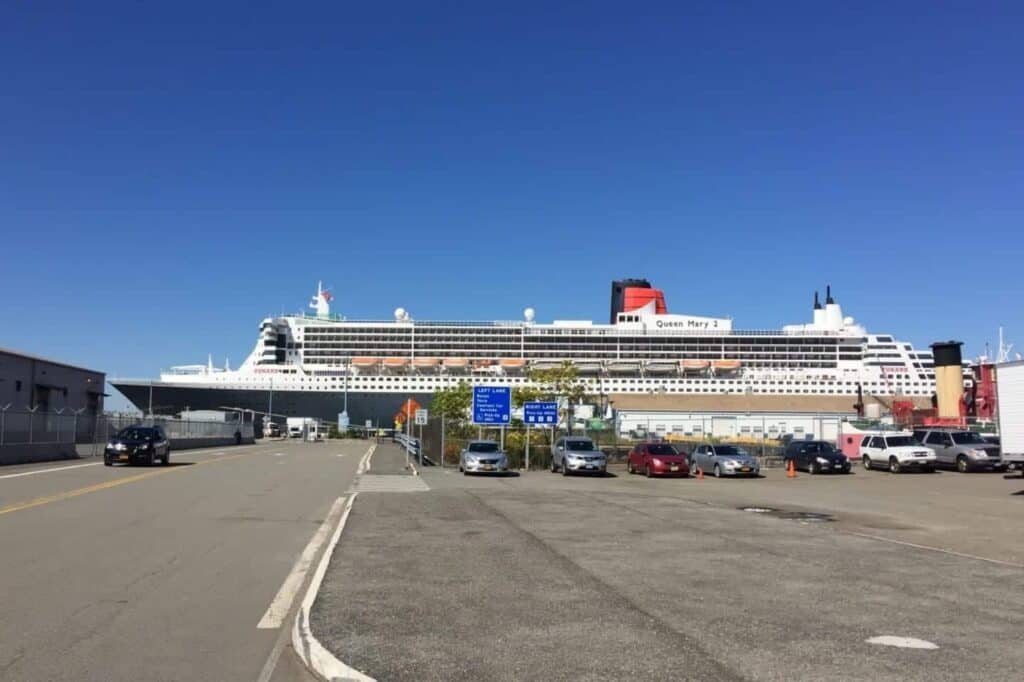
Finally, I’d catch another train to Hamburg and board Queen Mary 2 to head back to New York. My two weeks with Viking, from Budapest to Amsterdam is a trip I’ll always treasure.
Disclosure: I was a guest aboard Viking Lif and Viking Skadi for their spectacular Grand European Tour river cruise. As always, opinions are my own. There were no requirements on what to write or not to write.