Amsterdam to Luxembourg by Train for a River Cruise: An Unexpected Adventure
This site contains affiliate links for which I may be compensated. More info here.
I had just completed a two-week transatlantic cruise from Port Canaveral, Florida to Amsterdam in the Netherlands, on my way to a four-week river cruise. Next, I needed to travel from Amsterdam to Luxembourg by train for the next leg of my journey.
The plan seemed simple. Just two trains to Luxembourg and a taxi to the Mosel river to board my ship.
Sometimes, even the best plans take their own direction.
Traveling from Amsterdam to Luxembourg by train is usually straightforward. For me, it turned into something else entirely.
I also didn’t expect I’d need to leave the river ship in the middle of Nowhere, Germany before the end of the cruise. But these things happen. It was a mad dash from beginning to end.
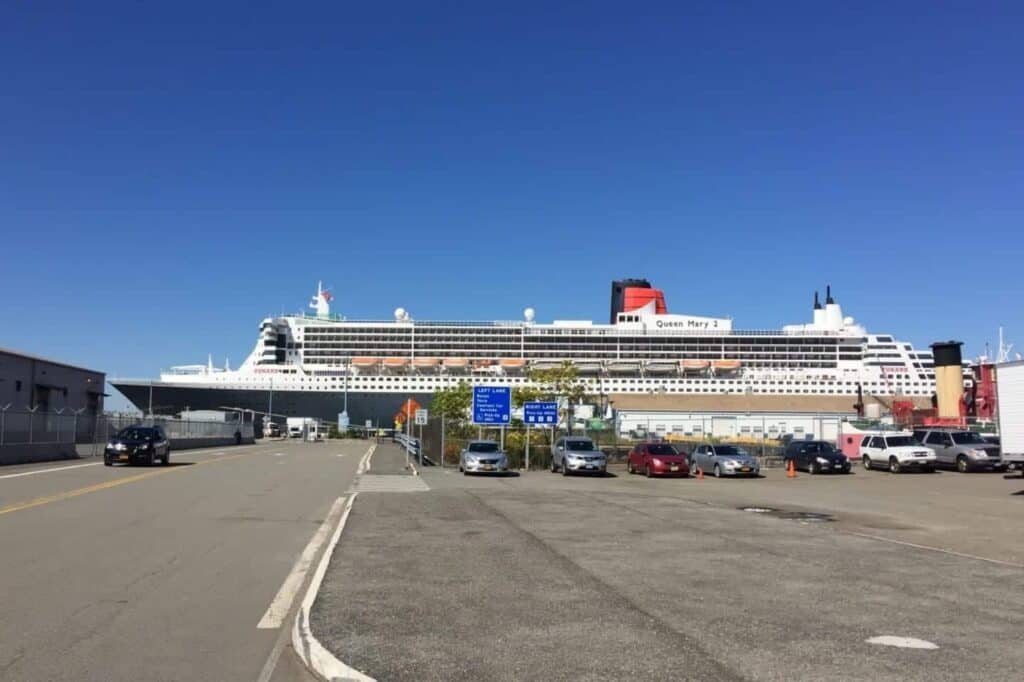
Here’s how I did it, plus, what happened when nature intervenes and things really go sideways. I had to get to Southampton, England before Queen Mary 2 left for New York. Would I make it in time?
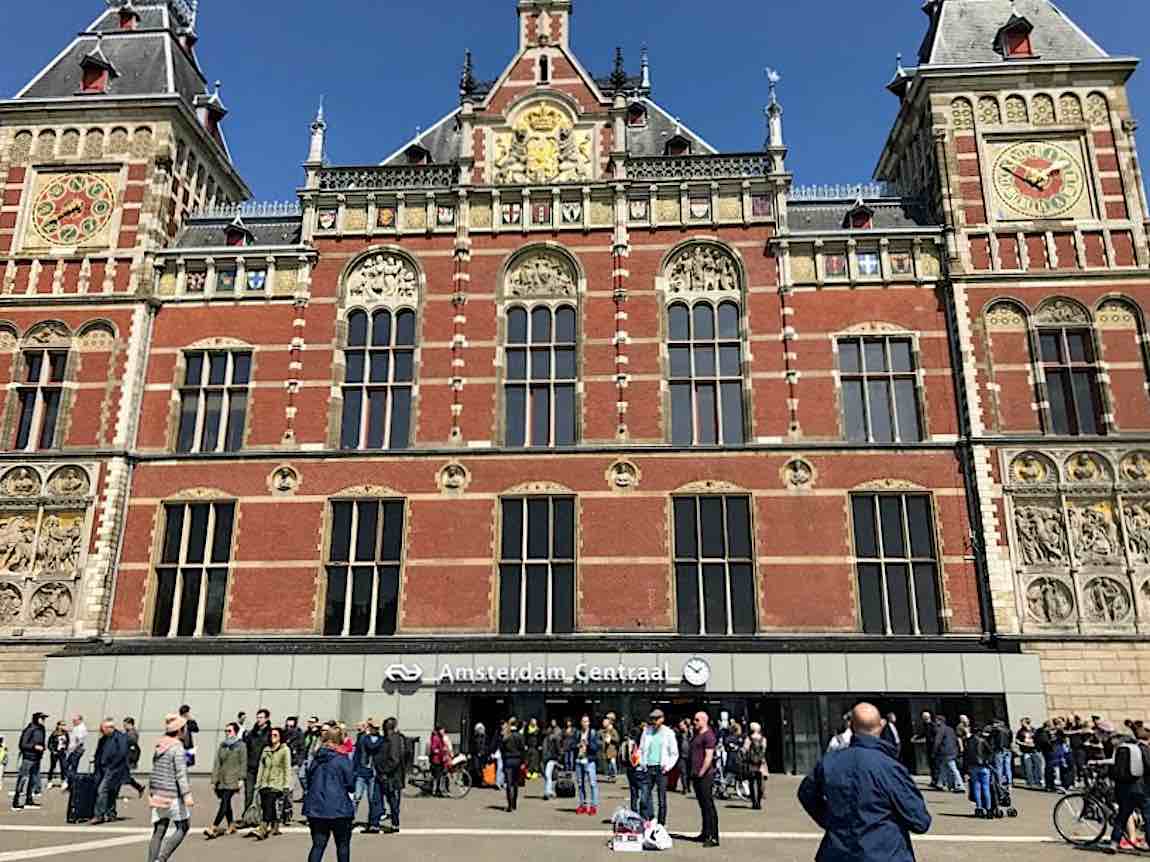
Leaving by Train From Amsterdam to Luxembourg
There wasn’t much time to linger or shop at the train station. European trains run on time, especially from origination stations.
My trains across three countries were booked like dominoes; miss one and the pile crumbles. I needed to make my way across The Netherlands, onto Belgium and then to Luxembourg so I could board the river cruise ship on the Mosel.
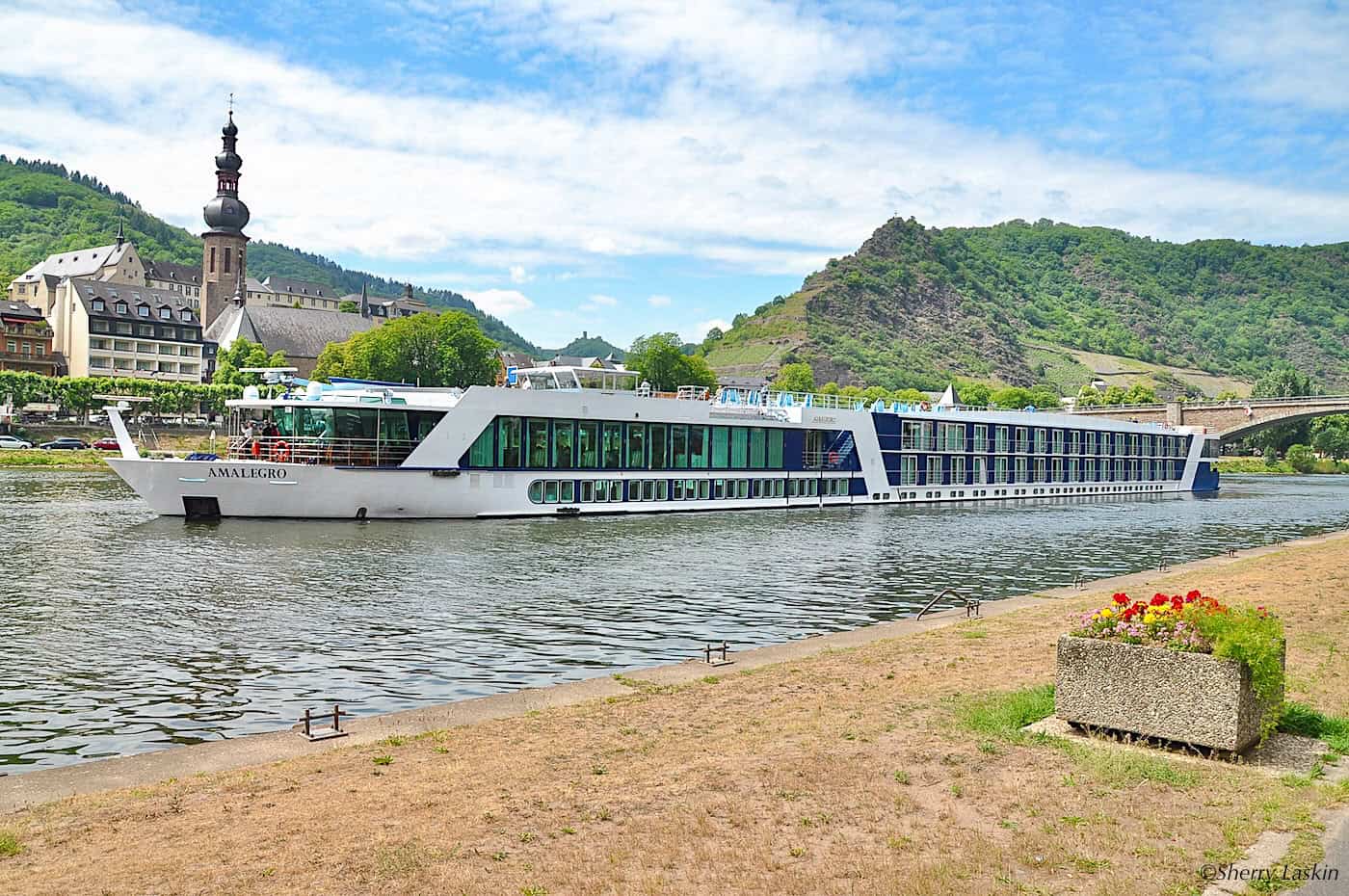
From Brussels, I had an unreserved train seat to Luxembourg City (open ticket). From there, I’d find a taxi to the small town of Remich, where I would board AmaWaterways AmaLegro on the Mosel River.
It sounded simple enough on paper. In reality, it turned out to be one of those quirky travel days that I would remember long after the trip was over.
The Adventure Begins: Leaving Amsterdam by Train
I had been through Amsterdam’s Centraal Station several times, so I knew my way around well enough. It is a sprawling, extremely busy station, but once inside, everything seems to fall into place. Organized chaos.
With about thirty minutes to spare, I found the first class Thalys lounge upstairs near Platform 1. It felt like a small oasis of calm above the crowds below. I tried to log on to the WiFi, only to discover it wasn’t free and not inexpensive either. For a few minutes of use, it didn’t seem worth it.
Soon enough, my train was posted on the overhead board.
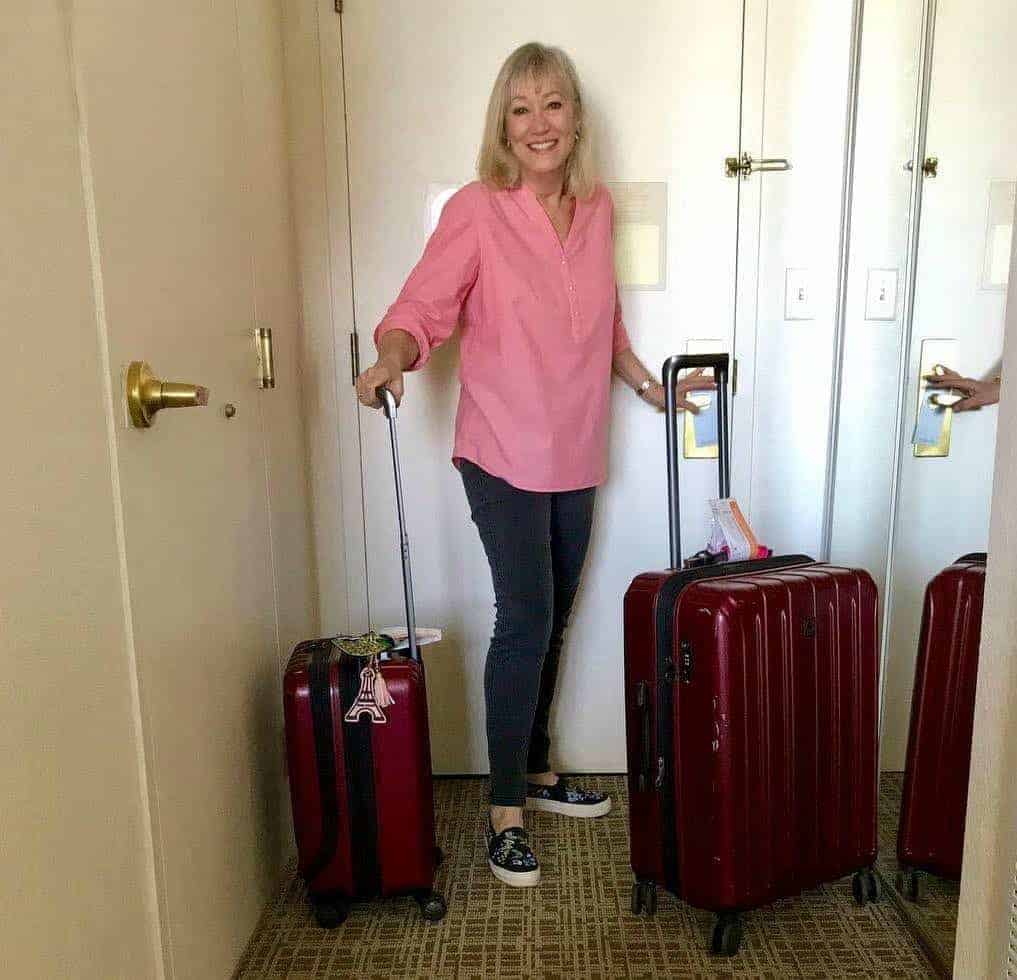
Time to gather everything. And by everything, I mean a suitcase that felt like it weighed a thousand pounds, along with two smaller bags that weren’t nearly as light as I had imagined when I packed them.
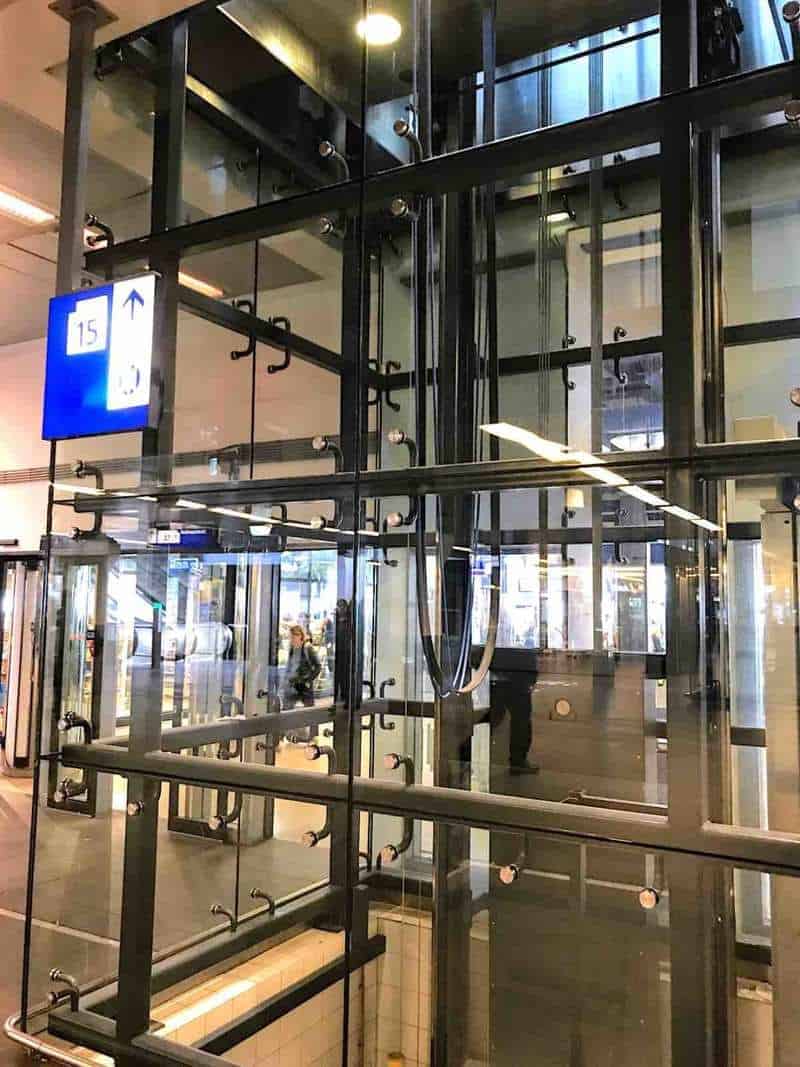
I was grateful to find a working elevator. What’s cool is that for safety’s sake, many train station elevators in Europe’s main stations are glass.
At Centraal Station, the train platform as well as the Thalys lounge I mentioned, sit above the main hall. The thought of hauling my luggage, one piece at a time in stages, up a long flight of cement stairs was not appealing. It was a relief that the elevator was in good shape.
Boarding in Amsterdam
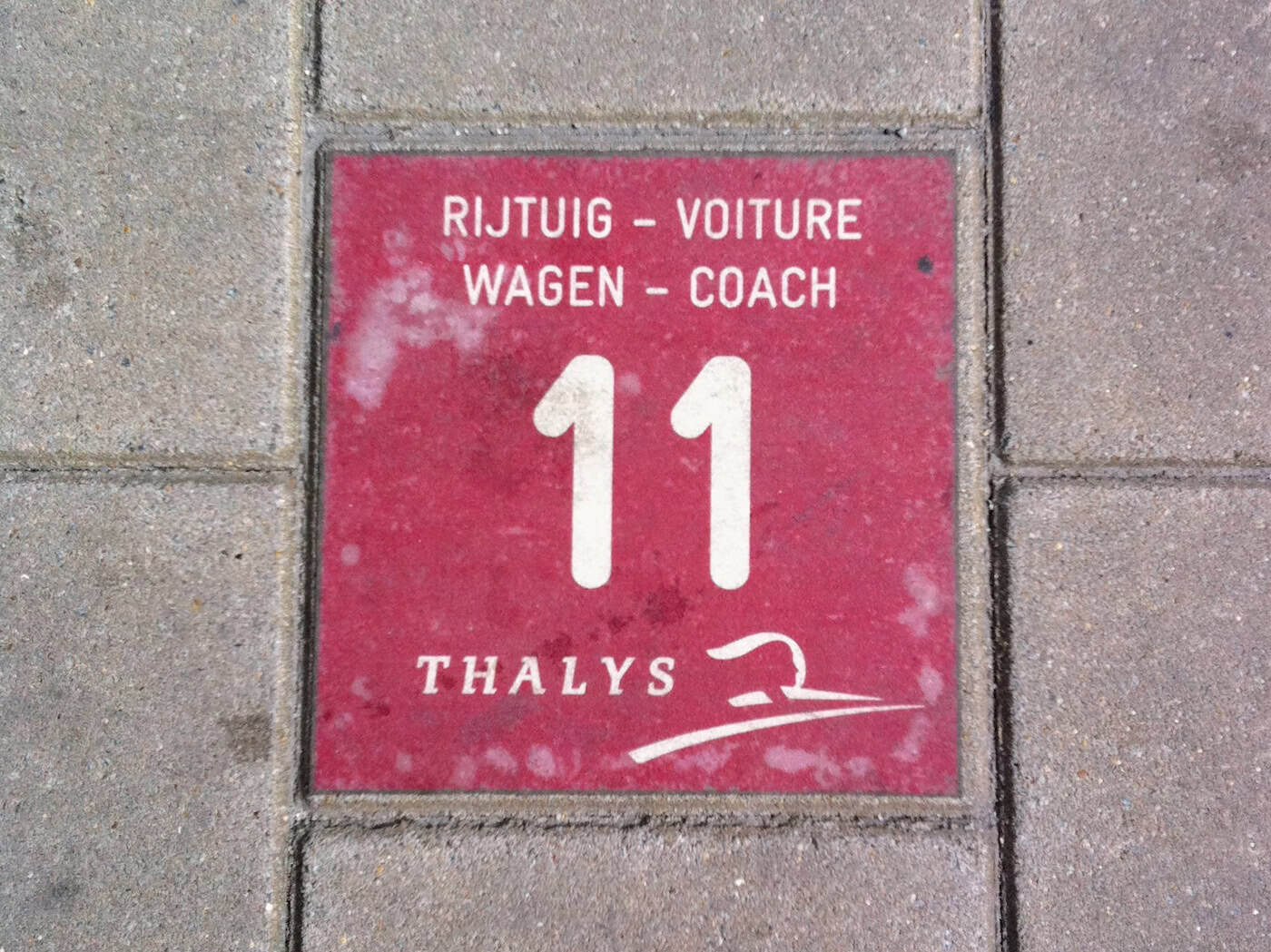
Coach 11, Seat 41.
In Amsterdam, as in many European train stations, coach car numbers are painted on the platform. I stood exactly where I was supposed to, right on the marked spot for my coach.
When the train pulled in, the door to Coach 11 stopped directly in front of me. It’s amazing how well the engineers can stop in the exact spot.
Inside, the seating was arranged two on one side and solo seating on the other. As always, I had chosen the single seat.
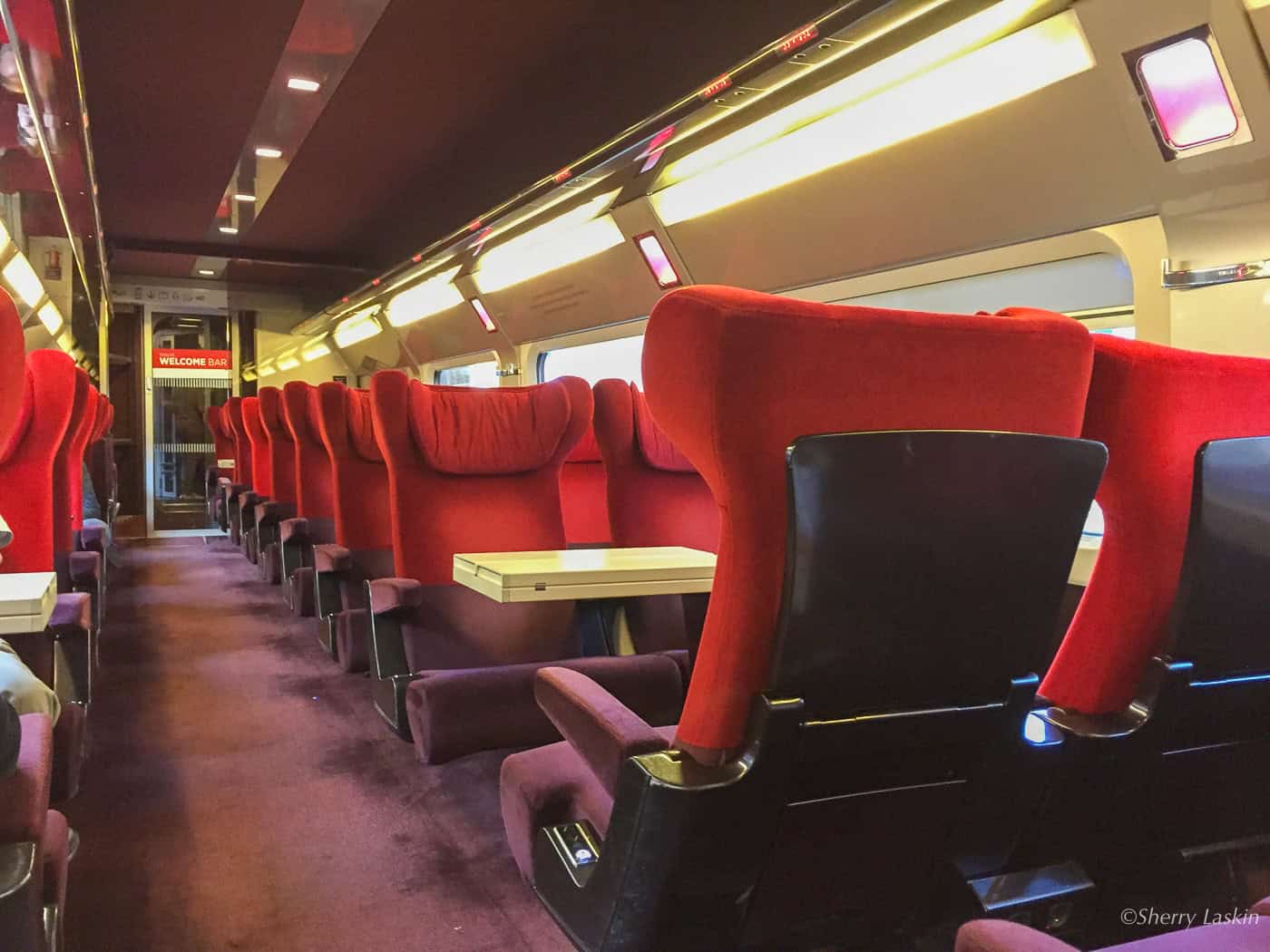
No climbing over anyone, no negotiating space. Just a quiet place to settle in and watch the scenery slide by.
Need I say that the included First Class lunch was spectacular….
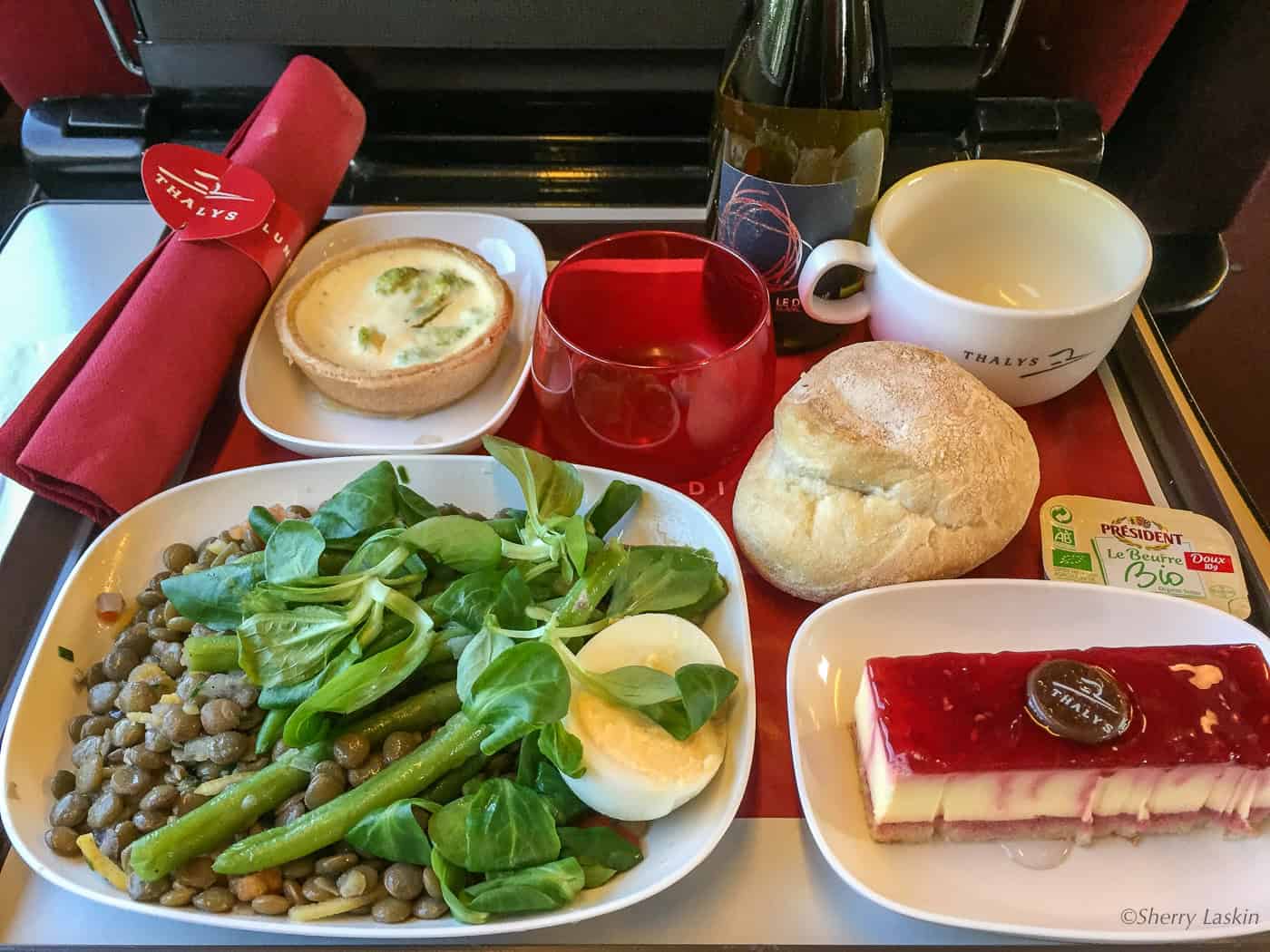
Somewhere along the way to Brussels, the train stopped. We were told there would be a delay of about twenty-five minutes. I checked my onward ticket again.
There was no specific departure time listed for the Brussels to Luxembourg train. It was an open ticket. That meant I would simply find the next available train once I arrived in Brussels.
It was one of those small freedoms that can either feel reassuring or slightly uncertain, depending on the day. Or my mood.
Changing Trains in Brussels
Brussels train station is noticeably much smaller than Amsterdam’s train station. With barely any passengers in the station, it was easier to navigate, and within minutes I found the departure board.
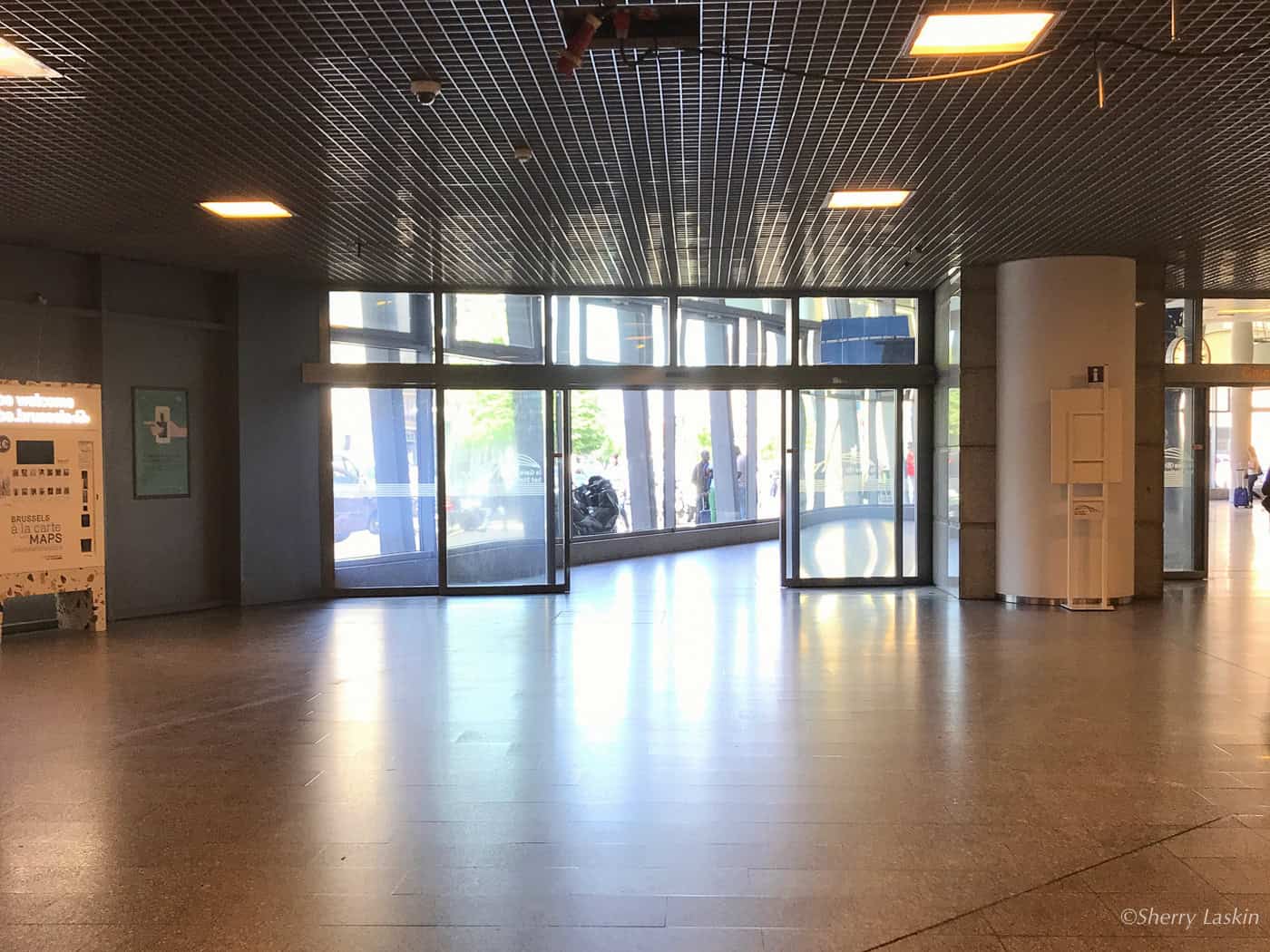
There was a train to Luxembourg leaving in ten minutes.
I wheeled my oversized suitcase through the station, found the elevator, and made my way up to the platform just in time. Within a few minutes, I was on board another train. A commuter-style train with no fancy seats or food service.
Before settling in, I turned to a young woman nearby, who somewhat reminded me of my daughter.
“Does this train go to Luxembourg?” I asked. I wasn’t sure if I hopped on the right train!
“Yes,” she said with a smile, “I certainly hope so. That’s where I’m going too.”
We talked for nearly the entire journey. Three hours passed quickly and we arrived into Luxembourg on time.
Arriving in Luxembourg
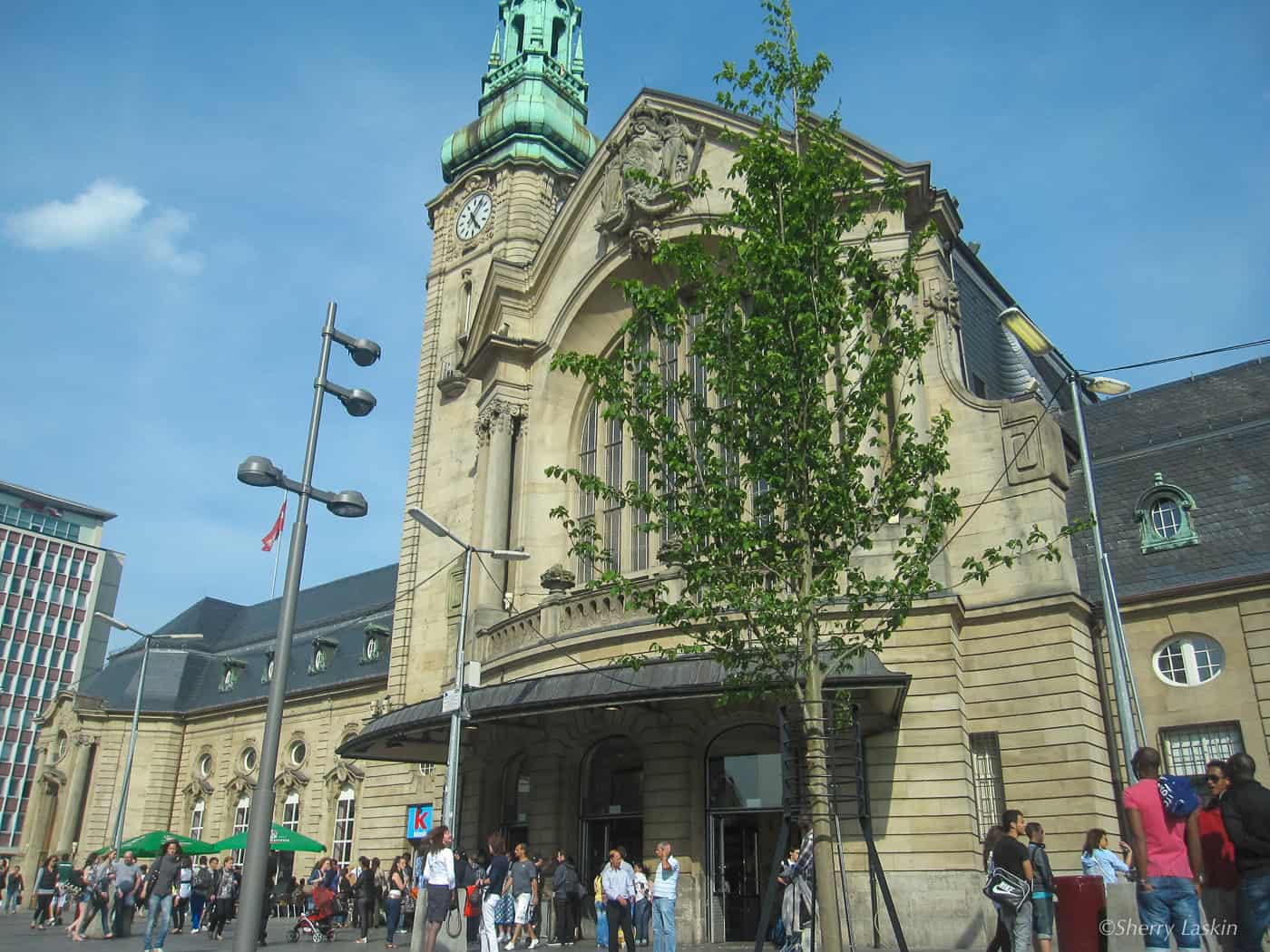
If I thought the Brussels train station was small, Luxembourg’s main train station is even smaller. This was the Luxembourg City train station. For such a small country, it has over 60 little stations scattered throughout its borders.
What I hadn’t realized was how far I still had to go.
Remich, where my river ship was waiting, was not the short distance I had calculated. It was closer to twenty miles, not four. A small detail, but one that changed the end of a travel day.
The taxi ride took about an hour. Fingers crossed that the ship didn’t leave before I arrived. The countryside was idyllic and springtime blossoms were everywhere, so that made the hour less stressful.
My driver spoke no English, and I was pretty rusty in French, but we managed. When we arrived at the river, he insisted on helping with my suitcase. He wheeled it along the pier, up the gangway, and into the ship as if he did this every day.
Then he paused.
He looked around the gleaming lobby, taking it all in. His eyes widened as he noticed the polished brass and glass, marble-topped reception desk; the quiet elegance of the river ship’s lobby.
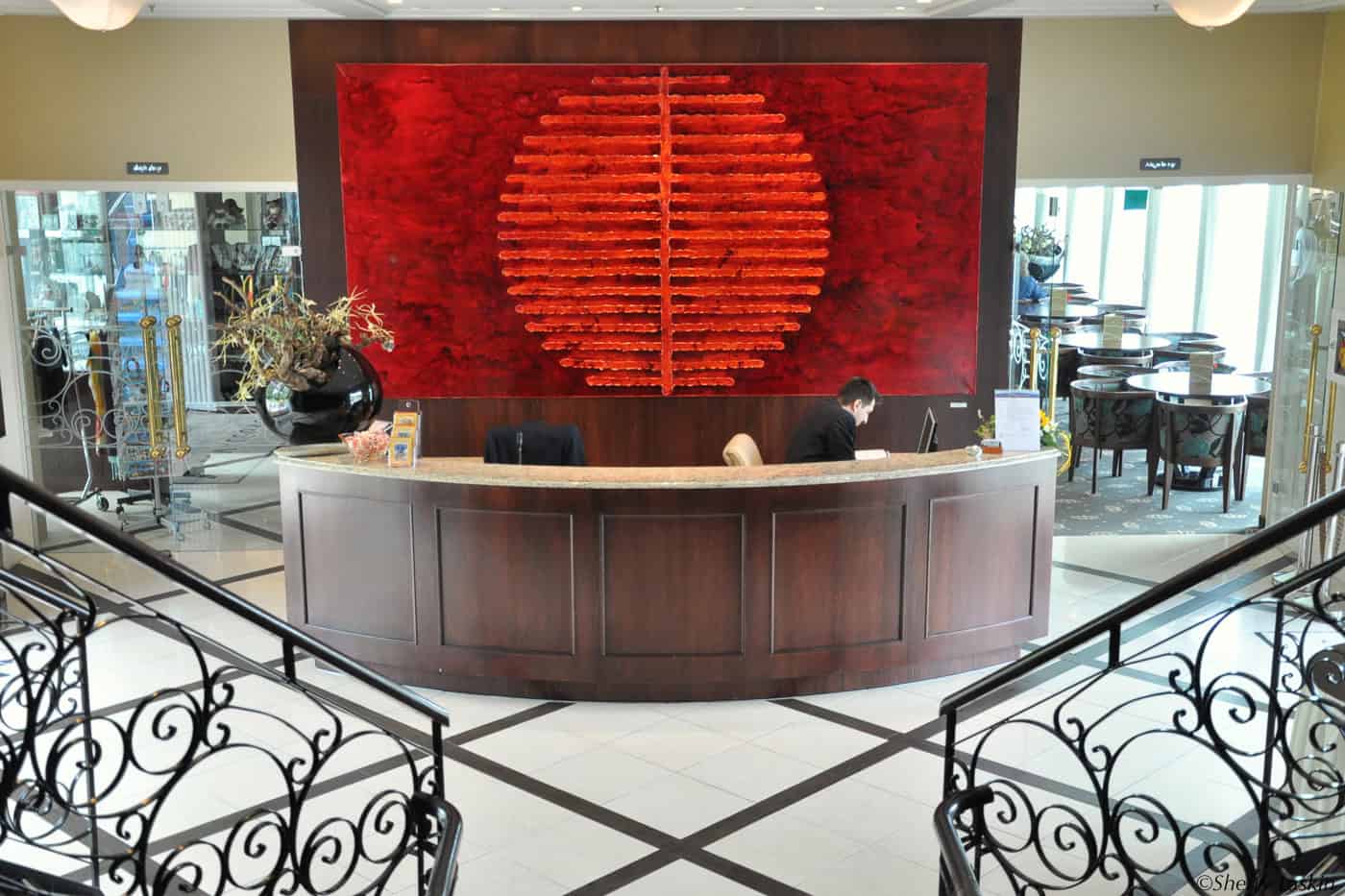
We shook hands and exchanged thank-yous in a mix of French, Flemish, Luxembourgish, and English. Somehow, it all made sense.
Getting Underway on the Mosel
It had been a long day. Two trains, one untimely delay, and a longer-than-expected taxi ride.
I missed the complimentary afternoon tour of Remich, but I arrived just in time for dinner.
After a quick stop in my cabin with its small French balcony, I headed to the familiar-looking dining room. AmaWaterways ships, as most river cruise lines, have identically laid-out interiors.
AmaLegro was my home for the next four weeks, from Remich to Budapest and back again. I would cruise along the Mosel, Rhine, Main and Danube rivers. Twice.
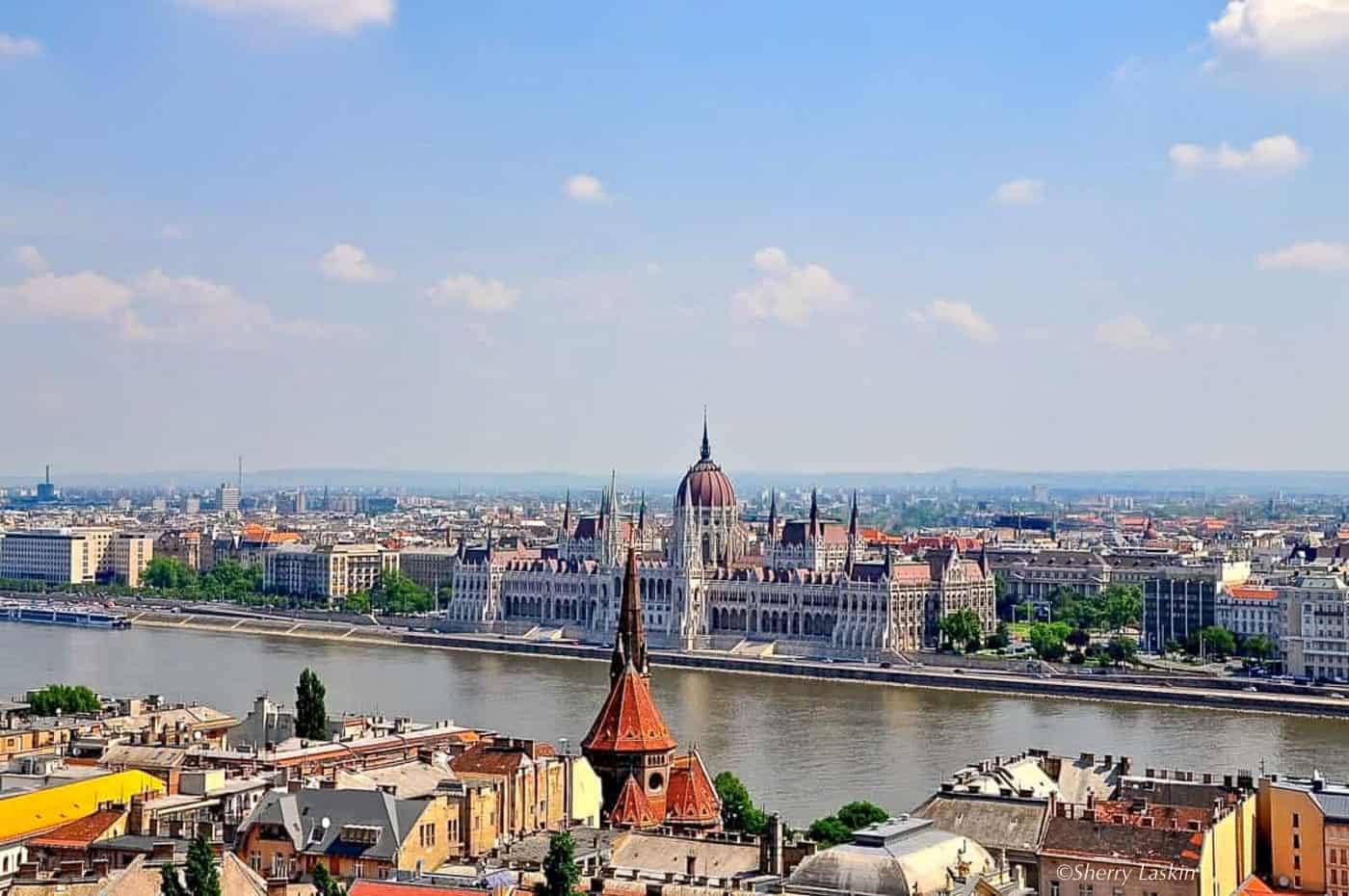
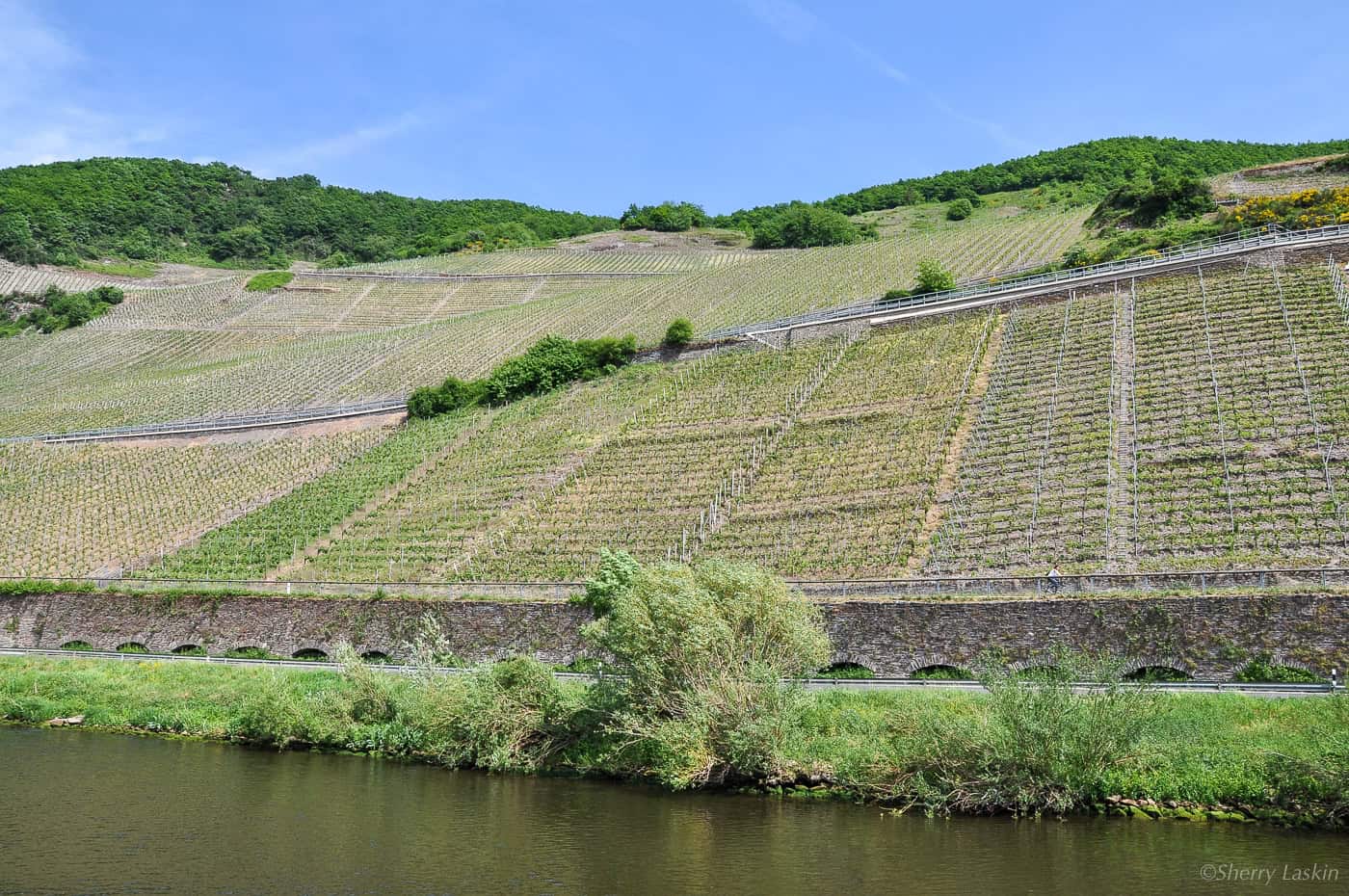
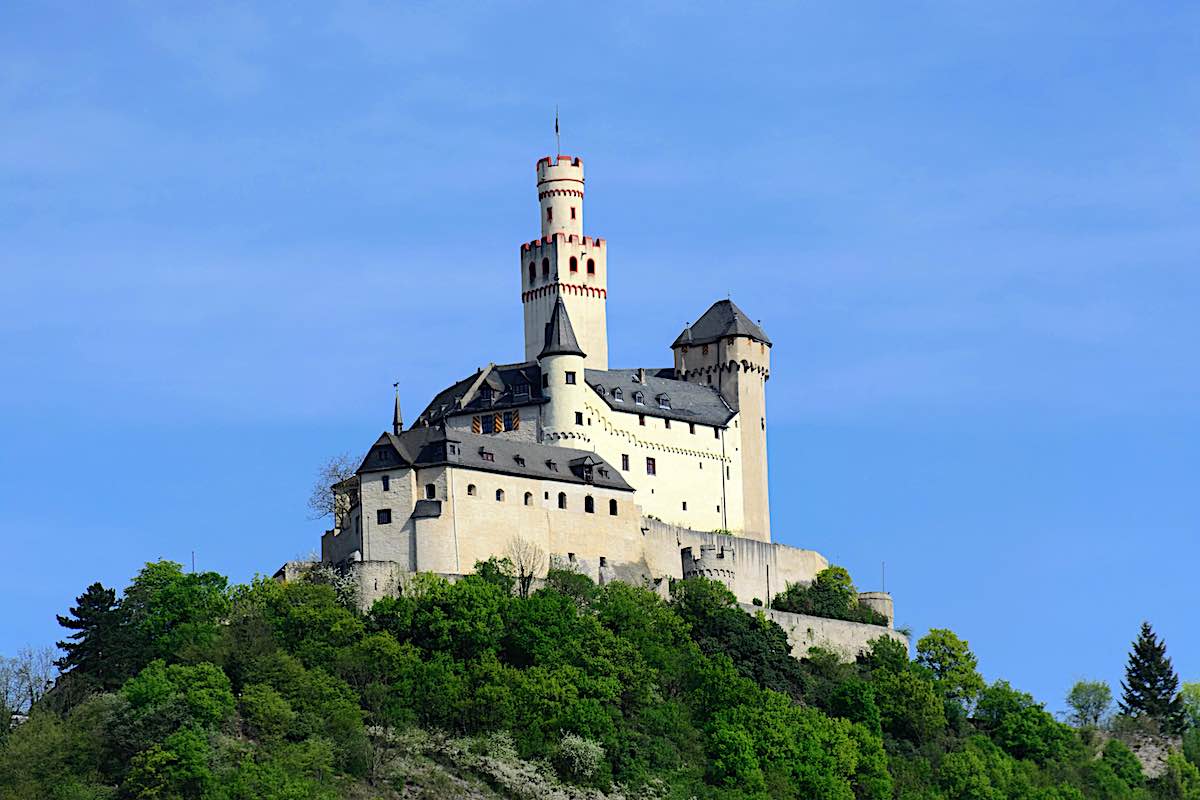
Small towns and vineyard-covered hills dotted the banks of the slow moving, meandering Mosel. Incredible castles on the Rhine appeared around each narrow bend. I had finally settled into a full month of a slower rhythm of travel.
Or so I thought.
When the Best Laid Plans Go Sideways
It was on the return trip from Budapest to Remich, about the half-way point on the Rhine river, I started to notice the trees along the river banks were half-submerged.
I had a sinking feeling that the Rhine was flooded. It had been a particularly snowy winter in the Alps and an earlier than usual warm Spring accompanied by tremendous rain storms.
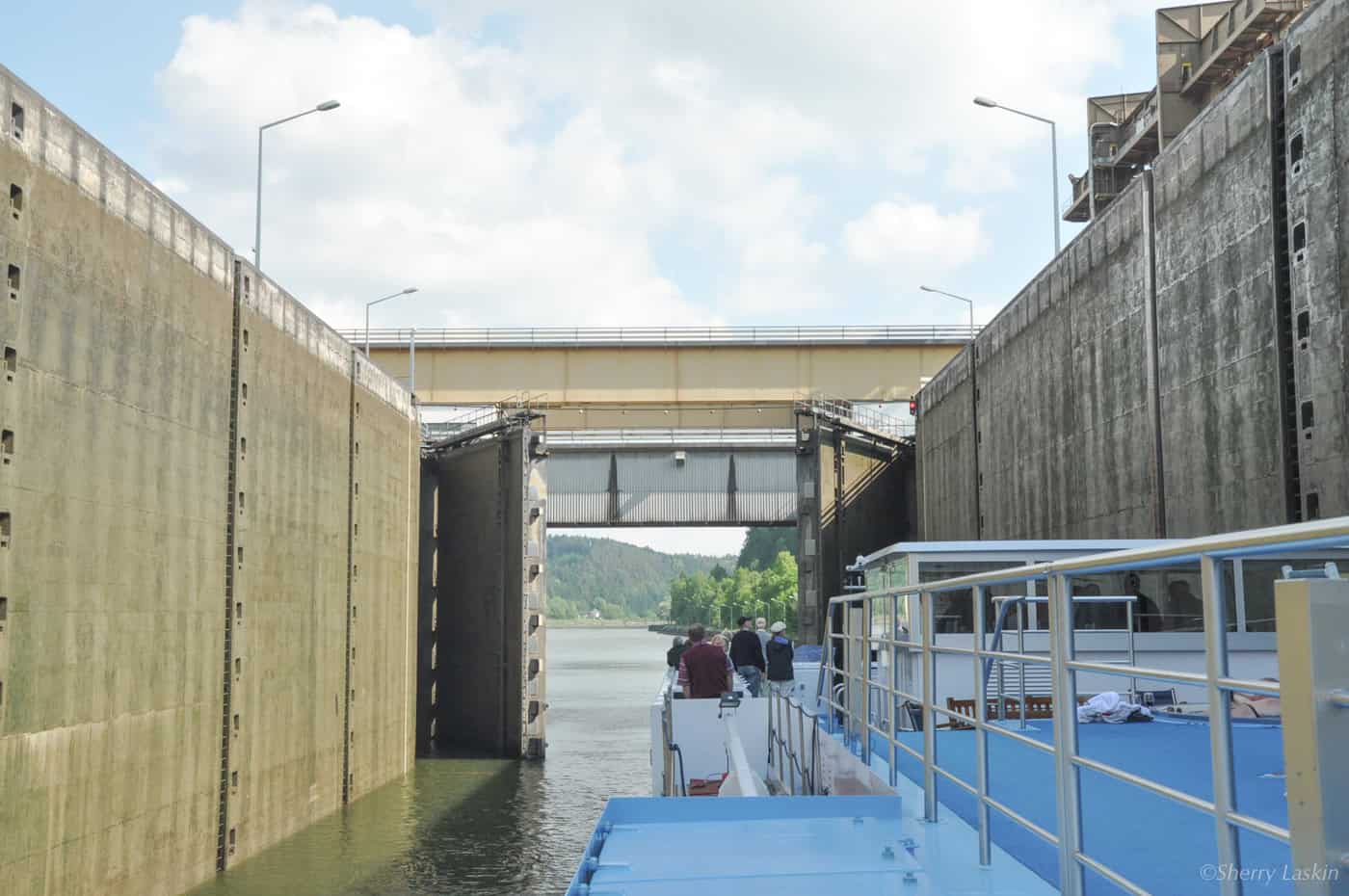
Without much warning, the Rhine river can quickly reach high water levels. In addition, I hoped that all the river locks, especially on the Mosel, were working as they should. Some of these locks are extremely old and most are manually controlled.
My return transatlantic aboard Queen Mary 2 was booked. That gave me only one day to get to London by trains, after leaving the river ship in the intended city of Trier, Germany.
My Adventure Escalated
As fate would have it, as the ship made its left turn from the Rhine onto the Mosel in Koblenz, Germany, the first lock onto the Mosel was broken. There’d be a several hours delay. It looked like I would miss my return crossing ship. Then AmaLegro’s captain intervened.
Somehow, at the entrance to the Mosel, an obscure place to dock the ship was found. The captain carefully maneuvered AmaLegro to a tiny landing and securely tied. I was the sole debarkee at a random, grass-covered dock somewhere in Germany.
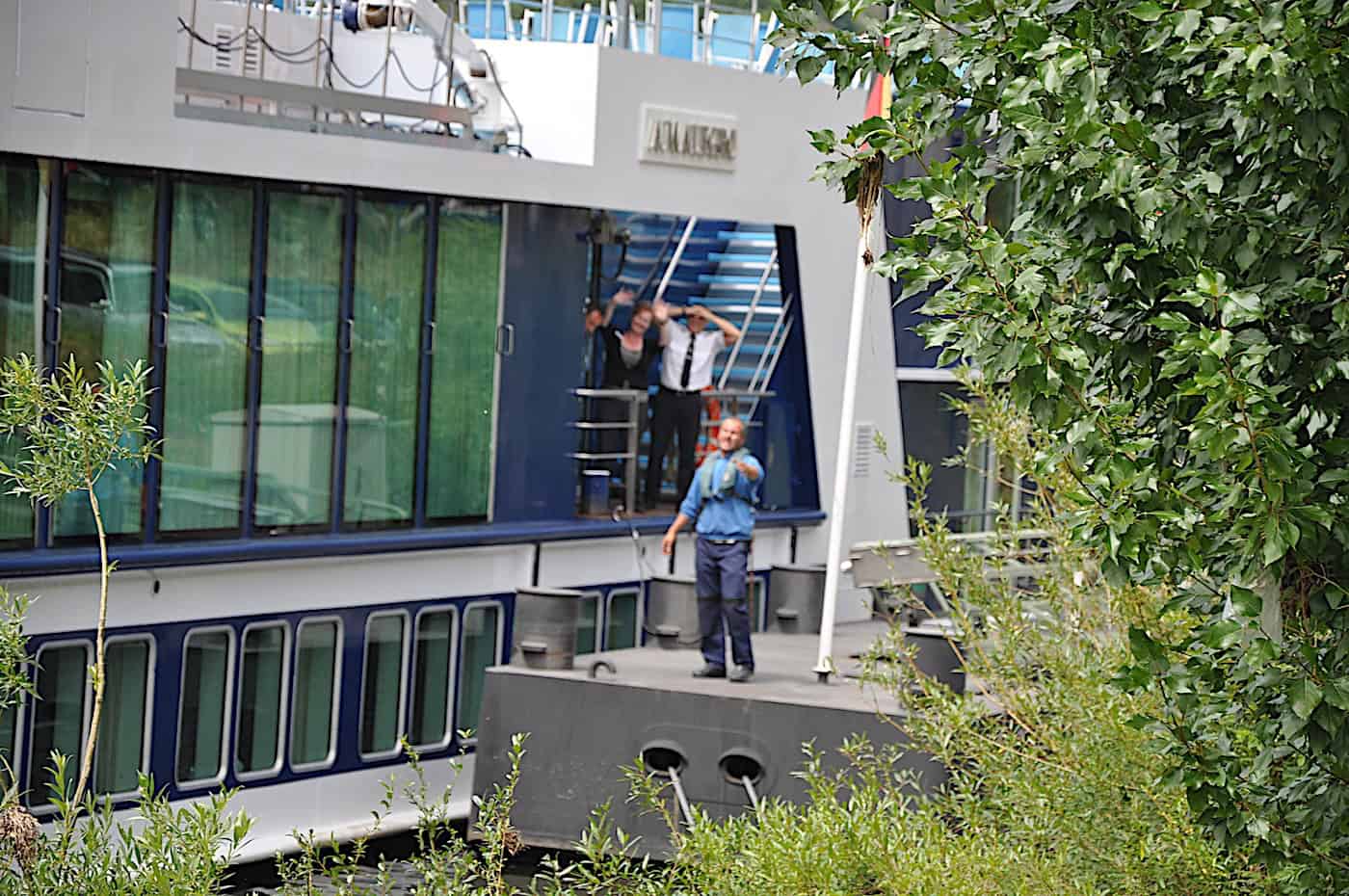
The cruise manager and the hotel manager helped me and my luggage onto the cement block of a dock, and up the narrow gangway to the street. I felt special and very embarrassed at the same time.
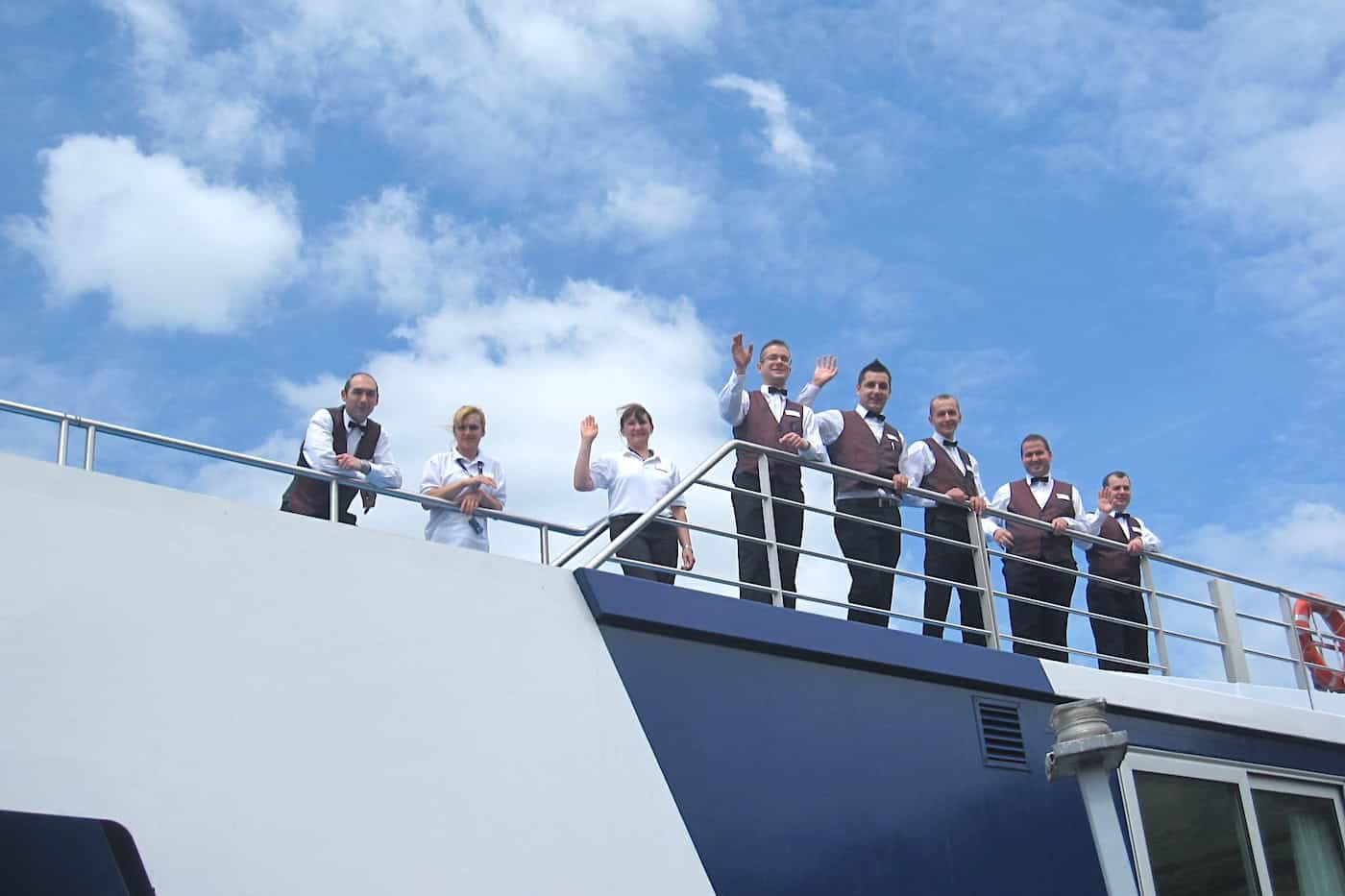
The ship’s hotel manager had called ahead to a taxi company to get me to Cochem, Germany. I turned around before I got into the waiting taxi to see the ship’s crew on the top deck waving goodbye.
I, too, waved goodbye to the amazing captain, crew and ship managers. Within minutes, I was in the taxi, headed to Cochem.
After I thanked the taxi driver in the few words of German that I knew (thank you Wayne Newton) I rolled my luggage across the bridge over the Mosel river to Hotel Am Hofen.
I had been able to book a room while I was still aboard the ship.This was a very tidy little hotel where I’d spend one night in my little solo room.
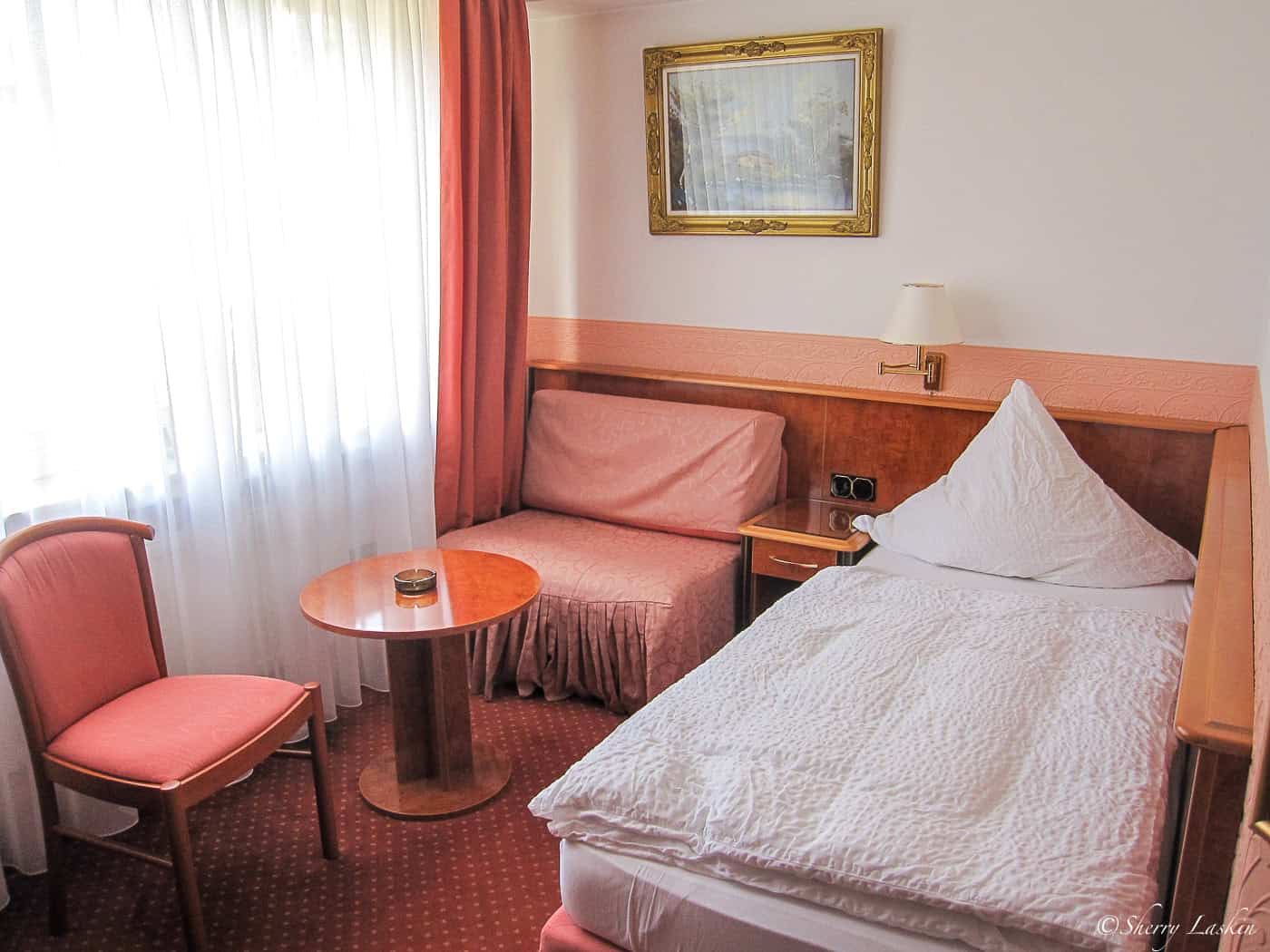
In the morning, I’d taxi to Cochem’s train station and try to put my patchwork of train connections back together. I could not miss my return ship to New York.
What a Beautiful Place to Get Ditched
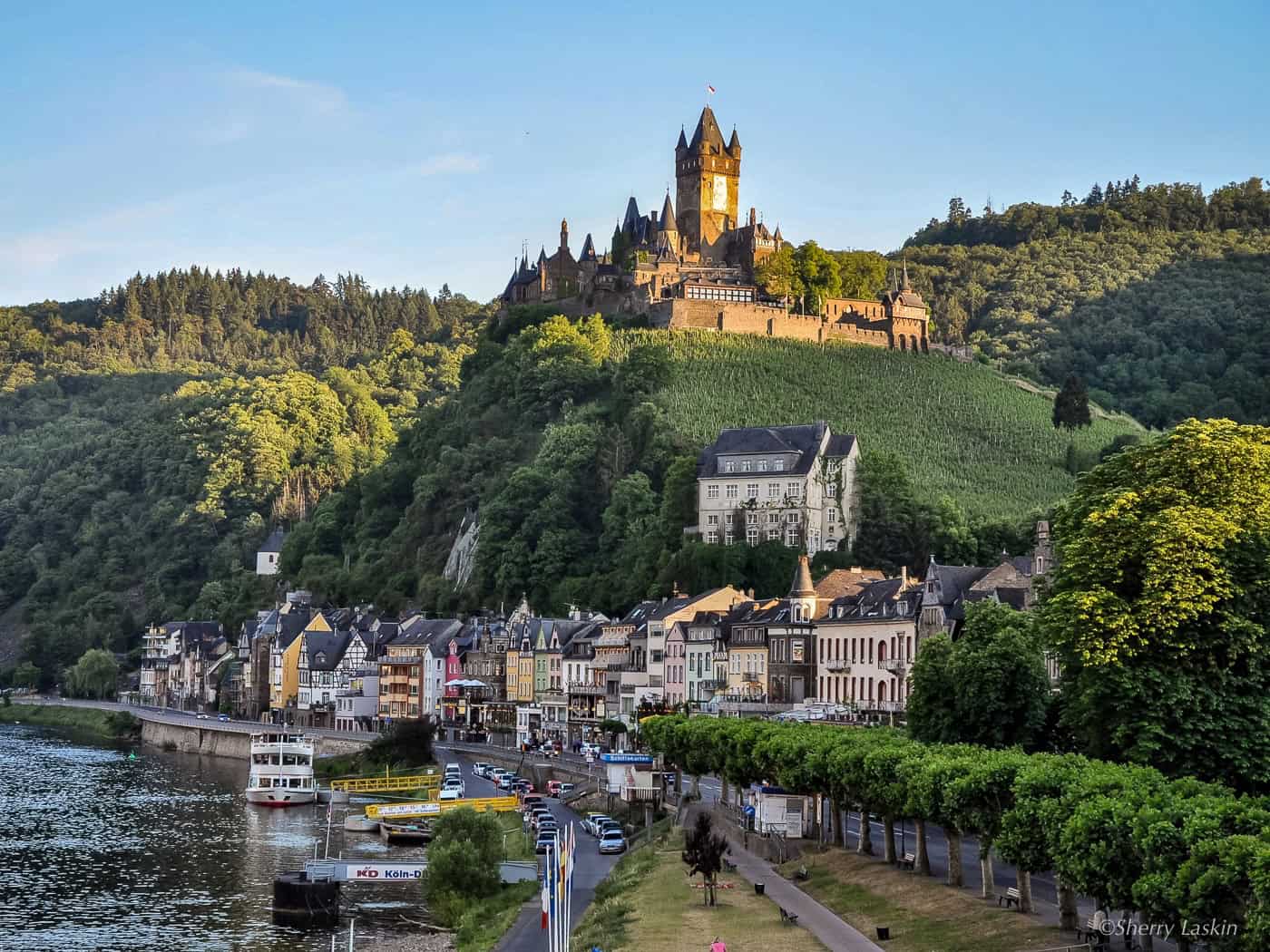
Cochem is a storybook town. And Reichsburg Castle is its crown.
Even the short time I spent in Cochem was worth the effort. Reichsburg Castle sits high on a crag, and overlooks the Mosel and the quaint town. With a full afternoon to wander, I made my way to the towering medieval castle just in time for the last tour of the day.
Built in the 1000s, all but the tower was nearly destroyed over time. The castle was lovingly restored in the 1800s.
The tour guide took us to almost every part of the castle, including the high overlook down to the Mosel. Whenever I tour a castle or ruin, it’s easy for me to imagine what life was like when the place was in full bloom.
When the tour ended, I decided to walk back to the hotel, rather than take the local bus down the hill.
Dinner was at my hotel at their a small restaurant that overlooked the river. I ordered my favorite Dover Sole and was not disappointed.
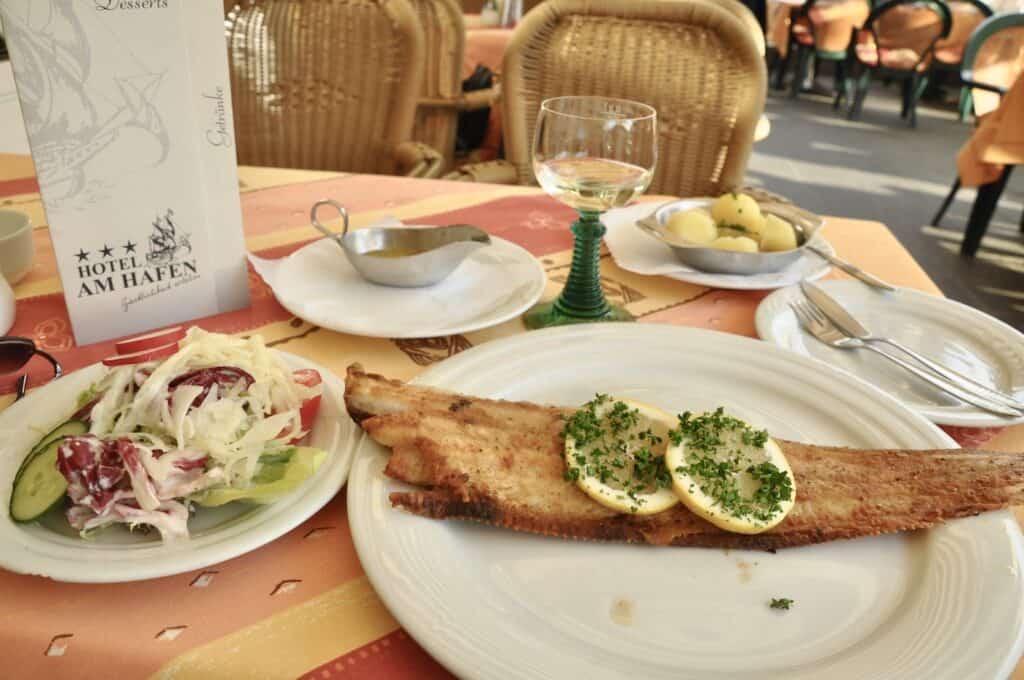
Then a quick walk back over the bridge to meander the wide promenade next to the river.
As the sun set behind the castle, I returned to my hotel and my little solo room. I watched a couple of American TV shows in German, and settled in for an early sleep.
Tips for Traveling from Amsterdam to Luxembourg by Train
• Book First Class for more luggage space
• Allow extra time for connections
• Luxembourg City station is small and can be elbow to elbow at rush hour
• Taxi to Remich and the Mosel will take longer than expected.
Why This Convoluted Journey Was Worth It
Looking back, this wasn’t one of my easiest European adventures. But it was the right way for me.
Traveling across the ocean, then overland from one city and country to another without flying, my journeys slowly unfold and gives me a sense of stability. I can feel the distances. It confirms I’m a traveler; not just someone rushing between airports to catch their ship.
By the time I finally stepped onboard AmaLegro to begin the four-week river cruise – my main reason for this long slog to Europe – I certainly didn’t anticipate jumping ship in the middle of Germany.
It would be another component of my European (mis)adventures. And I wouldn’t trade any of them for a packaged tour that included flying.