A Day in The Dalles, Washington
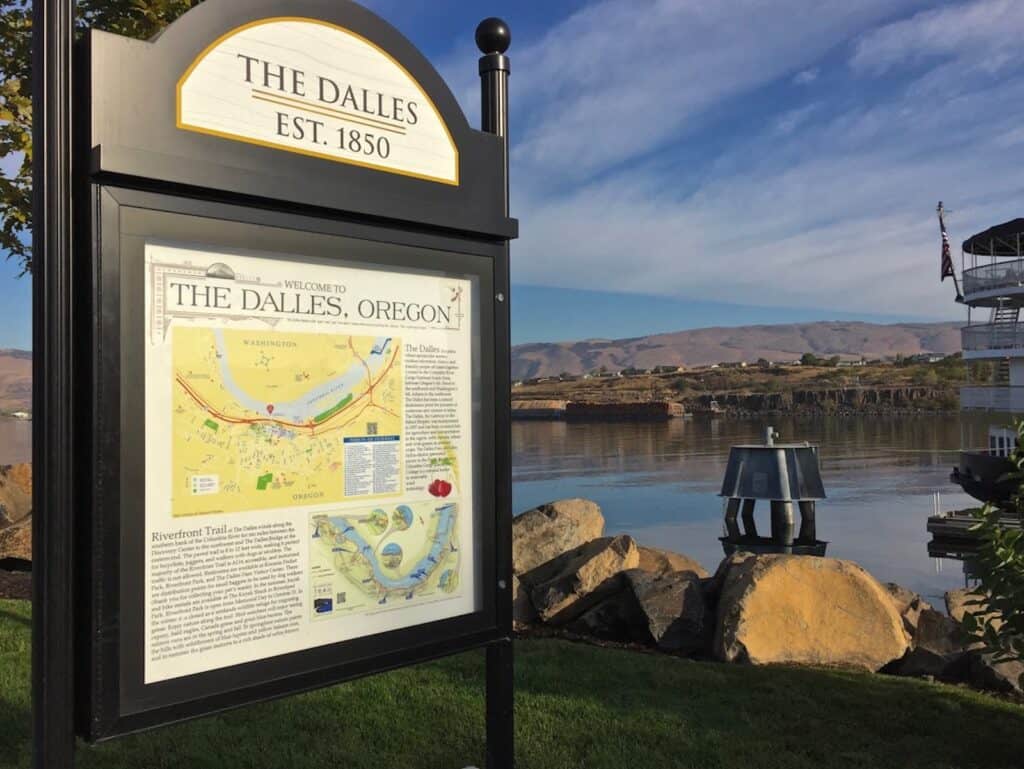
I didn’t expect to step back in time the moment I arrived in The Dalles. From the looks of things, that’s exactly the welcome I received when I disembarked the river ship.
A Curious Welcome in The Dalles
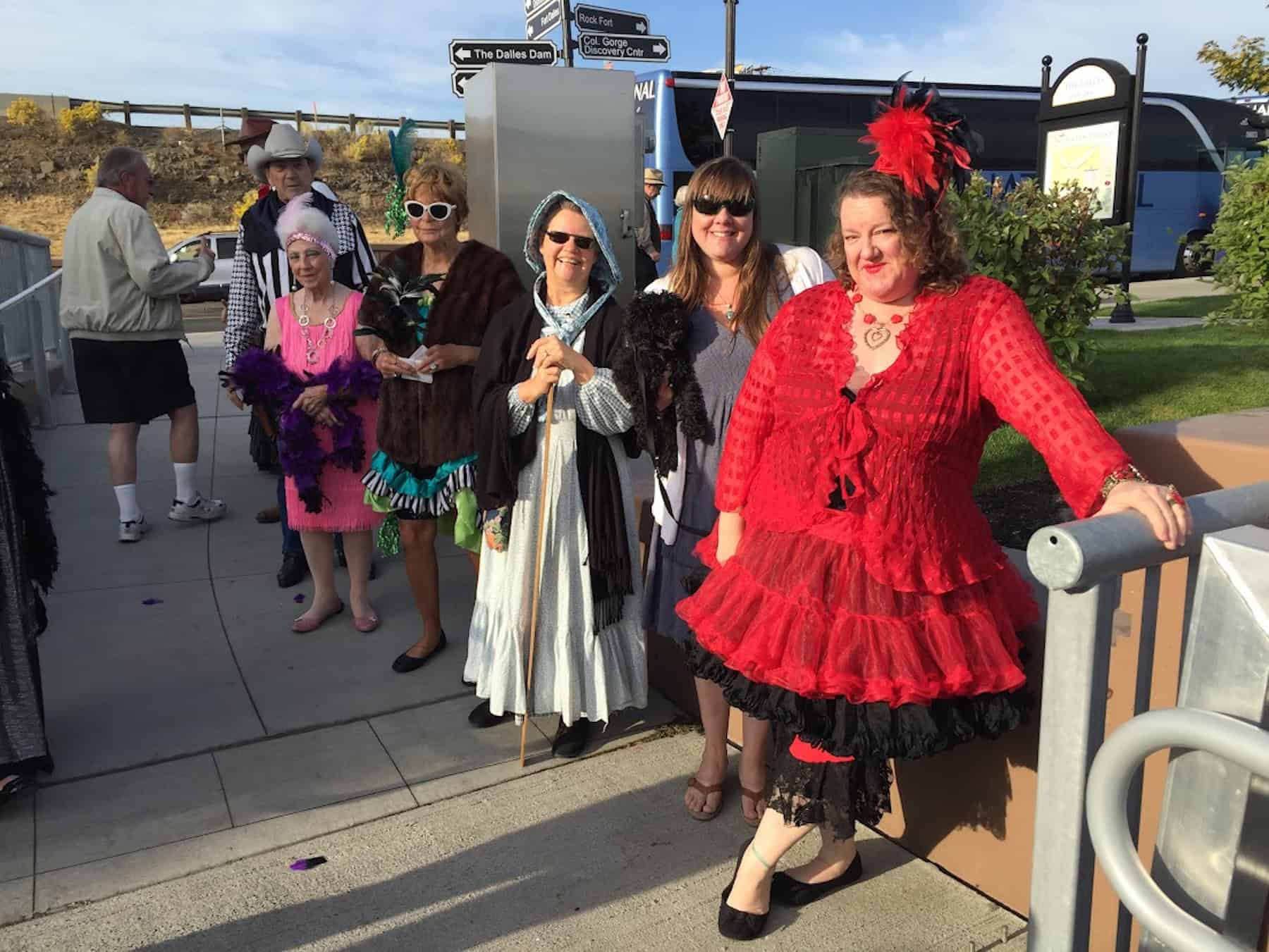
Before I had even found my bearings, I was greeted by the Fort Dalles Floozies – women in flashy dresses and feathered hats and boas. It seemed like I had wandered into the old West or a scene from Gunsmoke with Miss Kitty. It was funny, slightly absurd, and instantly disarming. The kind of moment that made me laugh before I’d had time to question it.
Days like this are why I’ve come to value slow travel for so many years. It’s letting a place reveal itself without a timetable or checklist, and without the pressure to see everything.
With only one day in one place, that’s how I view my method and not go crazy.
Somewhere in the middle of the joking around and photo ops with this gang, I was introduced to the legend of Samuel Hill.
I had a vague sense of who he was, but by the end of the day his name would seem impossible to forget.
Hill was a mid-19th-century industrialist, lawyer, road builder, gambler, and eventual millionaire. He was a man whose ambition seemed to stretch as wide as the Columbia River below, where he chose to settle.
Samuel Hill and a Mansion That Became a Museum
Together with his wife Mary, Sam Hill ventured west across rolling plains and mountain ranges to what was then considered the far edge of civilization. The land was stark and beautiful, but it wasn’t what Mary had imagined for her life.
The desert heat in summer, the bone-chilling winters, and the isolation far from a major city, proved too much. Before long, she packed her bags and returned east, never to come back.
Sam Hill stayed.
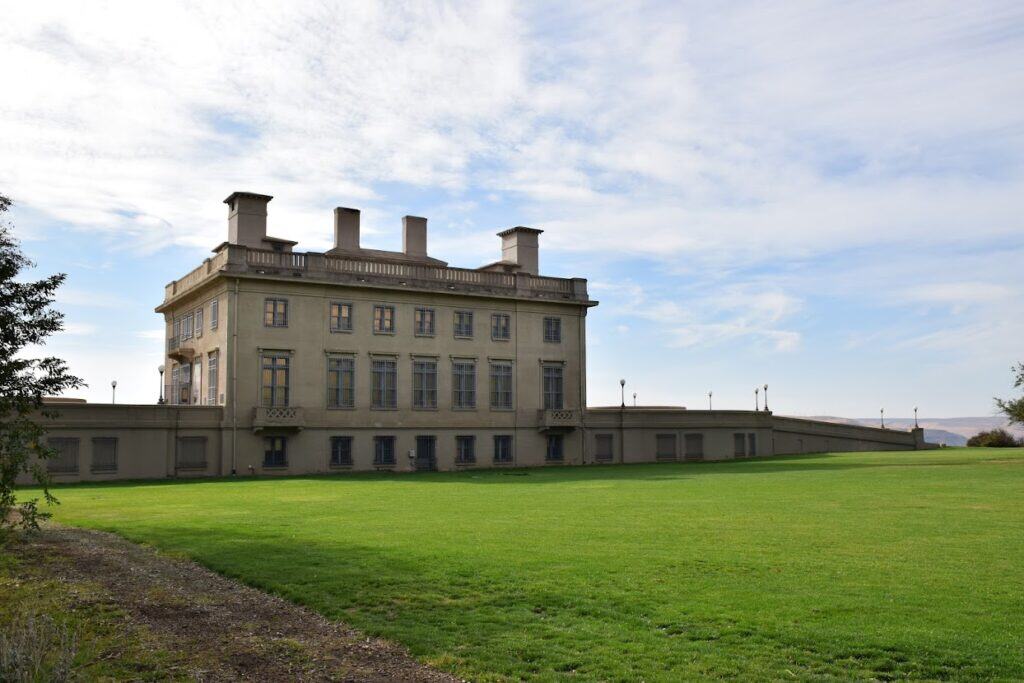
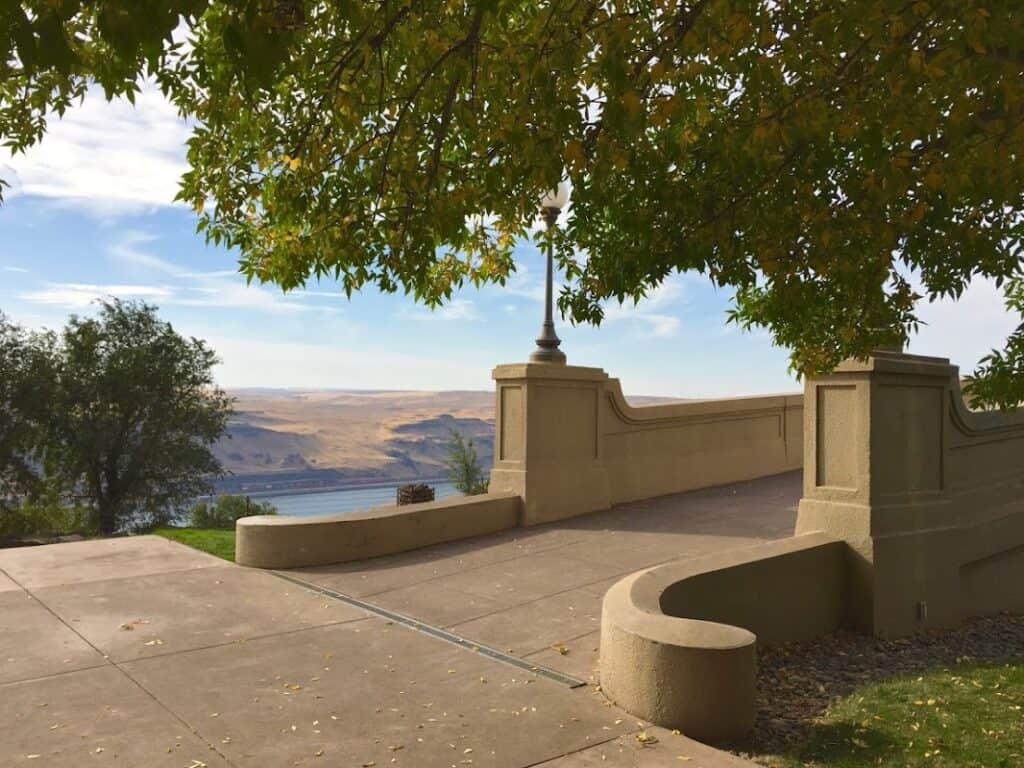
What followed was one of the more curious chapters in Pacific Northwest history. Hill was determined to build a grand home on a lonely butte overlooking the Columbia River, originally meant to honor Mary. When she abruptly moved out, Sam shifted his vision entirely and transformed the mansion into what would become the Maryhill Museum of Art.
The story only grows stranger from there.
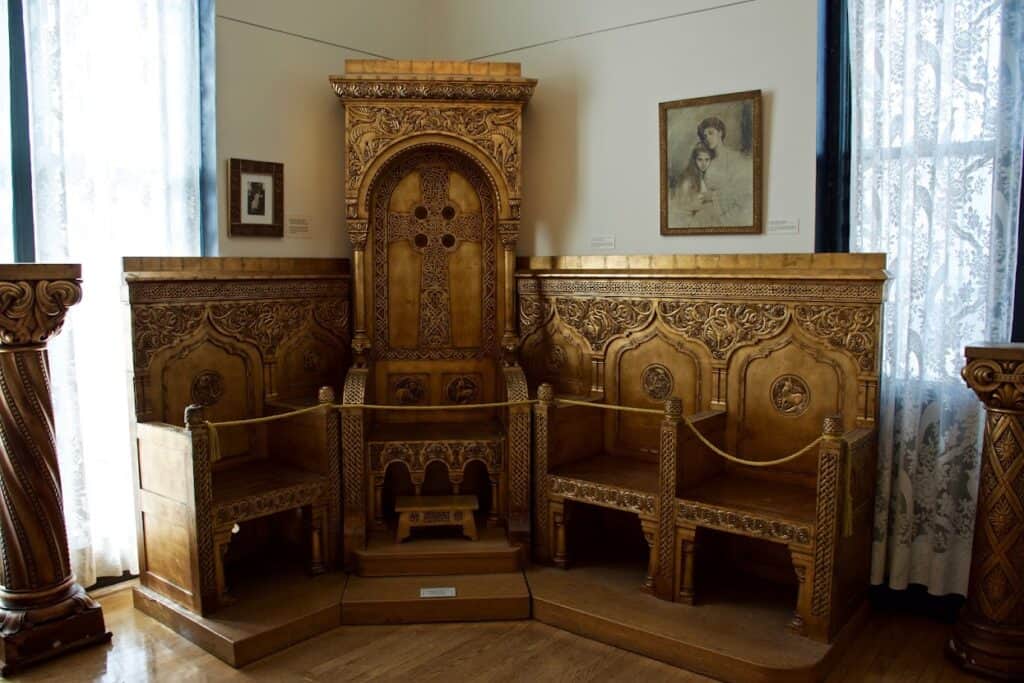
Among Hill’s close friends was the Queen of Romania. An unlikely connection that resulted in an extraordinary donation of royal artifacts. In November of 1926, just days after attending a formal dinner at the White House, the Queen traveled across the country by private train to attend the museum’s dedication.
She arrived with more than one hundred pieces of art and personal treasures from Romanian royal palaces. This gave the remote museum an international pedigree no one could have predicted.
One of the quirkiest museums ever, Sam Hill’s collection of French sculptor Auguste Rodin’s work fills the galleries to become the largest collection of Rodin pieces outside of Paris. Early Renaissance influences sit beside unexpected artifacts, all housed in a structure that looks part French château, part high-desert dream.
Talk about Paris…on the top floor of the museum is the permanent exhibit, “Théâtre de la Mode”. Originally opened at the Louvre in 1945, this collaboration by French haut couture designers created these one-third life-size mannequins to showcase their post-war vision of French fashion.
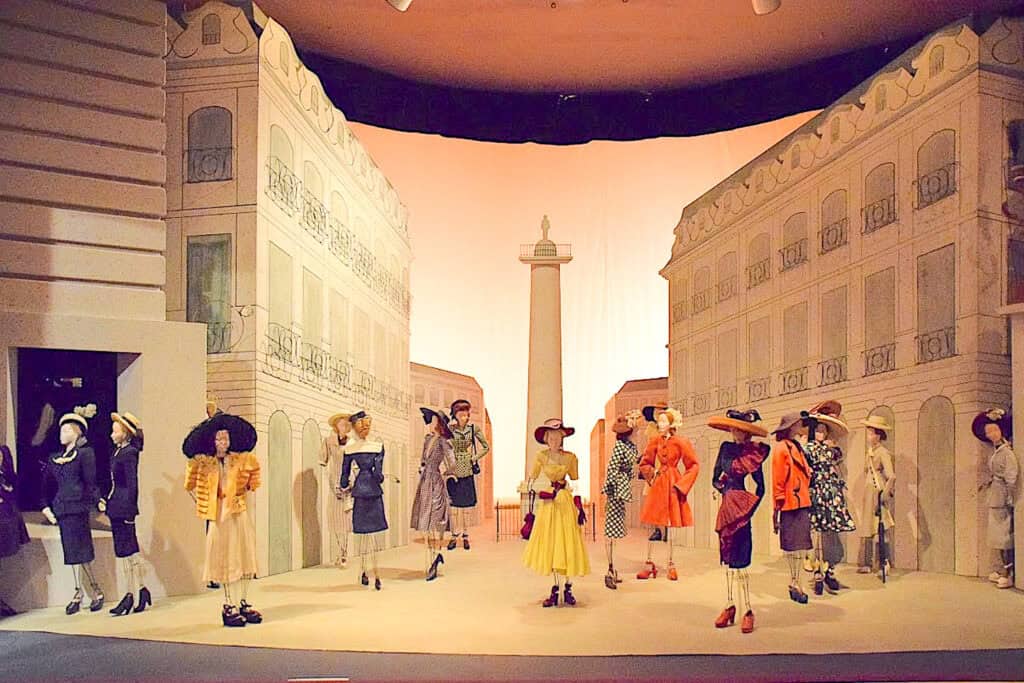
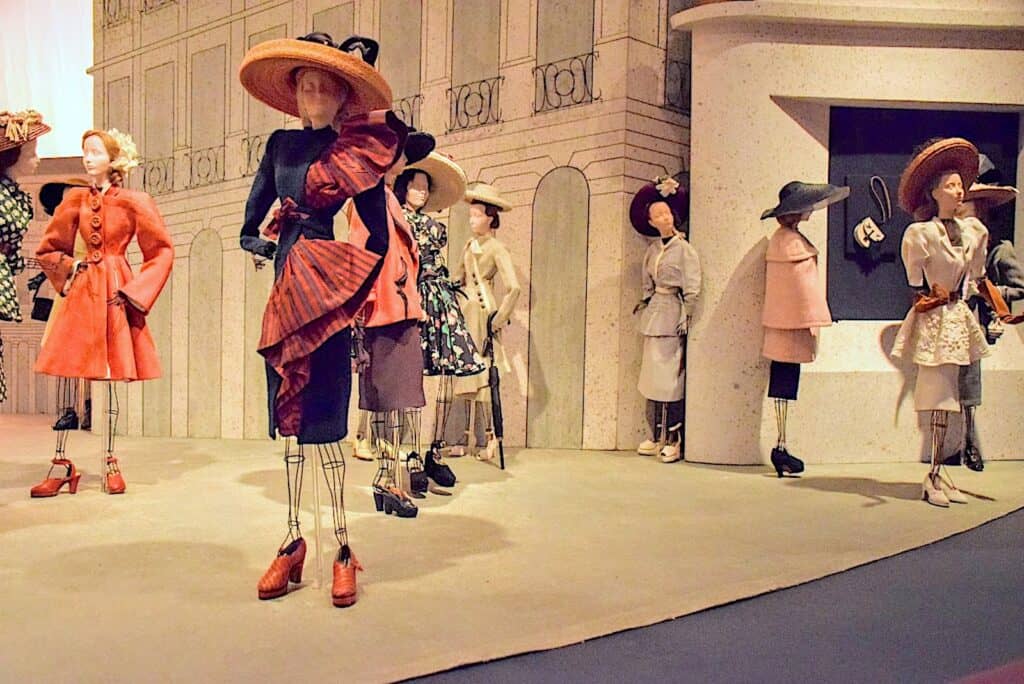
You have to see this exhibit to believe it. Almost eery, but absolutely gorgeous miniature French fashions adorn stick-like dolls.
Samuel Hill never lived to see the museum completed.
But his presence lingers. In the scale of the building, in the oddity of its collections, and in the phrase coined when onlookers would see the massive structure,“What in the Sam Hill?” And that’s how the infamous expression began.
Wandering Maryhill at My Own Pace
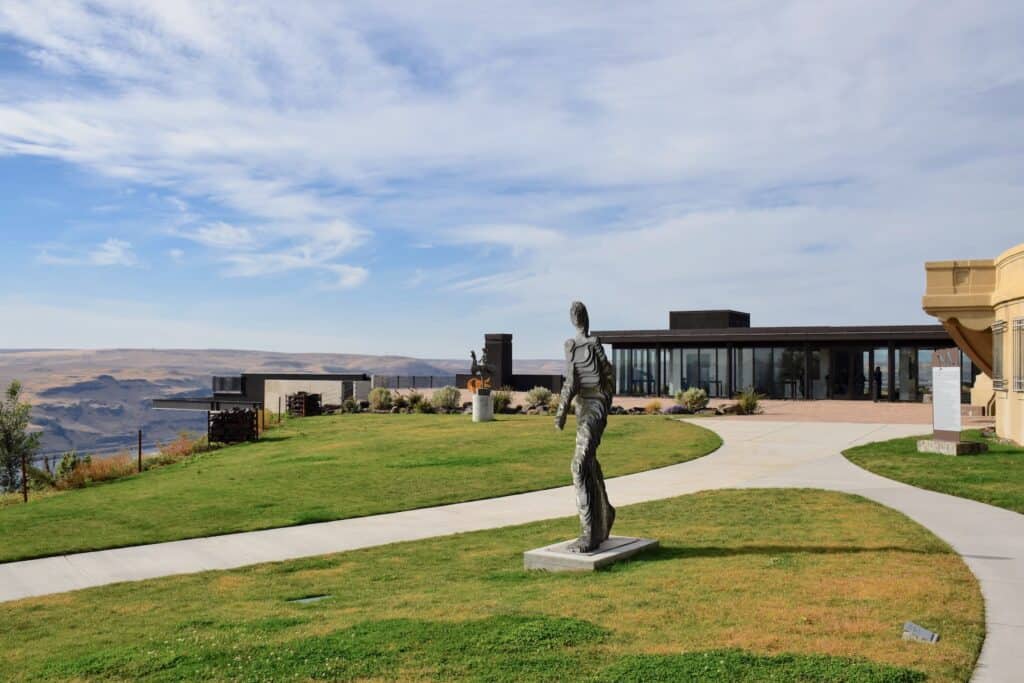
I’ve always liked to wander at my own pace, especially when I’m exploring with a group. I tend to let everyone else move ahead while I linger behind, stopping when something catches my eye. There’s something grounding about taking a pause to look around, without a wall of people blocking the view.
That instinct paid off almost immediately when I stepped outside of the museum.
From the museum patio, the landscape opened up into a breath-taking, wide, cinematic view. The Columbia River stretched below, the high desert unfolding in every direction. Freight trains snaked their way through the valley below. It was the kind of moment that didn’t need explanation or narration. Just a little time to absorb it.
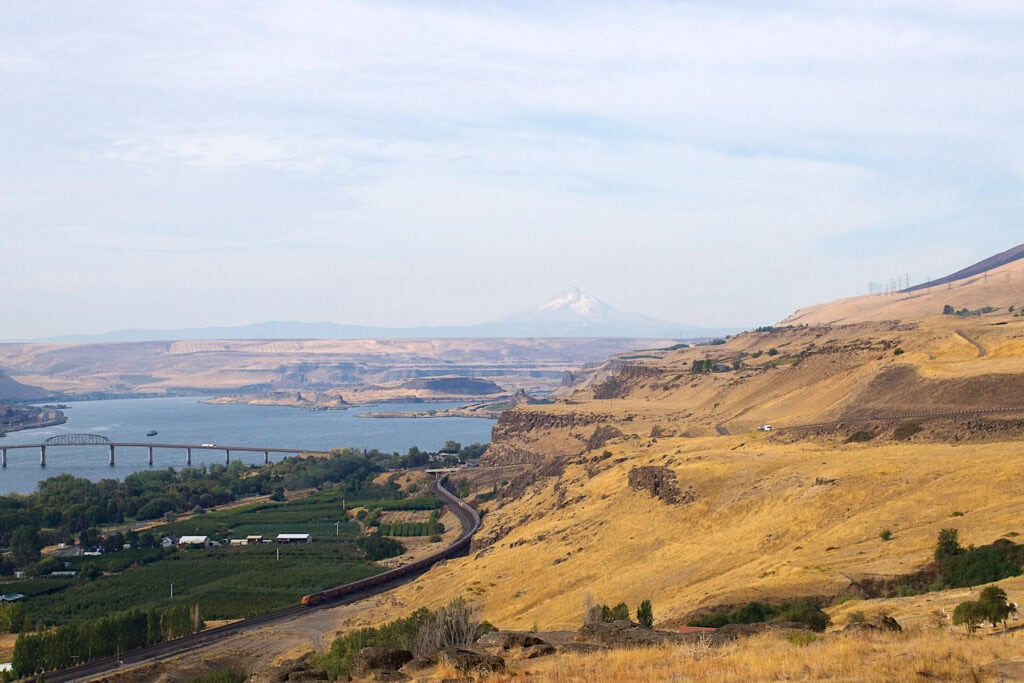
Maryhill Museum invites wandering. With dozens of exhibit halls and rooms, it’s impossible to see everything in one visit, and that’s part of its charm, I guess. I drifted from gallery to gallery, never quite sure what I would find next. Just when I thought I understood the rhythm of the place, something entirely different appeared.
As the day unfolded, it became clear that Maryhill’s weirdness was only the beginning. The Dalles had more surprises waiting; places that felt improbable, out of place, and simply unforgettable.
A Stonehenge Where You Least Expect It
Leaving the museum behind, the day took an even stranger turn.
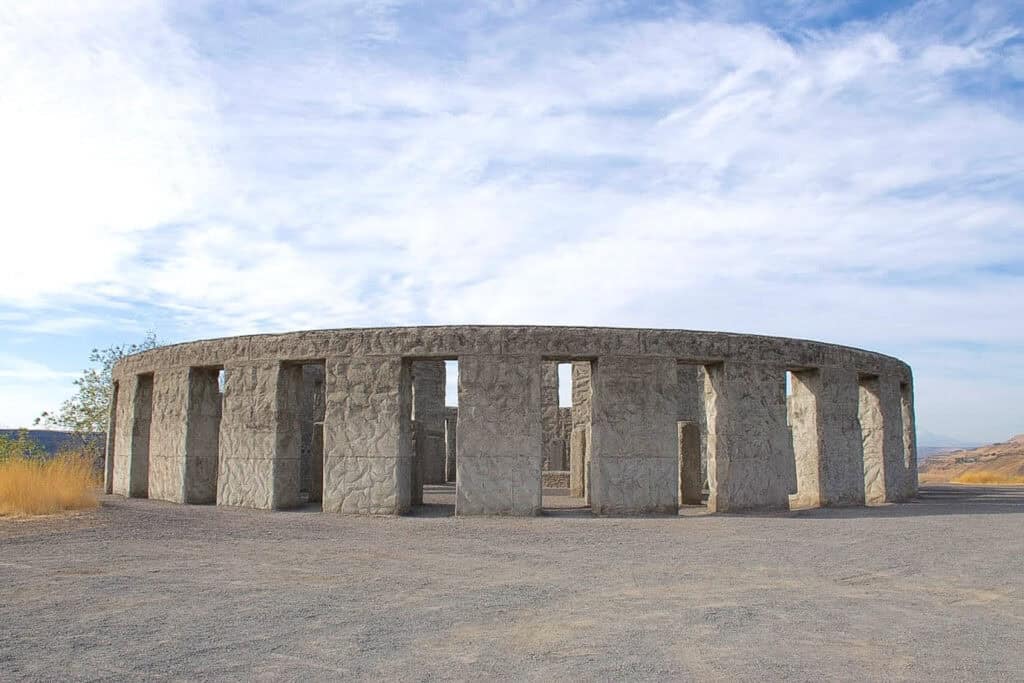
Not far away, standing improbably against the high desert landscape, is a full-scale replica of England’s Stonehenge. Samuel Hill first encountered the original Stonehenge during a visit to Wiltshire, England, and was captivated by its mystery and sheer improbability. His response, as one might have guessed, was to build one of his own.
Hill dedicated the Maryhill Stonehenge as a memorial to American service members who lost their lives in World War I. Seeing it in person, its massive stones rising from an otherwise empty stretch of land, felt surreal. It was solemn and unexpected, a monument that didn’t quite belong and yet felt deeply intentional.
History, Raptors, and a Quiet Ending
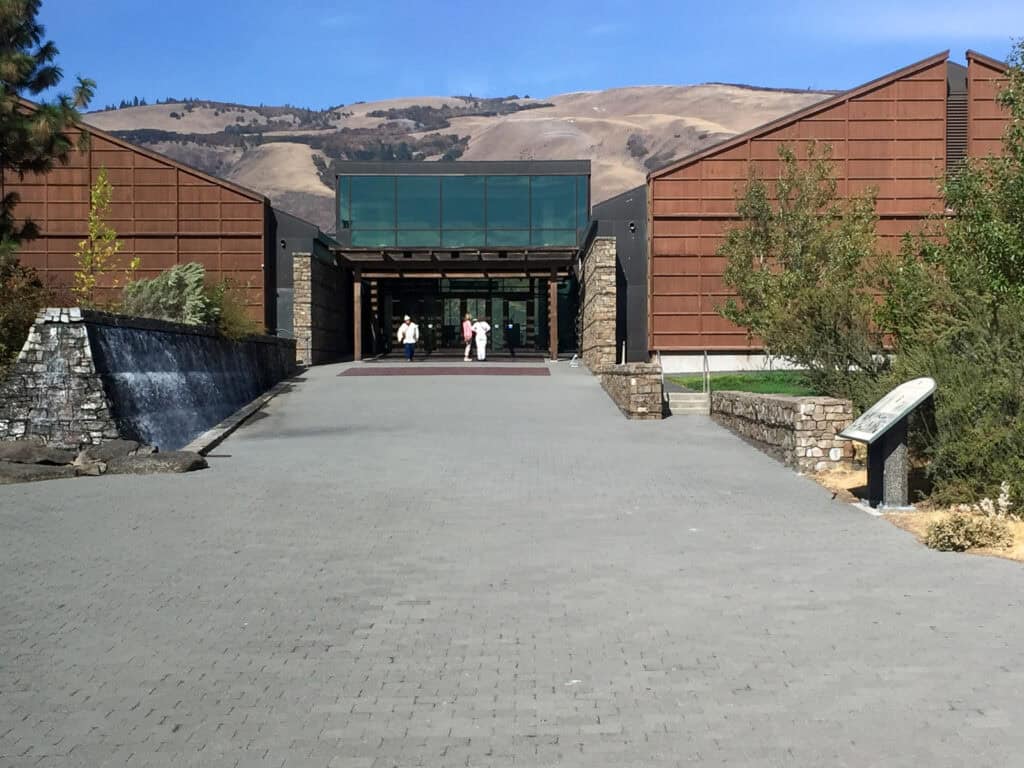
For the final stop of the day, the tour bus crossed over to the Oregon side of the Columbia river for a visit to the Columbia Gorge Discovery Center. Part museum, part educational hub, the Center offers insight into the natural and cultural history of the region.
But the moment that really wow’d me took place at the Center’s Raptor Program demonstration. While the docent introduced several rescued birds of prey, each with its own story, the highlight was the Great Horned Owl.
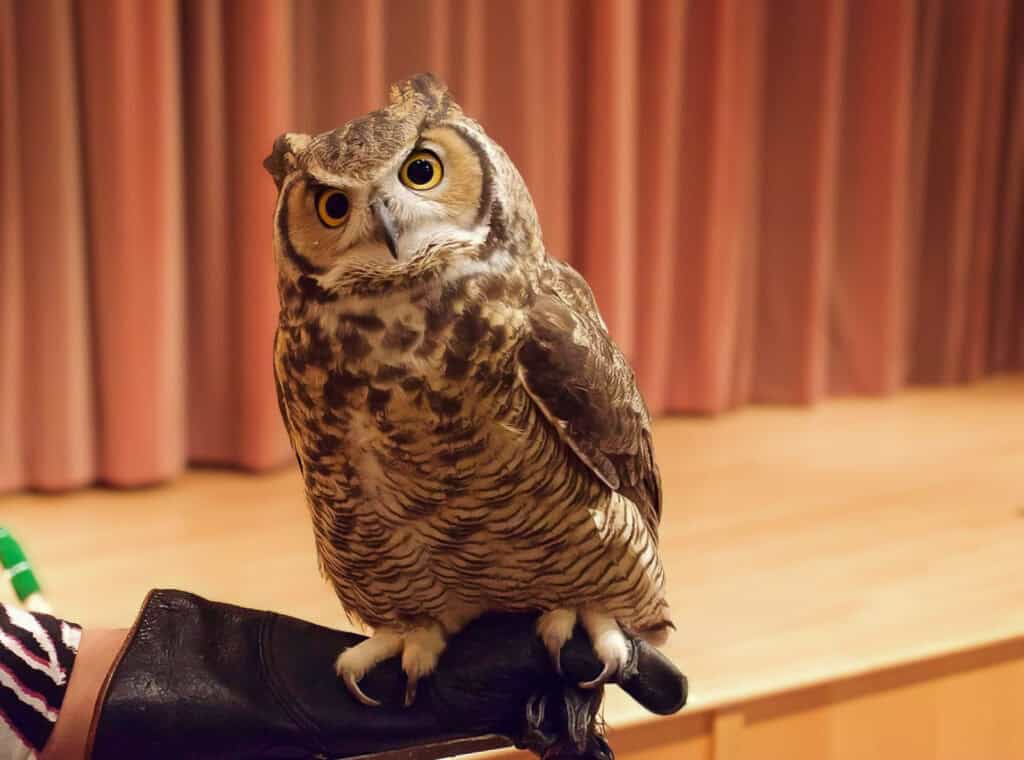
I was struck by how calm, watchful, and unexpectedly gentle this hulking raptor seemed. I stood close enough to see the tiniest details in his feathers. Looking straight into its glowing gold and black eyes was one of those strange encounters that I’ll always remember.
As the sun began its slow descent towards evening, I felt like it was a really good day in a very unique place. Everything was just weird and yet oddly connected. The Dalles had revealed itself gradually, not on a tour bus through the city, but through a series of unexpected moments that unfolded one by one.
Some places rush past you and boom! you leave. Others stay with you long after you’ve left. All of what happened that day have become part of my ongoing reflections instead of just a fleeting memory of a place.
The Dalles did exactly that. And, as Maurice Chevalier said in the movie, Gigi, “Oh yes, I remember it well.”